Population: ~43,000,000–50,000,000 Estimates vary significantly because of Afghanistan’s political situation, migration, displacement, and limited recent census reliability.
Official languages: Pashto and Dari
Other spoken languages: Uzbek, Turkmen, Balochi, Pashayi, Nuristani and other regional languages. English is limited and mostly used by some educated people, aid-sector workers, guides, and urban contacts.
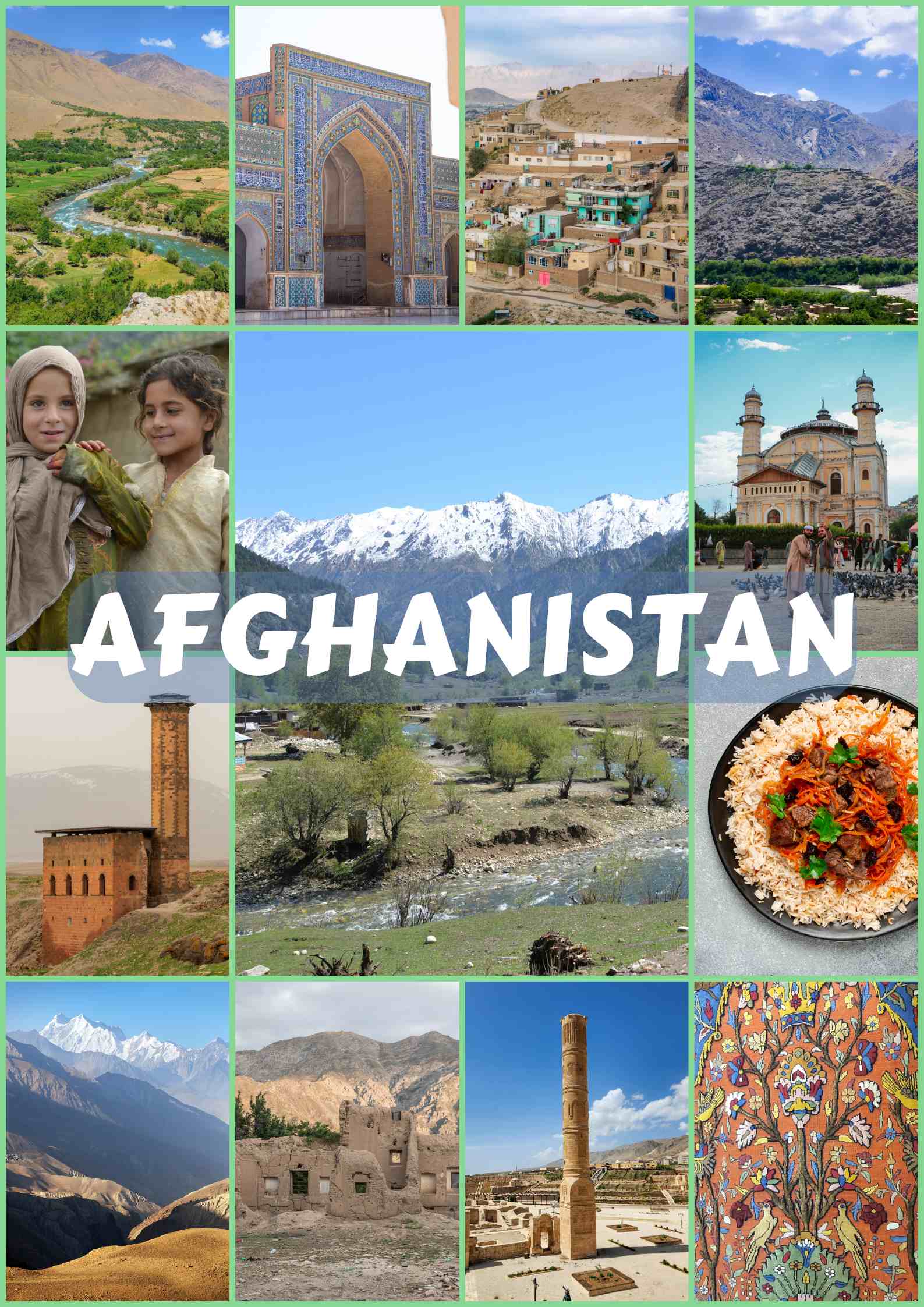
Basic facts: Afghanistan is a landlocked country at one of the most important geographic junctions of inner Eurasia. It lies between Iran, Central Asia, Pakistan, the Hindu Kush, the Pamir and the northern edge of the Indian subcontinent. Historically, it formed part of the broader Silk Road world, where routes between Persia, Central Asia, India and China met across difficult terrain.
Geographically, Afghanistan is defined by dry continental landscapes, exposed valleys, highlands, deserts, and the western approach to the Greater Ranges. The Hindu Kush dominates the northeastern structure of the country, while the central highlands, western basins, northern plains and southern frontier zones create a complex system of corridors, barriers and chokepoints.
Travel tips: Afghanistan should not be treated as a normal travel destination or a reliable overland transit country.
The country is geographically central to Eurasian movement, but current security, border, permit, checkpoint and diplomatic realities make route planning highly conditional.
Official government advisories from many countries warn against travel to Afghanistan because of terrorism, kidnapping, detention risk, limited consular support, weak medical infrastructure and unpredictable security conditions.
Organized visits with local agencies may be possible in some cases, but this is not the same as independent overland route continuity.
A visa does not automatically mean freedom of movement across all provinces. Foreign travelers may need local permissions, travel letters, registration, guides or route clearance depending on the province and route.
Overland movement requires special caution around checkpoints, photography, phones, drones, border areas, military sites and conversations about politics or security.
Afghanistan contains regions that may feel calmer than others, such as Bamyan, parts of the north or the Wakhan Corridor, but relative calm should not be confused with safety or reliability.
For Crossing Eurasia-style planning, Afghanistan is best understood as a high-risk route barrier, not a fixed backbone of a transcontinental route.
10 key geographic and route-reality places in Afghanistan:
Kabul: The capital and main administrative centre of Afghanistan. Kabul is the core urban hub for permits, flights, agencies, ministries and route decisions, but it also carries symbolic and security sensitivity.
Herat: A major western city near the Iranian border and the natural first hub after entering from Islam Qala. Herat is one of the key gateways between the Iranian Plateau and Afghanistan.
Islam Qala / Dogharoun Border: The most important western land gateway between Iran and Afghanistan. It is a logical entry point from the Iranian Plateau, but it does not guarantee onward route continuity.
Bamyan: A central highland region often described as calmer and more accessible than many other parts of Afghanistan. It is geographically important as a mountain-basin node between Kabul, the central highlands and western routes.
Band-e Amir: A highland lake system in central Afghanistan, important as a rare concentrated natural feature in the dry mountain environment. It represents the country’s rugged interior landscape rather than a simple tourist attraction.
Firozkoh / Chaghcharan and Ghor: A remote central highland route zone between Herat, Bamyan and Kabul. Important for understanding Afghanistan as a difficult internal corridor of mountains, poor roads, local permissions and weak fallback options.
Mazar-e Sharif and Balkh: A major northern urban and historical region connected to the Amu Darya and Central Asia. It is one of the key northern route nodes for movement between Afghanistan and Uzbekistan / Tajikistan.
Kandahar: The major city of southern Afghanistan and a key node on the route toward Spin Boldak / Chaman and Pakistan. It is geographically important but politically and security-sensitive.
Wakhan Corridor: A narrow mountain corridor between Tajikistan, Pakistan and China, linked to the Pamir and Hindu Kush systems. It is one of Afghanistan’s strongest expedition-geography zones, but not a normal transit corridor.
Wakhjir Pass: The far eastern Afghanistan–China border point at the end of the Wakhan Corridor. It is geographically fascinating but not a practical open international crossing for modern overland travelers.
Afghanistan looks like a natural land bridge between Iran, Central Asia, Pakistan and the Greater Ranges. But under current conditions, it is a high-risk route barrier rather than a reliable overland corridor.

 Location: Central / South Asia