

Update (October 2026): This guide has been reviewed to improve the geographical explanations of ocean swell, breaking waves, and tsunamis, and to update selected surf seasons, access arrangements, and visitor information. The original selection of surfing destinations remains unchanged. Surf conditions, safety restrictions, transport schedules, and local facilities may vary, so always check current information before travelling.
One of the most spectacular things that can be seen in the nature is a big wave in the sea that approaches the coast, grows up, turns into a tube, and crashes in an explosion of water and seafoam. If it is not too big, you can play with the wave, but if it is too big, you can only watch it from afar. But if you know how to surf, you can ride it! Such big waves can’t be seen everywhere, but there are places that conditions make these waves perfect. Let’s visit the 10 best surfing places in the world, and enjoy their beautiful waves!
Table of Contents
About the waves
First, let’s talk a bit about geography and physics. Sea waves are not different than any other wave in the nature- sound waves, seismic waves, even gravitational waves. Or, to illustrate it clearer- do you know what is a “Mexican wave”? In a football match, people consecutively stand up rising their hands, then sit down. Thus, they create a wave that moves around the stadium. But the people don’t move forward, only up and down.
Something similar happens in the ocean, although the actual movement of water particles is more complex. In deep water, particles beneath a passing surface wave generally move along approximately circular paths rather than simply rising and falling vertically. The wave transfers energy across the ocean, while the water itself does not travel across the entire distance with the wave. Most ordinary ocean surface waves originate from wind, which transfers energy to the water. For a simple scientific explanation, see NOAA’s introduction to ocean waves.
Coastal waves
Now, another important factor comes- the seabed. While the depth decreases, the lower (underwater) part of the wave starts fractioning with the seabed and its speed slows. But and the same time, the upper part of the wave still keeps its initial speed longer time. Thus, the wave becomes higher and higher, its front part steeper and steeper, and it gets stable direction toward the coast.

In general, there are two types of coastal waves- the first type is when the normal open-sea waves caused by the wind approach the coast. These waves are not so “organized”, even near the coast, they break a bit far from the coast before they become enough steep.
The second important phenomenon is called swell. Unlike locally generated, irregular wind waves, swell consists of relatively organised waves that have travelled away from the distant storms that originally created them. They can cross thousands of kilometres of open ocean, sometimes reaching a coast when the local weather is perfectly calm. As these waves enter shallower water, their speed and shape change, and the right combination of swell direction, wave period, and seabed topography may produce spectacular breaking waves suitable for surfing.
How about a tsunami?
Probably you have heard about surfers, riding 5, 10, 15 m or even higher swell waves? These waves reach the coast and disappear. But at the same time, a tsunami that is only 5 m can cause flood and destruction much deep on the land. Why?
A tsunami is also a wave phenomenon, but it is fundamentally different from the ordinary wind-generated waves used for surfing. Tsunamis are usually caused by the sudden displacement of a large volume of water, most commonly during a submarine earthquake, although landslides and volcanic activity can also generate them. Their wavelengths may extend over tens or hundreds of kilometres, and they involve movement throughout a much greater depth of the water column. As they approach shallow coastal waters, they may produce powerful currents, rapid sea-level changes, and destructive flooding rather than a regular, surfable breaking wave. This is why even a tsunami that is only a few metres high can be far more destructive than a much taller ordinary surfing wave.
A tsunami can’t be surfed, because due to its nature, it doesn’t form a tube shape, it is just a chaotic mass of water moving toward the coast. If someone tries to surf it, he would just become like one of the debris driven by the tsunami, and chances to survive are not too big.
Surf, seasons, conditions
The perfect surfing waves require perfect swell conditions. And they depend on many factors like climate, direction to the open sea, the shape of the coastline, the seabed, and the underwater currents. Also, they are not the same throughout the year, but there are high and low seasons. Even the best swell waves are perfect only during a specific season.

Hawaii is a good example. If you are a surf lover, you must have seen videos of giant swell waves and surfing contests, probably you have been there, and maybe you have even surfed such waves. But they are formed only in winter when strong currents come from the far north of the Pacific Ocean, caused by the winter storms there. Without any obstructions, they reach the northern coasts of the Hawaii islands and in a combination of the proper type of seabed, they create the perfect surfing waves.
But during the summer, there are no such currents, and there are no big swell waves.
Hawaii is definitely one of the 10 best surfing places in the world. But let’s see what the other 9 places are.
The 10 best surfing places in the world
There are thousands of places where the combination of swell, terrain, coastline, climate, and seabed create excellent surfing conditions. But some of these places are really outstanding and can rank in the Top 10. In fact, it is difficult to choose only 10, but this is a list of places that are well-valuated by many people, websites, other charts, and just their geographical nature.
Nosara, Costa Rica
Our first stop is at the Pacific coast of Costa Rica. Nosara is a town, located in the hilly area, not far from the coast. There are three beaches near the town, called Nosara, Pelada, and Guiones. And there are a lot of hotels and small resorts beside them, which is no strange since these beaches are some of the best in the whole country of Costa Rica.
The three beaches of Nosara look straight toward the west-southwest, straight to the open Pacific. This creates perfect conditions for the southwest swells that hit the coast. These swells depend on the cycles of El Nino and La Nina, and the best season for them, hence for surfing is between March and October.
How to reach, explore and enjoy Nosara
Nosara is located in the northwestern part of Costa Rica. If you come from the capital San Jose, you have to travel 6 hours by bus (there is a daily bus from 5:30 am) or to drive 4-5 hours by car. Once you reach Nosara, you can choose a hotel or another type of accommodation, and you can start enjoying yourself.
This place is popular for two activities: surfing and yoga. Guiones Beach offers the best surf breaks due to its perfect combination of seabed and currents, so this is the main surfing center, one of the best in the world. There are opportunities for everyone- from beginners to professionals. But even if you are not into surfing, you can play the waves of the beach, and enjoy all other activities in the area- various kinds of sports (and yoga), wild trekking, exploring the nearby rivers and their wildlife, and many others.
Uluwatu, Bali, Indonesia
Bali is one of the most popular islands in the world, attracting millions of tourists and backpackers for its beaches, unique local culture, stunningly beautiful nature, and nightlife. And luckily, due to its specific geographical shape and position, it also reveals a great opportunity for surfing.
This opportunity can be found on the west end of the small Bukit Peninsula, the southernmost appendix of Bali Island. The coast here faces the Indian Ocean, and the swells coming from the open waters meet perfect conditions for surfing. As a result, they form beautiful tube-shaped waves, reaching a height between 4 and 7 m.
How to reach, explore, and enjoy Uluwatu
Uluwatu is not far from Denpasar, the largest city in Bali. You just have to go to Kuta, and take a bus from DFS Bus Bay. It travels 40 mins to Uluwatu. Or, you can use local transport like a taxi or bajaj to reach the spot.
Book your hotel in Kuta, Bali!
The best surfing season in Uluwatu is from May to September. This is during the southern winter and the distant winter storms from the far south create the swell that hits Uluwatu. There are several breaks in the area, called Bombie, Temples, Outside Corner, Racetracks, and The Peak, where you can enjoy surfing.
The main Uluwatu reef breaks are generally suitable for intermediate to expert surfers, with powerful waves, shallow coral, and potentially strong currents. Beginners should not treat Uluwatu itself as a learning beach; instead, they can look for professional lessons at more forgiving locations elsewhere on the Bukit Peninsula or around Kuta, depending on daily sea conditions. For more detailed information, see the Surfline guide to Uluwatu.
And if you want to enjoy the place better, you can find accommodation in the resort of Uluwatu, and explore the other attractions in the area- the cliffs, the forests, and the local culture around.
Cloudbreak, Fiji
Fiji is one of the larger archipelagos in the Pacific Ocean. And its islands offer a lot of opportunities for exploring, beaches, hiking, local culture, and many more. These activities include surfing. But there is one small island, a part of Fiji Archipelago that presents so perfect surfing conditions that it has become one of the best surfing places in the world. This is the reef near the small islands of Tavarua and Namotu, and the surfing spot is called Cloudbreak.
Cloudbreak is located at the western end of the Fiji Archipelago, and it receives swells coming from the west. When they reach the reef, they form some of the most perfect waves on the Earth. This is due to the specific seafloor that descends into the depth in ledges. The best season for the swells is between April and October, during the winter storms in the south. And the name “Cloudbreak” comes from the local name Nakuru Kuru Malagi- “Thundercloud Reef”.
How to reach, explore, and enjoy Cloudbreak
It is a bit luxurious (and expensive), but worth traveling. First, you have to reach Nadi, the nearest city on the neighboring big island of Viti Levu. You can do it by 4 h 10 min travel by bus from Suva (there are 5 buses daily), by car (for 3 hours) or by plane (for 30 min). Once you reach Nadi, you can arrange a boat transfer to the Cloudbreak surf break. The nearby islands of Namotu and Tavarua offer established surf resorts, but staying there is not compulsory.
Visitors can also book surf charters from other Mamanuca Islands or the Nadi area, often making the experience more accessible to travellers with different budgets. Cloudbreak is an exposed reef break best suited to experienced surfers, so choose a reputable operator familiar with local sea conditions. See the official Tourism Fiji guide to Cloudbreak.
Make a reservation in Namotu Island Resort!
Make a reservation in Tavarua Island Resort!
Again, staying on Namotu or Tavarua islands is a luxury pleasure. If you are a surfer, you can spend the time enjoying the beautiful Cloudbreak swell. There are several other surfing spots nearby, but not of the quality of Cloudbreak, but at least more proper for beginners. And if you can’t surf (and don’t want to learn), you can still enjoy watching the waves, the surfers, and the whole tropical paradise of the area.
Jeffreys Bay, South Africa
Now, we go to the southeastern coast of South Africa. Here is the edge of the Indian Ocean, and the coast is directly open to the Antarctic influence from the south. And here, around the city of Jeffreys Bay, the coast looks toward the southeast. Along with the proper seabed, coastline curve, and local currents, this area provides some of the best swells in the world.
The swell in Jeffreys Bay is quite constant, you can enjoy breaking waves all year round, but still, the best is during the winter months, from May to October. Yes, in winter the water is too cool, but with neoprene, surfers can enjoy spectacular wave riding. At that time, the tubular shape of the waves and their hollowness are at their best.
How to reach, explore, and enjoy Jeffreys Bay
Jeffreys Bay is reachable from all the big cities in South Africa, although it is located quite far from them. If you travel from Cape Town, you can reach Jeffreys Bay by road along South Africa’s Garden Route, usually making it a full-day journey. Intercity bus services and tourist transport options may be available, but routes, operators, and departure times can change. Check current connections before planning your journey. From Durban, the bus journey is longer- more than 15 hours, and from Johannesburg even longer. If you travel by car, it is a bit faster, but still would take a whole day.
Find your hotel in Jeffreys Bay!
Once you arrive in Jeffreys Bay, you can arrange your surfing holiday there. The city is not exactly a luxury resort, but just an ordinary settlement. But due to its popularity as a surfing spot, many new hotels, restaurants, and nightclubs have been established. In summer, the waves are not the best, but the beaches are excellent, and in winter, even if you are not a surfer, you can enjoy the spectacular swell and the surfing contests.
Siargao, Philippines
The Philippines Archipelago is on the eastern side of the whole Southeast Asia island system. So, the eastern coast of the Philippines islands faces the open Pacific directly. Not only that, but the seafloor descends steeply eastward to the deep Philippines Trench, from where the oceanic currents from various levels of depth mix and create strong swells on the eastern Philippines coast. But the most perfect conditions for surfing exist on one of the islands- Siargao.
Siargao Island is located northeast of the large Mindanao Island. It is a tropical paradise, covered mainly by a coconut palm forest, and surrounded by coral reefs. Spectacular swells break on the reefs, creating a lot of surfing spots around the eastern coasts of the island. But the best spot, called also “The Surfing Capital of the Philippines” is Cloud 9- a popular place with annual surfing contests.
How to reach, explore, and enjoy Siargao
The most popular way to reach Siargao Island is from Surigao, a city, located on the northernmost tip of Mindanao Island. Several morning boats travel about 2 hours and a half to Dapa, the main port of the island. You can also travel by plane- there are planes from Manila and Cebu. Once you reach Siargao and Dapa, you have to take a local tricycle that will take you to the main resort of the island- General Luna.
Find your hotel in General Luna!
Once you reach General Luna, you can also easily reach the surfing spots, in particular- Cloud 9, located some 3 km north of the resort town. And if you want to enjoy the best of the Siargao swells, the most proper season is from August to December, when the swells are highest and most beautiful. Experienced surfers can enjoy the famous Cloud 9 reef break, while visitors who prefer watching can observe the waves from suitable shore-based viewpoints or designated viewing facilities when accessible.
The original Cloud 9 boardwalk and viewing tower were severely damaged by Typhoon Odette in December 2021, and a major restoration project was announced in April 2026. Check locally whether the rebuilt viewing facilities are open before planning your visit. Finally, you can combine your surfing pleasure with all other tropical paradise opportunities that Siargao presents- beaches, diving, island hopping, and many more.
Safi, Morocco
The coast of Morocco is exposed to the open Atlantic Ocean, mainly toward the northwest. Thus, the ocean swells hit the coast from this direction, creating waves in various shapes and intensities. But there is one point, where the conditions are perfect for such waves that the point can be ranked as one of the best surfing places in the world. This is the coast of the city of Safi, in the southern part of the country.
When the swells reach the coast at Safi, the result is beautiful waves in tubular shape that can break for 500 m. The coast and the bottom are rocky, with no long beaches nearby, so the nature of the local waves depends on the rocky seabed at the coast. And the best surfing season in this place is between October and April, during the winter months.
How to reach, explore, and enjoy Safi
If you travel around Morocco, you can include Safi in your itinerary. It is not far from Marrakesh, one of the tourist pearls in the country. Also, it is not far from Casablanca. There are buses between these cities and Safi that travel about 2-3 hours. In fact, you can just explore the Atlantic coast of Morocco, touching amazing nature and local culture.
Once you arrive in Safi, you can combine surfing, or just surf watching, with the local culture and history. There are interesting sites, such as the fortress and towers of Bab Jdid, Bab Lakouas, the Mausoleum of Ouled Ben Zmirou, Tajine, and more. The local market is also worth visiting, just like many other markets in Morocco. And finally, if you are looking just for a beach, you can go north of the city and enjoy Plage de Safi.
San Clemente, California
The southern coast of California is looking toward the southwest, from where the strong local currents of the Pacific bring some of the best swells in the whole of the Americas. There are many surfing spots, but the local conditions are the best at San Clemente- a charming town, located south of Los Angeles, with Spanish architecture, and nice mountain and sea views. The coastline along the town is covered mainly by sand beaches, known for their surfing opportunities.
The best swells usually hit here from October to April. They come from the winter storms of the northwest. But sometimes, a distant echo from the far South Pacific winds reaches San Clemente too. When it happens, you can enjoy a unique opportunity to combine playing on the beach with surfing. There are several surfing spots at the San Clemente coast, and the best of them is Trestles Beach, which is protruded into the ocean.
How to reach, explore, and enjoy San Clemente
San Clemente is located an hour and a half by train, and an hour drive from Los Angeles. Although the town is well-known for its surfing conditions, it has remained relatively calm, without too many crowds. There are not too many hotels to stay there too, but they are still enough if you want to remain there for a longer time. Besides hotels, you can find Airbnb, guesthouses, or other places to sleep.
Find your hotel in San Clemente!
The combination of the calmness, beautiful swells, and the nature around, especially its beaches is really worth staying in San Clemente. But there is something more- here you can find a Museum of Surfing, also called Surfing Heritage and Culture Center. By exhibitions and other events, here you can enjoy a good and entertaining education about surfing.
Nazare, Portugal
Now, we go to the westernmost coasts of mainland Europe- the coast of Portugal. It is directly exposed to the currents and swells of the open Atlantic Ocean. But there is a place where the swells are stronger than everywhere. This is the coast of Nazare, a small city, located north of the capital Lisbon.
What makes the giant waves of Nazaré so remarkable is the underwater geography. Just offshore lies the Nazaré Submarine Canyon, one of the largest submarine canyons in Europe, extending approximately 200 km into the Atlantic and reaching depths of more than 5,000 m. Its head approaches remarkably close to the coast near Praia do Norte.
When powerful Atlantic swell approaches this area, the unusual seabed topography changes the way wave energy travels. Refraction, reflection, and the concentration of wave energy along the canyon’s edges can dramatically amplify the incoming waves. Combined with the shallow coastal waters, these processes create some of the largest breaking waves on Earth. You can learn more about this extraordinary geographical feature through the Nazaré Canyon overview.
How to reach, explore, and enjoy Nazare
Nazare is not far from Lisbon. Several afternoon buses travel from Lisbon to Nazare for about 2 hours. And if you go there by car, you can arrive in just an hour and a half. Nazare is a resort town, with hotels, restaurants, bars, nice local streets, and stunning seacoast views. There are two large beaches that are excellent during the summer. However, if you want to see the big waves, the best season is winter- from October to March.
The best sport to observe the giant swells is the Fortress Sao Miguel Arcanjo, built on the Promontorio da Nazare. This promontory separates the Northern (Praia do Norte) from the Southern beaches (Praia da Nazare) and provides excellent views of the breaking waves. There are surfing contests every year, and this place, along with the Praia do Norte become a scene of surfing celebration.
Teahupo’o, Tahiti
Now, we go deep into the vastness of the Pacific Ocean. The island of Tahiti has a shape of a strange asteroid with one big, and one small part joined together. And here, on the smaller part of the island, called Tahiti Iti, you can find a nice resort village- Teahupo’o. Its coast looks south-southwestward, and here is where you can find one of the most unique surfing places in the world.
The surfing waves of Teahupo’o are different than the “normal” waves. They don’t come like a “water mountain” that gradually gets steeper until breaks. And they don’t reach 15-20 m height like in Hawaii. Instead, the waves appear unexpectedly from the depths, suddenly become not just tube-shaped but hollow inside, and crash fiercely on the reef.
This is due to the specific shape of the seabed. The coral reef rises suddenly from the deep bottom, creating a contrasting shallow zone. When the waves reach it, their bottom is literally blocked by the reef, but the rest of the wave proceeds with the same speed, crashing far ahead of the bottom. It is breathtaking, but such kind of swells makes Teahupo’o one of the most dangerous surfing places on our planet.
How to reach, explore, and enjoy Teahupo’o
First, you have to arrive in Papeete, the capital of Tahiti. Teahupo’o lies on the southwestern coast of Tahiti Iti and can be reached by road from the Papeete area. Public transport services operate in parts of Tahiti Iti, but timetables and connections may be limited. For a visit to the surf break, particularly when carrying equipment or joining a boat excursion, confirm local transport arrangements in advance. Once you arrive there, you have to find your hotel or another place for accommodation and enjoy the beauty of the waves and the area.
The most consistent season for powerful southern swells at Teahupo’o is generally from May to October, although surfing conditions can occur at other times of the year. The waves are famous not simply for their height but for their exceptionally thick, hollow shape and the shallow coral reef beneath them. During major swells, Teahupo’o becomes an extremely dangerous wave suitable only for highly experienced surfers. Beginners should choose safer breaks elsewhere, while visitors wishing to watch the professional surfers can arrange an authorised boat excursion when conditions permit. For seasonal information, see Tahiti Tourisme.
North Shore, Oahu, Hawaii
Undoubtedly, the Hawaii Islands are among the top surfing destinations in the world. With their location in the middle of the Pacific Ocean, directly exposed to the heavy swells that come from the northern winter storms, the islands can offer opportunities to see and ride some of the highest waves on our planet. And the best area where you can see it, with the best conditions, is the North Shore of Oahu Island.
From all the islands of Hawaii, Oahu has the best coastline exposition toward the north. This part of the coastline, called the North Shore looks northward and northwestward. In addition, the proper seabed and currents create perfect swell, sometimes reaching more than 20 m of height. There are a lot of surfing points in the area, of which Banzai Pipeline is the best, and is a spot of many surfing contests.
How to reach, explore, and enjoy the North Shore of Oahu
The North Shore of Oahu is easily reachable from Honolulu. This city is the main starting point for the islands of Hawaii, and before you depart from there, you would want to explore this place. There are a lot of things to do in Honolulu, and when you enjoy the activities that you like, you can go to the north.
So, from Honolulu, you can easily reach the North Shore of Oahu for an hour and a half by bus, or just for 40 min by car. And the main city on the coast is Haleiwa, a nice resort-town with a lot of entertainment and no lack of surfing atmosphere. There are a lot of attractions in the town, from nice beaches and nightlife parties to shark watching underwater (in a cage), since diving in Hawaii is another experience you should not miss.
Again, the best season for big waves is winter, from November to April. During the rest of the time, the ocean is calm and you can’t expect big waves. So, if you come in winter, Haleiwa can be your “base camp” for surfing or just surf watching. The main surfing spots are located northwest of Haleiwa, where you can enjoy the perfect tube waves of Laniakea, Waimea, Sunset, and Banzai Pipeline.
Honorable mention: Mentawai
This is a very exotic place, relatively far from the tourist crowd. If you look at the map of Indonesia and zoom over Sumatra Island, you can notice a chain of small islands, accompanying Sumatra from the southwest. They are grouped into several archipelagos. One of these archipelagos is Mentawai, consisting of the islands of Siberut, Sipora, North Pagai, South Pagai, and many more smaller islands and islets around them.
These islands are directly exposed to the currents and waves of the Indian Ocean. As a result, these currents form one of the most beautiful swells on the Earth. The waves are not too tall, but due to the perfect combination of currents and bottom topography, they feature really brilliant tubes.
How to reach, explore, and enjoy the Mentawai
Until only recently, the Mentawai Islands were almost separated from the rest of the world. Even today, some Mentawai people still live in the jungle like they lived for thousands of years, far from the modern civilization. But today, with the discovery of the outstanding swells, these islands drew attention of the surfers, and after them, the attention of non-surfing tourists.
Today, the Mentawai Islands are connected to Padang, the capital of West Sumatra, by fast passenger ferries. Padang can be reached through Minangkabau International Airport, and ferry services depart from the city’s waterfront towards different islands, including Siberut and Sipora. Sailing days, travel times, and destinations vary, so confirm the latest Mentawai Fast timetable and the correct departure port before arranging accommodation or onward transport. Once you arrive there, you can stay in local homestays or newly built luxurious surf camp resorts.
More surfing places
Besides these 10 best surfing places in the world, of course, there are many more that could be included in the Top 10 (if someone else makes the chart). I would include them too, but now we just try to choose the 10 best, and the choice is not easy. Among other candidates, I would mention Mavericks in California, Noosa in Australia, Barra da Tijuca in Brazil, Ensenada in Mexico, Playa Chicama in Peru, Tulear in Madagascar, La Sauzaie in France, Rossnowlagh in Ireland, Shivas in India, 90-mile beach in New Zealand (one of the longest beaches in the world), and many more.
So, if you are a surfer, you have a variety of choices to enjoy your favorite sport. But even if you are not, just watching the fury of nature is so spectacular, not just from an entertainment point of view, but just as observing this majestic beauty is worth 100%!
Want to see more charts of best natural features and go to explore them?
Take a look at the following ones:
Best coral places for scuba diving
Most beautiful karst hills in China and Southeast Asia
Check some books about surfing!


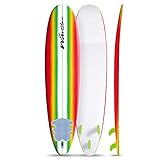
Choose your surfing board below!


Disclaimer: Journey Beyond the Horizon is a participant in the Amazon Services LLC Associates Program, an affiliate advertising program designed to provide a means for us to earn fees by linking to Amazon and affiliated sites at no additional cost to you.
Like it? Pin it here⇓! Follow us on Facebook, Twitter and Instagram!


You may also like


Hi, we are Krasen and Ying Ying. Krasen is from Bulgaria, and Ying Ying is from China. We are passionate about geography and history, and we believe that the best way to experience it is by exploring the Earth in reality, not in a school, and not virtually.
So, we created this blog Journey Beyond the Horizon, where we share geographical knowledge, travel guides and tips how to experience it when you explore our planet, and a lot of inspiration.
And we wish you a happy journey, not just virtually, but most of all- in reality.
Enjoy!
Krasen and Ying Ying
Hi, we are Krasen and Ying Ying. Krasen is from Bulgaria, and Ying Ying is from China. We are passionate about geography and history, and we believe that the best way to experience it is by exploring the Earth in reality, not in a school, and not virtually. So, we created this blog Journey Beyond the Horizon, where we share geographical knowledge, travel guides and tips how to experience it when you explore our planet, and a lot of inspiration. And we wish you a happy journey, not just virtually, but most of all- in reality. Enjoy!

The bigger the wave, the more support you need from your beginner surfboard. Be sure to check out the trucks to see if you want a set that has wider and deeper “tubes” for the “wave” you’re planning on riding.
Beginner surfboards are usually made of cheaper materials than other surfboards, because the beginner is just starting out. There are many different types of beginner surfboards that you can purchase, from ones that are made out of all plastic to ones that are made out of wood.