
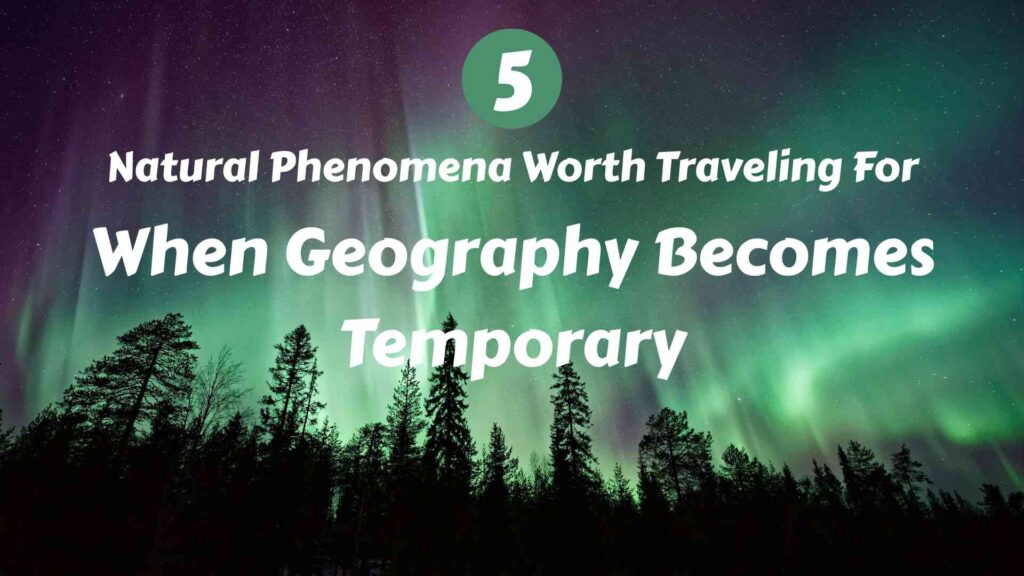
Some places can be visited at almost any time. Mountains, deserts, coastlines, cities, and ruins may change with weather and light, but they remain fixed on the map.
Other experiences are different. They are not permanent destinations, but temporary geographic events. They appear only when natural systems align: solar wind and polar darkness, rainfall and migration, ocean chemistry and moonlight, river cycles and animal movement, or the exact shadow of the Moon crossing the Earth. This is one of the clearest ways to explore the geography of the Earth: not as a static map of places, but as a living system of movement, timing, climate, terrain, and natural cycles.
To witness them, travel is not only about choosing a place. It is about understanding timing, season, latitude, weather, access, and movement — the same logic that sits behind any serious overland route plan, even when the journey is built around a short-lived natural event rather than a long-distance crossing.
Here are five natural phenomena worth crossing regions, seasons, and sometimes continents to experience.
Table of Contents
The Northern Lights
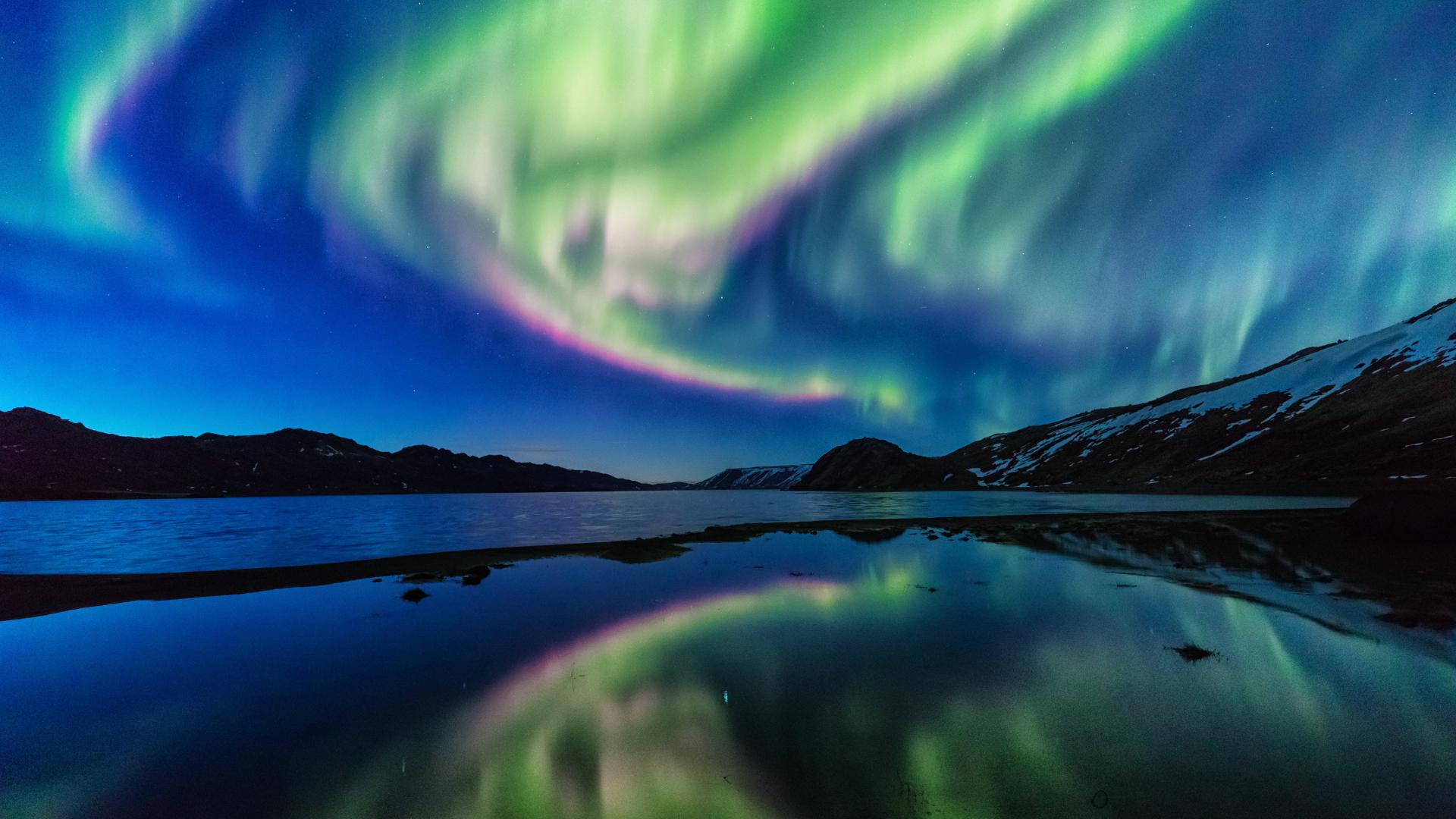
The northern lights are often described as one of the most beautiful sights in the night sky, but they are more than a visual spectacle. They are a meeting point between the Sun, the Earth’s magnetic field, and the upper atmosphere.
Auroras form when charged particles from solar activity are guided toward the polar regions by Earth’s magnetic field. When these particles interact with gases high in the atmosphere, they create shifting curtains of green, violet, red, and white light. What we see from the ground is the visible edge of a planetary-scale system.
Geographically, this makes the aurora a phenomenon of latitude. The best viewing zones lie close to the auroral oval, across places such as northern Norway, Iceland, Finnish Lapland, northern Canada, Alaska, and parts of Greenland. These are not random scenic locations. They sit within the high-latitude belt where polar darkness, magnetic activity, and open sky can combine. These same northern latitudes have also shaped human movement, settlement, navigation, and frontier cultures, from Arctic-edge communities to the Viking routes and settlements of the North Atlantic world.
For travelers, the main challenge is not simply “going north.” It is positioning yourself correctly. Winter brings long nights, but also storms, snow, and cloud cover. Coastal regions may offer dramatic landscapes but unstable weather. Inland areas can be colder but sometimes clearer. Artificial light, moonlight, cloud layers, and solar activity all affect the experience.
This is why aurora travel often becomes a waiting game. You may spend days moving between valleys, coastlines, frozen lakes, or small northern settlements, watching weather forecasts and cloud maps. The phenomenon cannot be forced. The traveler must adapt to the sky.
The Great Migration in East Africa
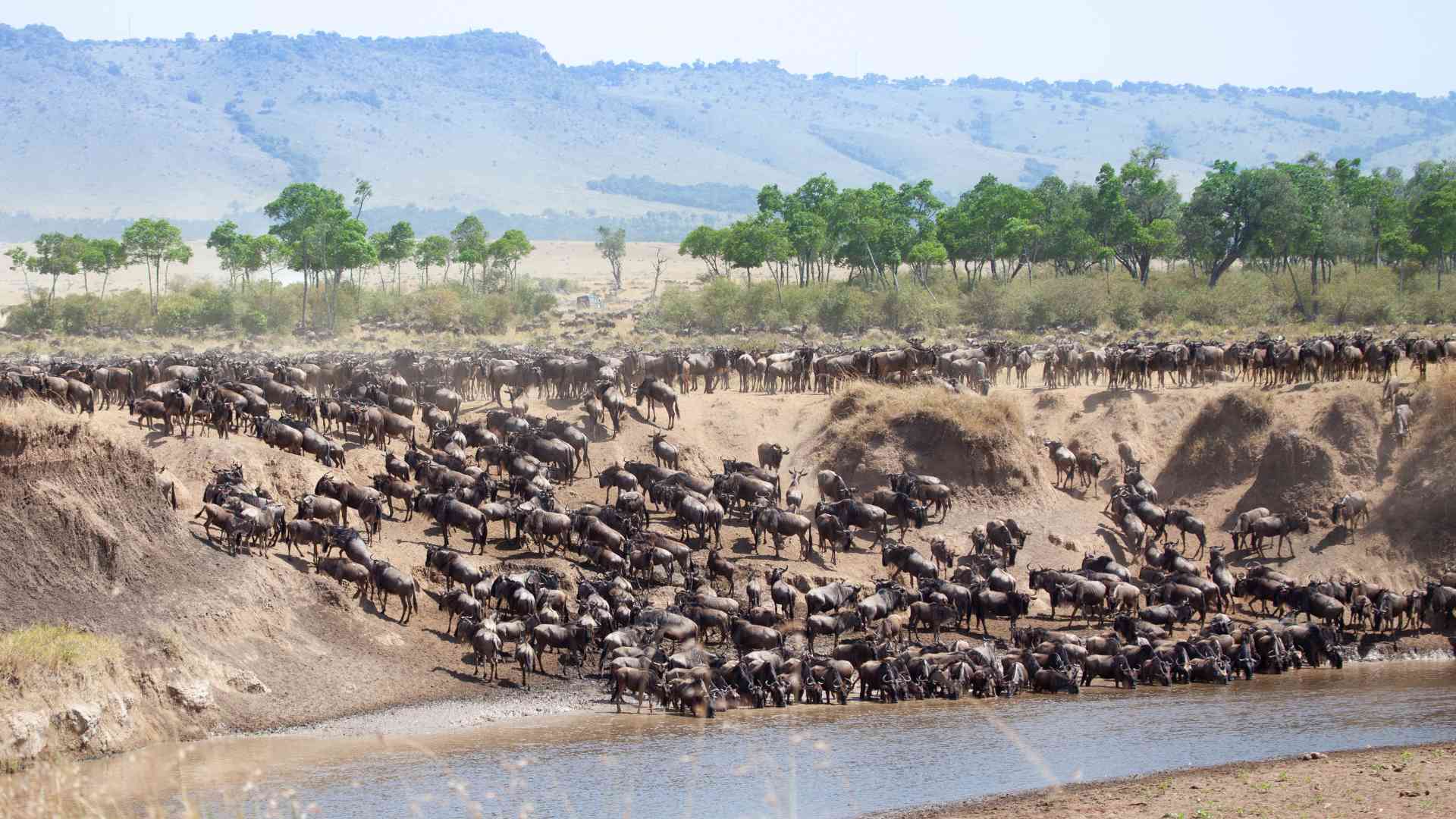
The Great Migration is usually presented as a wildlife spectacle, but at its core it is a geographic movement system. Across the Serengeti-Mara ecosystem, wildebeest, zebras, and gazelles follow a shifting pattern of rain, grass, water, and survival.
The movement is not a single event in one place. It is a continuous cycle across northern Tanzania and southern Kenya. The herds move because the landscape itself changes through the year. Rainfall produces fresh grazing. Dry seasons concentrate animals near remaining water. Rivers become barriers. Open plains become feeding grounds. Predators adjust their movements around the same seasonal pulse. For travelers, this also makes access part of the geography: reaching the right section of the ecosystem, whether in Tanzania or in Kenya’s more remote wildlife regions, can matter as much as choosing the right month.
This is what makes the Great Migration so powerful: it is not only a mass of animals moving across the savanna, but an entire ecosystem responding to climate and terrain.
For travelers, timing matters more than almost anything else. The calving season in the southern Serengeti, the movement northward through the plains, the famous river crossings, and the arrival into the Maasai Mara all happen in different phases. Even then, the migration is never fully predictable. Rainfall may come early or late. Herds may pause, split, or move along slightly different routes.
The most dramatic moments, such as river crossings, are also the most dependent on geography. A river is not just a background feature. It is a terrain obstacle, a predator corridor, and a pressure point in the migration route. The animals must cross because the grazing system pulls them onward.
To witness the migration properly, the traveler has to think like the landscape: where has the rain fallen, where is the grass growing, where are the rivers passable, and where will the herds need to move next?
A Total Solar Eclipse
A total solar eclipse is one of the rare natural events where geography becomes extremely precise. The difference between seeing totality and missing it can be a matter of kilometers.
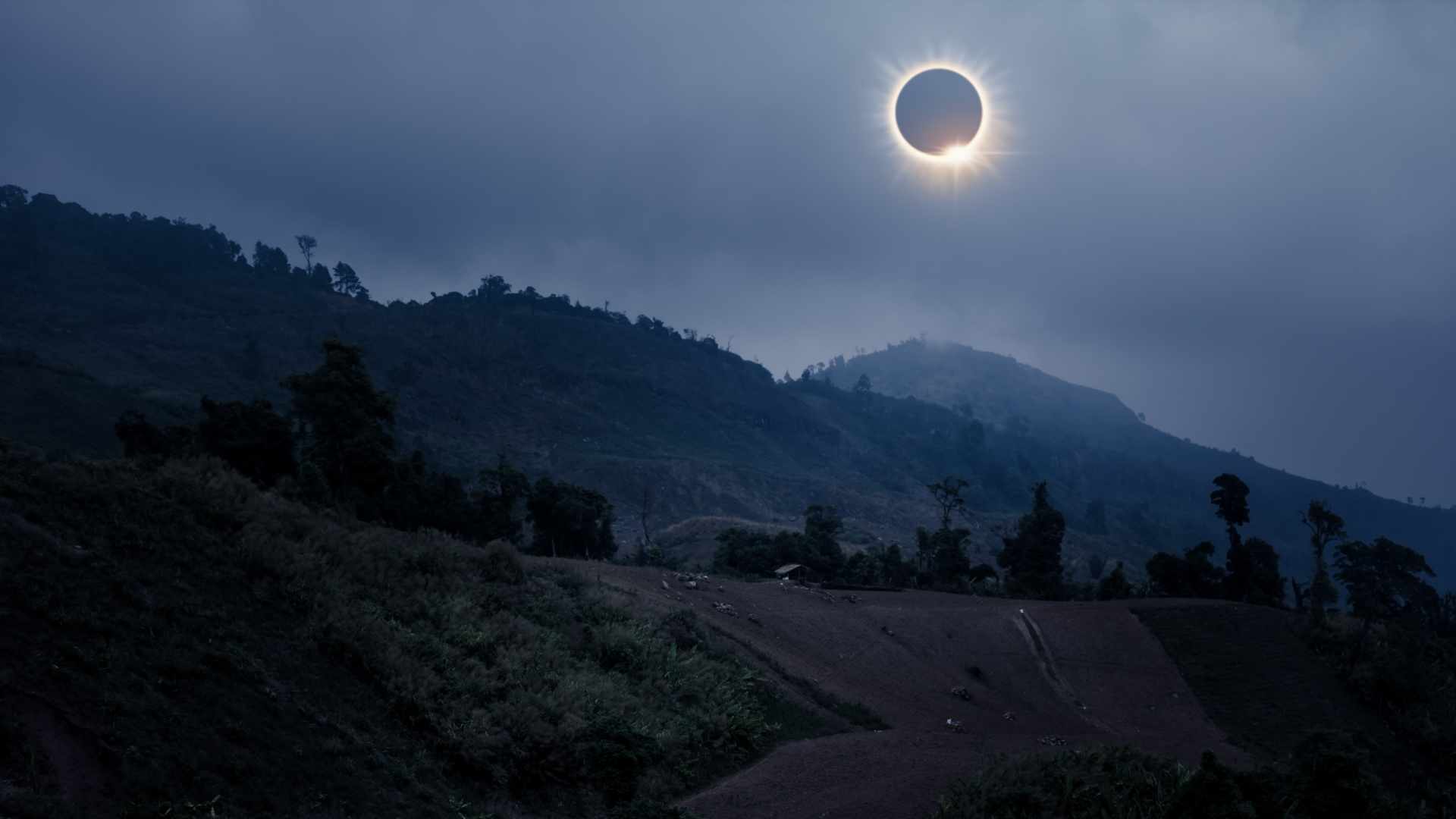
For a few minutes, the Moon’s shadow crosses the surface of the Earth. Inside the narrow path of totality, daylight fades, the temperature can drop, shadows sharpen, animals may react, and the Sun’s corona becomes visible. Outside that path, even a very deep partial eclipse is a different experience.
This makes eclipse travel a form of geographic positioning. You are not just traveling to a country or region. You are traveling to a specific strip of Earth at a specific moment.
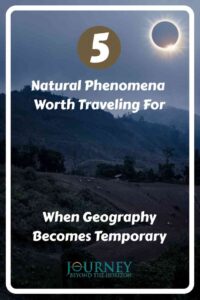
The total solar eclipse of August 12, 2026 is a good example. Its path crosses high-latitude and North Atlantic regions including Greenland and Iceland before reaching northern Spain and a small part of Portugal. For travelers researching solar eclipse travel destinations, the decision is not only about scenery. It is about cloud probability, horizon lines, road access, accommodation pressure, and how much flexibility they have to move if the weather changes.
Iceland offers dramatic volcanic and coastal landscapes, but also more uncertain weather. Spain offers stronger summer odds in some regions, but the eclipse occurs with the Sun low in the sky, close to sunset. That means mountains, buildings, coastal cliffs, haze, or the wrong side of a ridge can matter. A technically perfect location inside the path of totality may still fail if the western horizon is blocked.
This is why eclipse travel often attracts people who are willing to build entire journeys around one short interval of darkness. A total eclipse is not a place. It is a moving shadow. To experience it, humans must move into its path.
Bioluminescent Bays
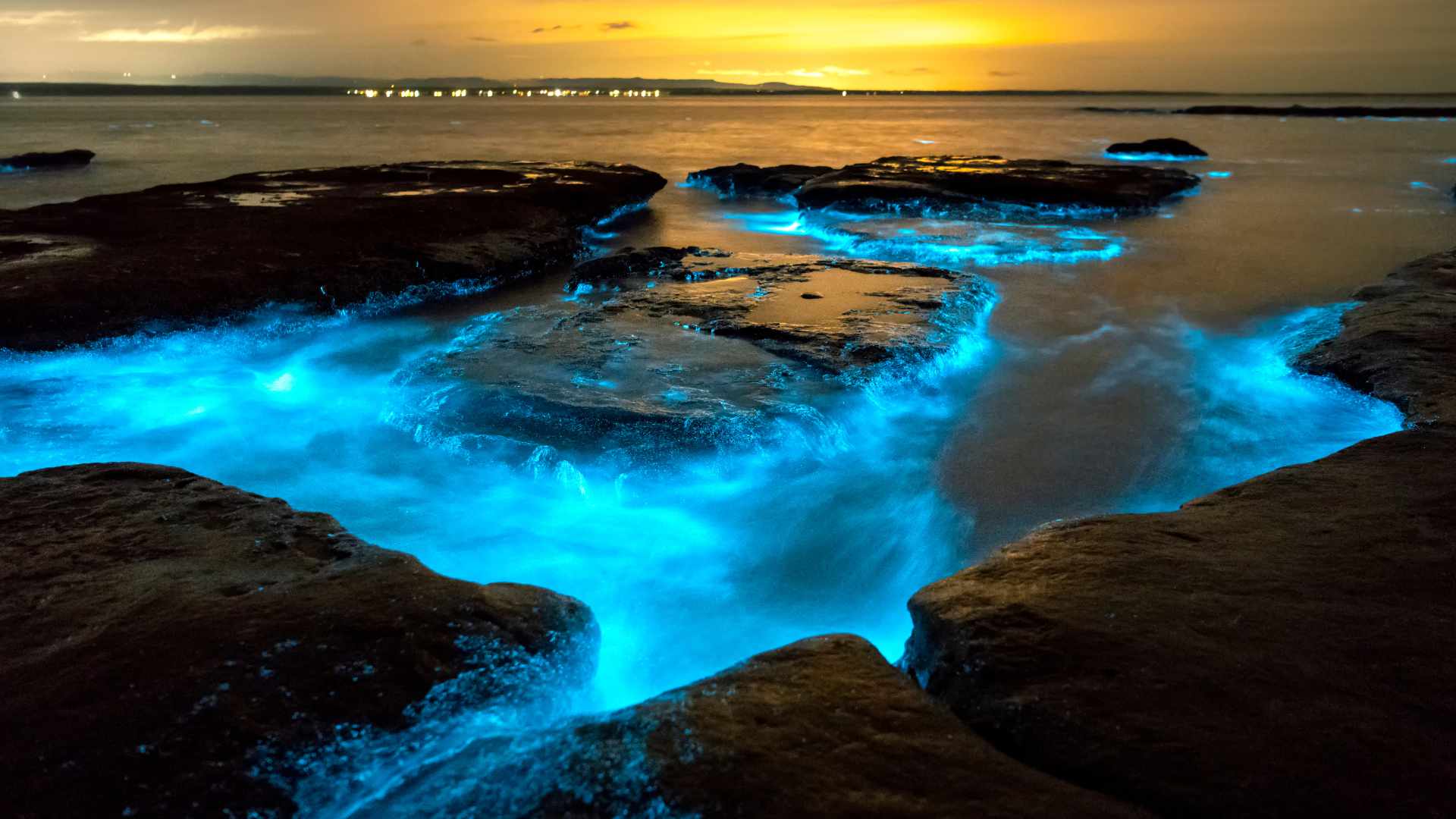
Bioluminescent bays show how small organisms can transform an entire coastal landscape at night. In certain sheltered waters, microscopic plankton emit light when disturbed, causing the sea to glow around paddles, hands, fish, or moving boats.
The effect can look almost unreal, but it depends on very specific environmental conditions. The water must support high concentrations of bioluminescent organisms. The bay often needs to be sheltered enough for these organisms to accumulate. Mangroves, salinity, water temperature, limited exchange with the open sea, and low light pollution can all play a role.
Puerto Rico is one of the best-known regions for this phenomenon, especially Mosquito Bay on Vieques Island. Similar displays are also associated with parts of the Maldives, where marine travel, reef environments, night conditions, and careful trip planning often shape the experience as much as the islands themselves. But the important point is that not every tropical beach can glow. The geography has to be right.
For travelers, the timing is again crucial. The darkest nights around the new moon usually offer better visibility. Bright moonlight can reduce the effect, and heavy rain, pollution, strong water movement, or excessive boat traffic can weaken the display. In some places, tourism itself has become part of the problem, because the same access that brings people to the bay can disturb the fragile conditions that make the glow possible.
A bioluminescent bay is therefore not just a beautiful place to kayak. It is a delicate coastal system. To experience it well, travel planning should consider moon phase, local regulations, responsible operators, and the ecological limits of the site.
The Annual Salmon Run
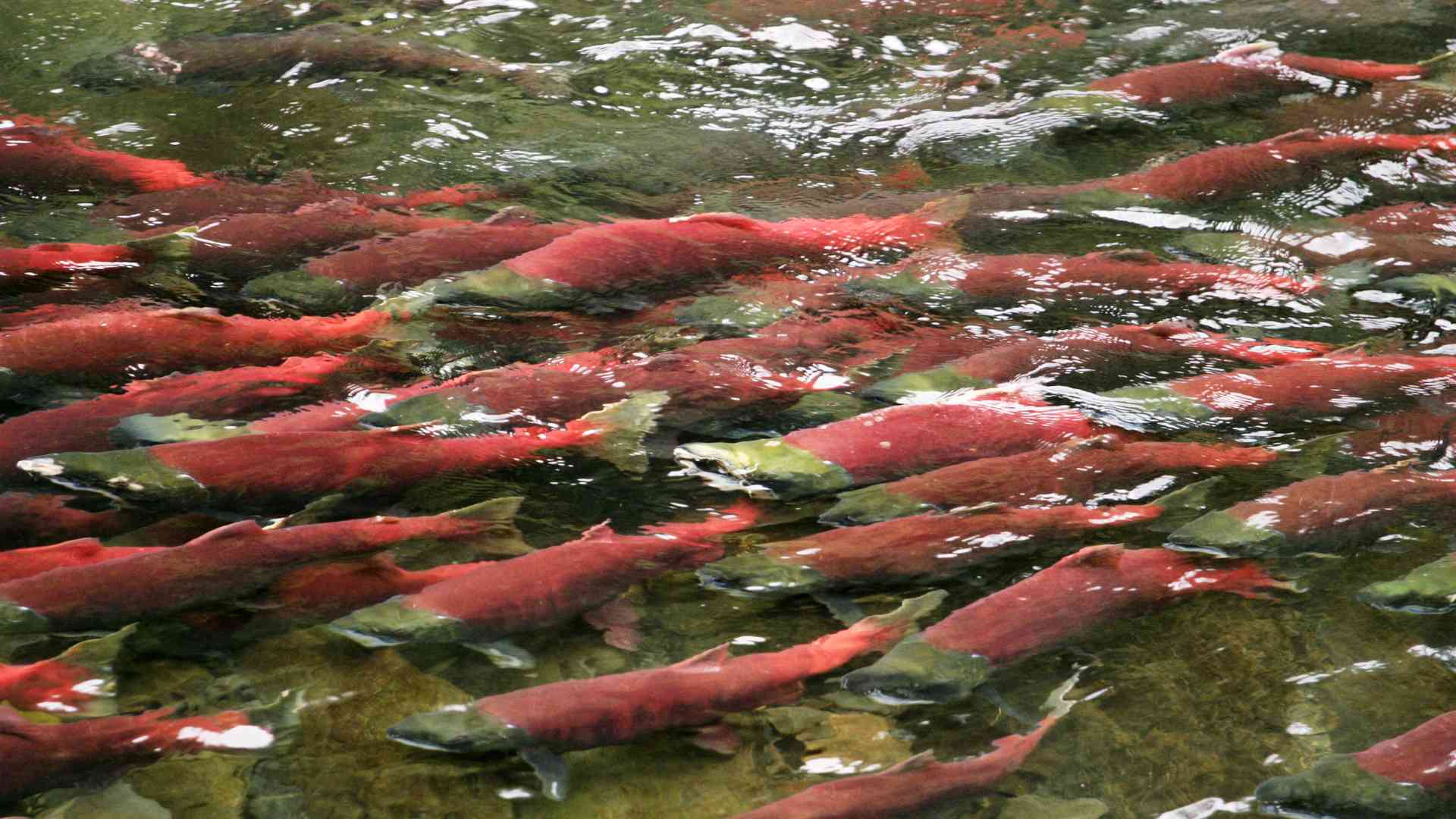
The annual salmon run is one of the clearest examples of movement linking ocean, river, forest, and wildlife into a single seasonal system.
Each year, salmon leave the ocean and return to the rivers where they were born. They move upstream through currents, rapids, gravel beds, and narrow channels, often covering difficult terrain in order to spawn. For the fish, this is the final stage of a life cycle. For the surrounding ecosystem, it is a seasonal transfer of energy from the ocean back into the land.
This movement shapes entire regions of Alaska, British Columbia, and the Pacific Northwest. Bears gather at riverbanks and waterfalls. Eagles and other birds feed along the migration corridors. Forests receive nutrients carried inland by fish and distributed by predators, scavengers, and decomposition. What appears to be a river event is actually a landscape event.
For travelers, the salmon run is highly regional and seasonal. Different salmon species return at different times. Some rivers are famous for bear viewing, others for fishing, photography, or observation platforms. Weather, road access, park rules, and local safety regulations all matter.
Unlike a monument or viewpoint, the salmon run cannot simply be visited whenever convenient. It requires matching the right river, the right season, and the right ecological phase. Arrive too early and the river may be quiet. Arrive too late and the peak movement may have passed.
To see it properly is to understand that rivers are not only channels of water. They are migration corridors, food routes, and seasonal connectors between sea and mountain interior.
Last Word
The most powerful natural phenomena are not always fixed places. Some are temporary alignments of sky, climate, water, animals, light, and terrain.
The northern lights depend on polar latitude, solar activity, darkness, and clear sky. The Great Migration follows rainfall and grazing across a vast savanna system. A total solar eclipse demands exact positioning inside a moving shadow. Bioluminescent bays require fragile coastal chemistry and darkness. The salmon run links ocean, river, forest, and wildlife through seasonal movement.
In each case, travel becomes more than sightseeing. It becomes a response to the Earth’s timing.
These experiences remind us that geography is not static. It moves, pulses, migrates, glows, darkens, and returns. To witness it, we have to move with it.
Like it? Pin it here⇓! Follow us on Facebook, X and Instagram!
You may also like

Hi, we are Krasen and Ying Ying. Krasen is from Bulgaria, and Ying Ying is from China. We are passionate about geography and history, and we believe that the best way to experience it is by exploring the Earth in reality, not in a school, and not virtually.
So, we created this blog Journey Beyond the Horizon, where we share geographical knowledge, travel guides and tips how to experience it when you explore our planet, and a lot of inspiration.
And we wish you a happy journey, not just virtually, but most of all- in reality.
Enjoy!
Krasen and Ying Ying
Hi, we are Krasen and Ying Ying. Krasen is from Bulgaria, and Ying Ying is from China. We are passionate about geography and history, and we believe that the best way to experience it is by exploring the Earth in reality, not in a school, and not virtually. So, we created this blog Journey Beyond the Horizon, where we share geographical knowledge, travel guides and tips how to experience it when you explore our planet, and a lot of inspiration. And we wish you a happy journey, not just virtually, but most of all- in reality. Enjoy!

