

Updated October 2026: This packing guide is based on my solo ascent of Mount Kerinci in August 2023, with additional information on equipment and safety. The national park reopened its hiking routes in October 2026 following a temporary closure, with renewed emphasis on registration procedures and fire prevention. Before your hike, check the current access conditions, volcanic activity, and park regulations, particularly those concerning camping and the use of cooking equipment.
Reaching the top of Mount Kerinci, the highest volcano in Southeast Asia is a very special experience. You are guaranteed breathtaking views, the beauty of geographical zones, a difficult climb, and a lot of fun. Needless to say, such an adventure requires a certain preparation- arranging the transportation, accommodation, tickets and health certificate, and of course, the things you have to bring. In this article, we will focus on the packing list you have to prepare for hiking Mount Kerinci.

Table of Contents
Mount Kerinci hike overview
Let’s start with the basics. Mount Kerinci is the highest volcano in the whole of Southeast Asia, and the highest point in the island of Sumatra. The elevation on its top is 3805 m. It is located at the border between West Sumatra and Jambi provinces.
At the same time, it is located near the Equator of the Earth, in a wet climatic zone with frequent rains. However, its altitude is not enough high to form glaciers or eternal snow. There aren’t even snowfalls (or if ever falls some snow, it is wet and doesn’t leave any snow cover).
Rainfall is frequent, and conditions become considerably colder with altitude. Near the summit, temperatures can approach freezing and may occasionally fall below it, particularly at night. Strong winds, rain, and wet clothing can make the conditions feel even colder. Even temperatures of 5–8°C can be unpleasant and potentially dangerous if you are exposed to wind and rain without adequate insulation and waterproof protection.

The trail
Like most volcanoes, Mount Kerinci’s slopes are steep, so the trail to the top is steep too. The trail starts from about 1580 m (or 1820 m in Pintu Rimba, if you reach this point by a jeep or motorcycle), and passes through three natural altitude zones:
Zone 1 is from 1820 to around 2400 m. Here the trail is still less steep and the area around is covered by lush and deep mountain rainforest.
Zone 2 is from 2400 to around 3200 m. Here the trail is steeper, and the mountain rainforest gradually turns into a “mossy forest”, where the trees get shorter and shorter. Eventually, they turn into a bush, and finally, the bush disappears.
Zone 3 is the highest- from 3200 m to the top. On its lowest part, there are still some bushes here and there, also some grass, but around 3400 m it disappears too.
In Zones 1 and 2, the trail is constantly muddy and in some places- slippery. And in Zone 3, it is dryer but rugged and stony, and still can be slippery.

Level of difficulty
All of this makes the Mount Kerinci trek quite challenging. You have more than 2000 m ascent, and then more than 2000 descent back. So, normally, people make it for two days while spending one night in the middle.
However, there is no accommodation, and the only way to spend the night is by camping. For this purpose, there are several shelters and campsites along the trail (proper places where you can install your tent). Only some physically well-fit and experienced people can make it within one day without spending the night there (but including a night hiking).
 Exploring the Earth is fantastic! However, there are various hidden dangers that may ruin your journeys. Don’t allow that to happen, or at least reduce the consequences as much as possible!
Include a travel insurance as a part of your trip preparation by pressing the button below:
Mount Kerinci Packing List
Planning the packing list for Mount Kerinci is a part of your Kerinci or the whole of West Sumatra itinerary. It can be different, depending on your experience and strength, and whether you hike solo or in a group. You don’t need a tent, a sleeping bag, or other camping accessories if you can make it within one day without spending the night there. Also, if you join a group, normally, some porters help you bring a part of your luggage, or you can share each other’s luggage. For the broader terrain-based logic behind footwear, rain protection, waterproof packing, shelter and power management in humid mountain rainforest, see our guide to gear for hot, wet and roadless terrain.
But what if you are a solo hiker who has to spend the night there?

Footwear
Let’s start with the footwear. You have to hike on a steep, rugged, slippery, muddy, or stony (in the high zone) trail. No matter what shoes or boots you wear, they WILL become dirty and muddy- there is no way to keep them clean. Most probably, they will also get wet, because the chance of rain is quite high. So, if you want to walk more stable and keep your feet dry, you need some hiking shoes or boots with good traction and good waterproof features.
Let’s see some examples:


⇑ CLICK ON THE IMAGES ABOVE FOR MORE DETAILS! ⇑
However, don’t be surprised to see various kinds of different and strange hikers on the way. I personally saw happy young hikers wearing only slippers, or even barefoot.
Anyway, don’t forget to bring more socks, especially if you are going to camp!
Clothing
As mentioned above, temperatures don’t drop below freezing but it can still be quite cool, even cold, especially at night. Ok, while you hike (especially while you ascend), you can get hot and even sweaty, but when you stop camping, you can feel cold, especially if there is wind (in Camp 3, above the tree zone).
During the ascent, you may feel comfortable in lightweight hiking clothes, although long sleeves and trousers offer better protection against vegetation, mud, and insects. Once you stop, especially at the higher camps, the situation changes. Bring a dry set of clothes, warm socks, long trousers, an insulating layer such as a fleece or lightweight insulated jacket, and reliable wind and rain protection. For an overnight stay, choose your clothing according to the expected temperatures and your personal tolerance of cold, remembering that wet conditions can greatly reduce comfort and warmth.
Just think about “November” in the moderate zone of the North Hemisphere, or “May” in the moderate zone of the Southern Hemisphere. If you feel hot while hiking, you can always insert the “autumn” clothes into your backpack, and take them out when stop for a rest or camp.
Let’s see some clothes proper for Mount Kerinci:
Hiking shirts:


⇑ CLICK ON THE IMAGES ABOVE FOR MORE DETAILS! ⇑
Hiking pants:

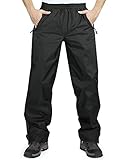


⇑ CLICK ON THE IMAGES ABOVE FOR MORE DETAILS! ⇑
Light hiking jackets:


⇑ CLICK ON THE IMAGES ABOVE FOR MORE DETAILS! ⇑
Rain protection
This is mandatory, if you want to stay dry. Actually, even if it doesn’t rain, the forest remains wet from the last rains and you will certainly touch it. Sometimes, you can be lucky to catch 2-3 days without rain, but you never know, and the weather forecast is not so reliable here.
So, you need a raincoat. But not a “poncho”-style, because it would make it difficult to climb the steep muddy trail, especially in some more difficult sections like narrow chutes or tree roots.
The best raincoat consists of a rain jacket and rainproof pants. In addition, you need protection for your backpack- many good backpacks provide such a rain cover. Of course, you don’t need to wear all of this if the sun is shining, you can bring it in your backpack but keep in mind that weather can change quickly, so prepare it in a more convenient place (not in the bottom of the backpack).
Let’s see some good raincoats:


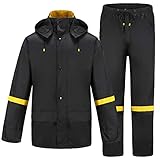

⇑ CLICK ON THE IMAGES ABOVE FOR MORE DETAILS! ⇑
Camping gear
All of the above is for every hiker, no matter whether you are solo or join a group. And if you are a solo hiker who can make the whole trek for one day, you can skip this section. But if you plan to spend one night on the slopes of Mount Kerinci, you need camping gear- a proper tent, a sleeping bag, and a sleeping pad (or a self-inflating sleeping mat).
You would need a lightweight tent, to reduce the weight as much as possible, and it must be waterproof. Let’s see some proper tents below:

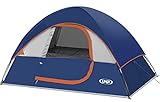


⇑ CLICK ON THE IMAGES ABOVE FOR MORE DETAILS! ⇑
Again, if you join a group, you can share the luggage with others.
See the best backpacks for two-days hike!
Accessories and alternatives
If you have to bring the camping gear yourself and still want to reduce the weight, an alternative option is to bring a bivy (bivy sack). Again, it must be waterproof.
Bringing just a tarp is not so proper– you still need something to put on the wet and muddy ground. A hammock is not so proper too– you most probably would spend the night in the highest part of the tree zone and it may be difficult to find proper trees to install your hammock.
You don’t necessarily need an expedition-grade sleeping bag, but its temperature rating should match the conditions at your chosen campsite. For the higher camps, a sleeping bag with a Comfort rating around 0°C, combined with a well-insulated sleeping pad, can provide a more useful safety margin than a lightweight summer bag. Check the expected overnight temperatures before your hike, and remember that a sleeping bag’s rating assumes suitable ground insulation and reasonably dry conditions. Let’s see some sleeping bags:


⇑ CLICK ON THE IMAGES ABOVE FOR MORE DETAILS! ⇑
Concerning the sleeping pad- a normal sleeping pad is ok too, especially if you sleep in Camp 1 or 2 (or the additional small camp below Camp 2).
But Camp 3 is almost above the tree line and here the ground is a bit stony and uneven. So, if you want to feel more comfortable, probably you would need a self-inflatable sleeping pad:
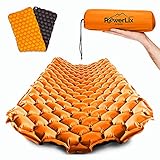


⇑ CLICK ON THE IMAGES ABOVE FOR MORE DETAILS! ⇑
However, keep in mind that is a bit heavier than the normal sleeping pads- you have to choose between comfort and weight.
Various accessories
If you want a better and safer experience on Mount Kerinci, you would need some additional things to bring that are normal for such types of hikes.
Hiking poles
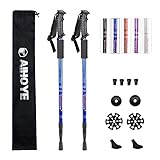
Do you really need hiking poles? They can help a lot, especially in such a difficult terrain. Keep in mind that they will sink deep into the mud and if they are not enough durable, they can bend or even break. At the same time, they can be very useful to keep you stable on the slippery trail.
However, there are some sections where the poles are useless and even inconvenient, especially between Camp 1 and Camp 3. In these sections, you literally have to climb up or down, using both hands to hold on trees, roots, or stones. Here you can stow the poles and open them again later (although it can be a bit inconvenient too). Anyway, let’s see some trekking poles:



⇑ CLICK ON THE IMAGES ABOVE FOR MORE DETAILS! ⇑
Cooking set
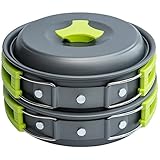
A cooking set is optional, and carrying one adds weight to your backpack. Warm meals and drinks can be useful during an overnight hike, but cooking must comply with the national park’s current fire-prevention rules. The authorities have emphasized strict precautions against forest fires, so check whether portable gas stoves are permitted before bringing one. If their use is restricted, prepare food that does not require cooking or heating.


⇑ CLICK ON THE IMAGES ABOVE FOR MORE DETAILS! ⇑
The main problem is that you also need a gas can (gas stove canister). Gas canisters cannot be carried on passenger flights, so you would need to obtain one locally if stove use is permitted. Any unused canister should be disposed of or handed over responsibly rather than abandoned in the national park.
Electronics
Bringing your mobile phone is always good- for navigation, photos, communication (although there is no good mobile range on most of the trail), or just entertainment (some music, videos, etc.). But there is one mandatory thing- a headlamp.
Headlamp
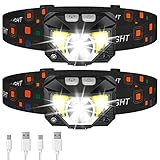
No matter how long you hike Mount Kerinci, walking or just staying (camping, resting, sleeping) in the darkness is inevitable. And of course, a headlamp is much more convenient than any other source of light (mobile, torch, etc.), because your hands will be free. So, let’s see some good headlamps:


⇑ CLICK ON THE IMAGES ABOVE FOR MORE DETAILS! ⇑
Charger (power bank)
This is also highly advisable, especially if you are going to spend one night on the slope of Kerinci. And you would need it not only for charging your mobile but also your headlamp if it is chargeable (losing the light in the darkness while walking or installing your tent is not so nice, actually, it can be a bit scary and dangerous). So, let’s see some power banks (from 15 000 to 30 000 mAh):


⇑ CLICK ON THE IMAGES ABOVE FOR MORE DETAILS! ⇑
How about a solar panel? It is not so useful in such a rainy area like Mount Kerinci. Again, yes, there is a good chance to hike on a nice sunny day, of course, but even without rain, most of the time you will be under the deep shadow of the mountain rainforest.
First aid kit
I know this is something that many travelers ignore. It adds additional weight to your backpack and occupies some space inside. So, you can decide by yourself, but keep in mind the following:
The trail is difficult, and there are some chances of falling and injuring.
There are no medical facilities along the trail, and an injured hiker may be difficult to evacuate because of the steep, muddy terrain. Although Mount Kerinci attracts many hikers, you should not assume that someone will always be nearby to help. Carry basic first-aid supplies, keep your navigation and communication devices charged, and make sure someone knows your planned route and expected return time. Mobile reception is unreliable along much of the trail, so emergency communication options are worth considering, especially when hiking alone.
And something additional- don’t forget the high altitude. Everybody is different, but if you are more sensitive to the high altitudes, you may experience some altitude sickness.
Normally, the first aid kits have a standard set of items, mainly for treating injuries, like antiseptic wipes, antibacterial ointment, compound tincture of benzoin, gauze pads, and more. Let’s see some of them:


⇑ CLICK ON THE IMAGES ABOVE FOR MORE DETAILS! ⇑
Food and water
How much food and water you can bring, again depends on your preferences. There are no restaurants, fast food, or food markets on the slopes of Mount Kerinci. You have to prepare and bring everything in advance.
As mentioned above, you can bring some products and cook them (if you bring a cooking set). Or, if you don’t want to add weight and occupy space with a cooking set, you can just bring something ready.
Usually, the small restaurants and fast foods in Kersik Tuo offer roasted chicken, nasi goreng (rice with chicken), and more and you can buy it “for home” (if you are a vegetarian, you can always buy something meatless) – after all, you would normally have only two lunches, one dinner, and one breakfast (if you spend one night on the slopes of the mountain).

Water is essential, even in Mount Kerinci’s cool and humid environment. The steep ascent requires considerable physical effort, and you can lose substantial amounts of fluid through sweating without noticing it.
During my hike in August 2023, I found a natural water source at Pos 2, in the lower forest zone. The stream was cold and clear, and it was an important place to refill before continuing uphill. However, clear mountain water is not necessarily free of harmful microorganisms, so filtering or properly treating it is advisable.
I did not encounter another reliable water source higher along the trail. Therefore, plan to carry enough water from Pos 2 for the remaining ascent, your overnight stay if applicable, and the descent back to a dependable source. Water availability may vary with weather and local conditions.

Those are the most essential things you have to bring for your Mount Kerinci trek. Some things are mandatory, other things depend on your preference and hiking plan (solo or group, one day or two days). At the same time, you have to balance it with weight and your strength to bring heavy luggage on a difficult hike. Hope this guide can help you to plan this part of your Mount Kerinci (and the neighboring places of interest like Lake Gunung Tujuh and more) adventure well and enjoy a wonderful experience.
Disclaimer: Journey Beyond the Horizon is a participant in the Amazon Services LLC Associates Program, an affiliate advertising program designed to provide a means for us to earn fees by linking to Amazon and affiliated sites at no additional cost to you.As an Amazon Associate I earn from qualifying purchases.
Like it? Pin it here⇓! Follow us on Facebook, Twitter and Instagram!


You may also like


Hi, we are Krasen and Ying Ying. Krasen is from Bulgaria, and Ying Ying is from China. We are passionate about geography and history, and we believe that the best way to experience it is by exploring the Earth in reality, not in a school, and not virtually.
So, we created this blog Journey Beyond the Horizon, where we share geographical knowledge, travel guides and tips how to experience it when you explore our planet, and a lot of inspiration.
And we wish you a happy journey, not just virtually, but most of all- in reality.
Enjoy!
Krasen and Ying Ying
Hi, we are Krasen and Ying Ying. Krasen is from Bulgaria, and Ying Ying is from China. We are passionate about geography and history, and we believe that the best way to experience it is by exploring the Earth in reality, not in a school, and not virtually. So, we created this blog Journey Beyond the Horizon, where we share geographical knowledge, travel guides and tips how to experience it when you explore our planet, and a lot of inspiration. And we wish you a happy journey, not just virtually, but most of all- in reality. Enjoy!

