
Travel through hot, wet and roadless terrain is shaped by more than rainfall. Heat, humidity, mud, dense vegetation, rivers and unreliable transport links affect how travellers move, carry equipment, protect essential items and continue when roads become tracks—or disappear entirely.
The right gear system therefore begins with the route, not with a generic packing list. It must remain useful during movement on foot, rough-road travel, boat crossings, long periods of waiting, overnight camping and repeated transfers between different forms of transport.
This guide explains how to build such a system: what must remain dry, what can continue functioning when wet, how to manage rain without trapping excessive heat, and how to keep the complete load portable when the route changes from road to river, boat or walking.
Table of Contents
Understanding Hot, Wet and Roadless Terrain
Hot, wet and roadless terrain creates a chain of connected problems rather than one isolated challenge. Heat affects pace and clothing, humidity prevents reliable drying, mud reduces traction, vegetation limits visibility, and rivers interrupt—or sometimes replace—roads.
These conditions also change along the route. A journey may begin on pavement, continue along a muddy track, cross water by canoe and finish on foot. Understanding those transitions is the first step towards choosing equipment that remains useful throughout the journey.
Where These Environments Are Found
The largest continuous areas of hot, wet and sparsely connected terrain lie in the Amazon and Congo basins, Indonesia and New Guinea. Comparable conditions also occur across Central America, mainland Southeast Asia, the Philippines and many other tropical islands.
They are not limited to the Equator. Seasonal heat and heavy rainfall can create similar conditions farther north or south, including parts of southern China during summer. The road network may be more developed than in central New Guinea or the Congo Basin, but muddy trails, dense vegetation, humidity and frequent rain still create many of the same equipment problems.
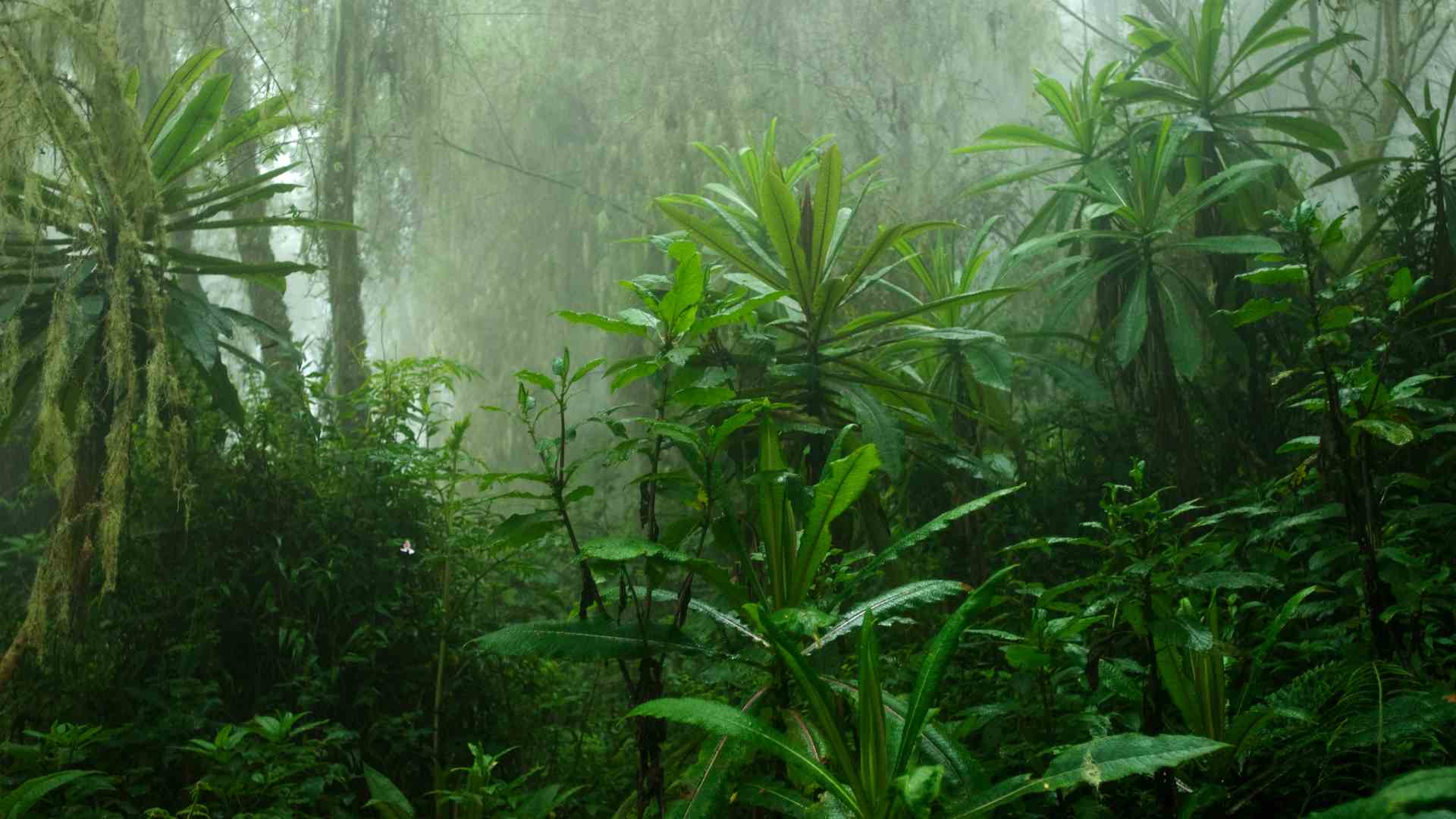
Elevation changes the environment without necessarily removing moisture. In equatorial mountain regions, wet forest can extend above 2,000 metres, gradually becoming montane or cloud forest. Temperatures fall, but saturated ground, condensation, mud and slow drying remain central concerns. Routes such as Mount Kerinci may therefore combine tropical moisture management with protection against cooler conditions.
The system discussed here applies wherever persistent moisture, difficult ground, dense vegetation and interrupted access shape movement, even when the heat is seasonal or reduced by altitude.
Heat and Constant Humidity
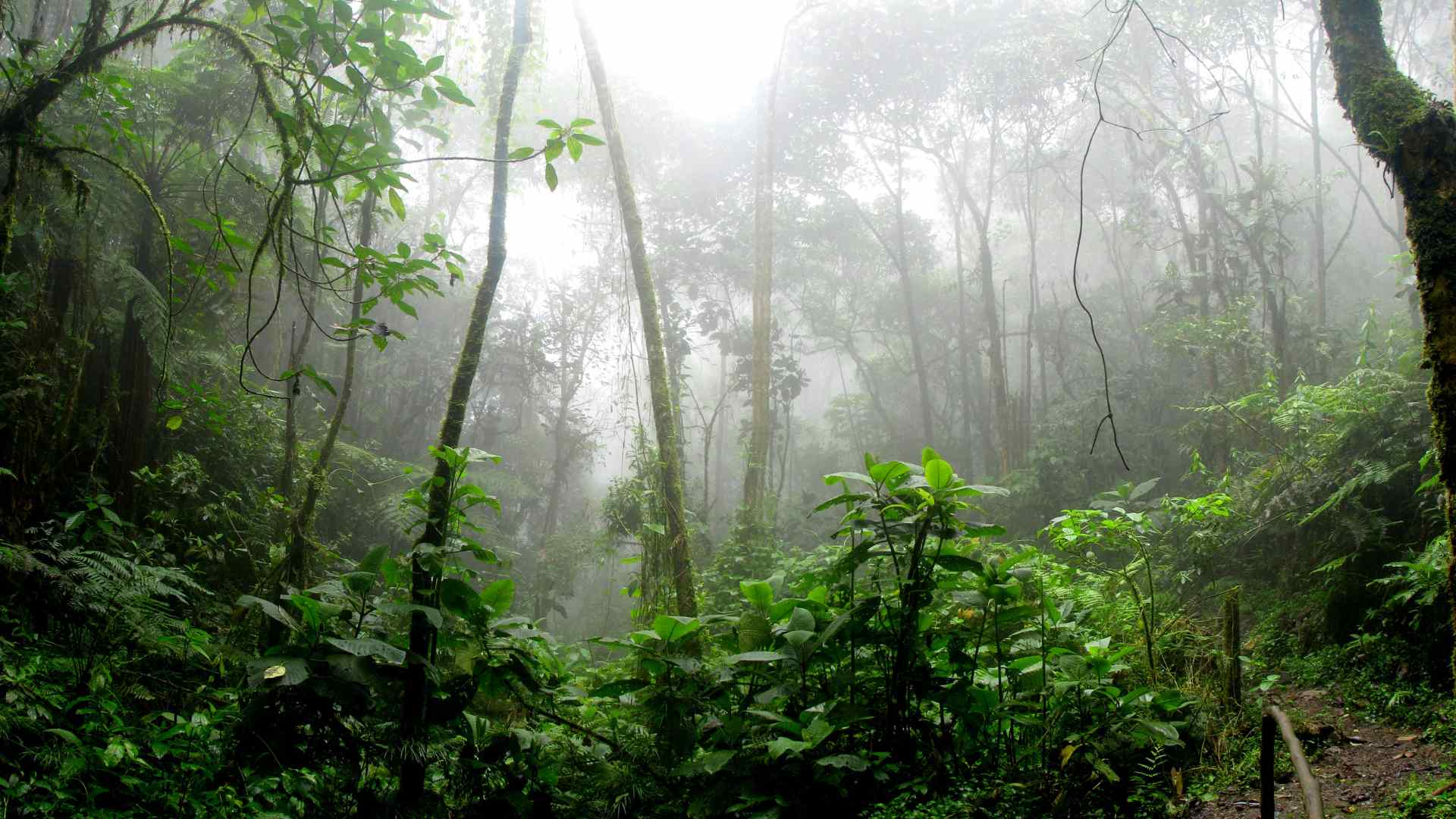
Lowland tropical environments are often hot, but humidity may be the more persistent problem. Moisture comes not only from rain, but also from perspiration, wet vegetation, saturated ground and the surrounding air.
Clothing can remain damp for hours or fail to dry between travel days. Waterproof layers may stop external rain while trapping heat and perspiration inside, especially during climbing, load carrying or movement through mud.
The challenge is therefore not simply to keep water out. It is to manage continuous moisture without overheating or depending on equipment that functions only when fully dry.
Rain, Mud and Saturated Ground
Rainfall varies by region and season, but prolonged wet periods can keep the landscape saturated even between storms. Water remains in the soil, vegetation, streams and low ground, so the route may never become completely dry.
Roads and tracks turn into deep mud, low sections flood, and slopes become slippery. Wet roots, rocks, fallen trees and wooden bridges may be more difficult to cross than they appear. Footwear can be soaked repeatedly by rain, puddles, vegetation and river crossings.
At higher elevations, the same moisture becomes colder. Heat stress may decrease, but wind, cold rain and wet clothing create a stronger problem during stops and overnight periods. Equipment must therefore respond not only to water, but also to the temperatures in which that water is encountered.
Dense Vegetation
Wet tropical vegetation is not uniform. Lowland rainforest may form a tall, layered forest with vines, undergrowth and limited visibility. Farther from the Equator, the forest may be more seasonal or fragmented, while highland cloud forest often contains shorter trees, mosses, exposed roots and moisture-laden branches.
In each case, vegetation slows movement. Wet leaves brush against clothing and luggage, branches catch loose straps, and hidden roots make footing uncertain. A trail may remain visible only for a short distance ahead, while an old or overgrown path can quickly become difficult to distinguish from the surrounding forest.
Distance on a map therefore says little about the time or effort required to cross the terrain.
Rivers and Land–Water Transitions
Wet tropical regions are divided by rivers, streams, lakes, swamps and seasonally flooded ground. Water may interrupt a road, but in places with few roads it may also provide the main route through the landscape. This broader challenge of continuing independently across land and water requires the route to be planned around changes in movement surface, not around one vehicle alone.
Travel often requires repeated transitions between vehicles, boats and movement on foot. Equipment may need to be carried down unstable banks, passed into narrow canoes or unloaded onto wet ground. Even a short boat journey can expose luggage to rain, spray, standing water or partial immersion.
These transitions place documents, electronics, dry clothing and sleeping equipment at particular risk. Their protection must continue throughout the route, not only during an obvious river crossing. The complete load must also remain compact enough to move when one form of transport can go no farther.
Where Roads Become Unreliable or End
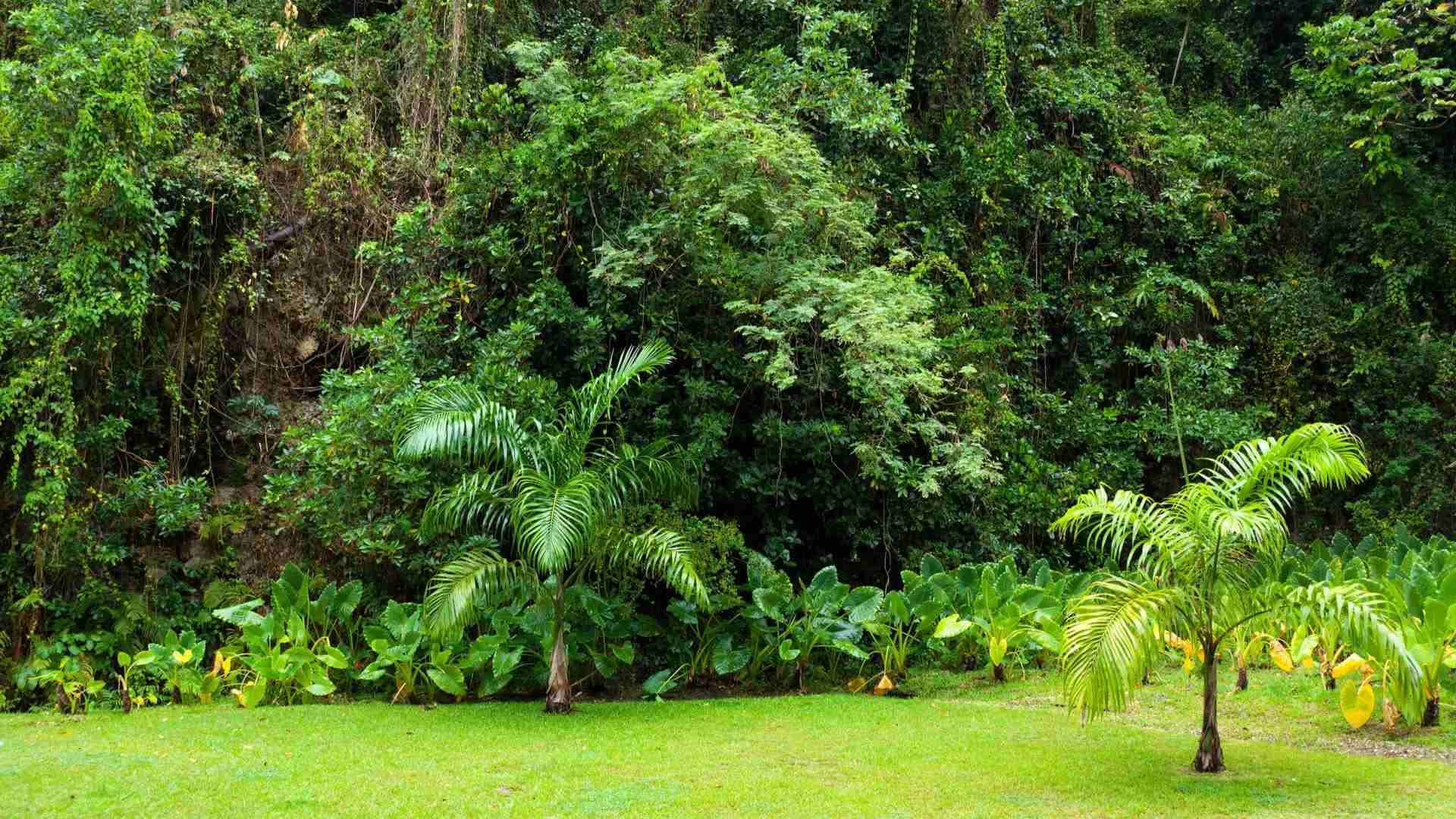
Road conditions vary greatly. Some tropical regions have extensive paved networks, while others depend on gravel roads, logging tracks, village paths or routes usable only during part of the year.
In areas such as the Democratic Republic of the Congo and New Guinea, paved roads may connect only limited parts of the wider landscape. Bridges can be damaged or missing, rivers interrupt continuity, and prolonged rainfall may turn an existing road into deep mud or stop traffic completely.
The important question is therefore not whether a road appears on a map. Its surface, bridges, maintenance, season and connection to the next usable segment determine whether it provides real continuity.
When the road becomes impassable, travel may continue by boat, local transport, bicycle or on foot. Equipment that was easy to carry inside a vehicle must then become protected, portable and manageable enough to continue with the traveller. The Darién Gap demonstrates this transition at continental scale, as road travel gives way to rivers, coastal boats, forest paths and the separate shipment of vehicles between Panama and Colombia.
Movement and Daily Activity in Wet Tropical Terrain
Travellers do not experience wet tropical terrain through one activity alone. A route may involve walking, rough-road travel, boat crossings, long periods of waiting, overnight camping and repeated use of navigation or filming equipment.
Each activity creates different demands. Clothing that works during strenuous movement may feel cold when the traveller stops, while luggage carried easily inside a vehicle may become impractical once the route continues by boat or on foot. Equipment choices therefore need to reflect how the traveller will move, pause and work throughout the route.
Moving on Foot
Walking conditions range from muddy roads and established forest trails to terrain where no visible path remains. Even the easier version may involve deep puddles, slippery roots, standing water and slow progress.
Heat builds quickly during movement, while long clothing used against insects and vegetation reduces ventilation. Rain protection can trap additional warmth and perspiration, forcing a continual balance between airflow, coverage and external moisture.
Some routes require repeated wading through streams, flooded ground or swamps. Muddy water may conceal holes, roots and unstable footing, making balance and careful foot placement more important than speed. In these conditions, footwear is likely to become wet regardless of its waterproof rating.
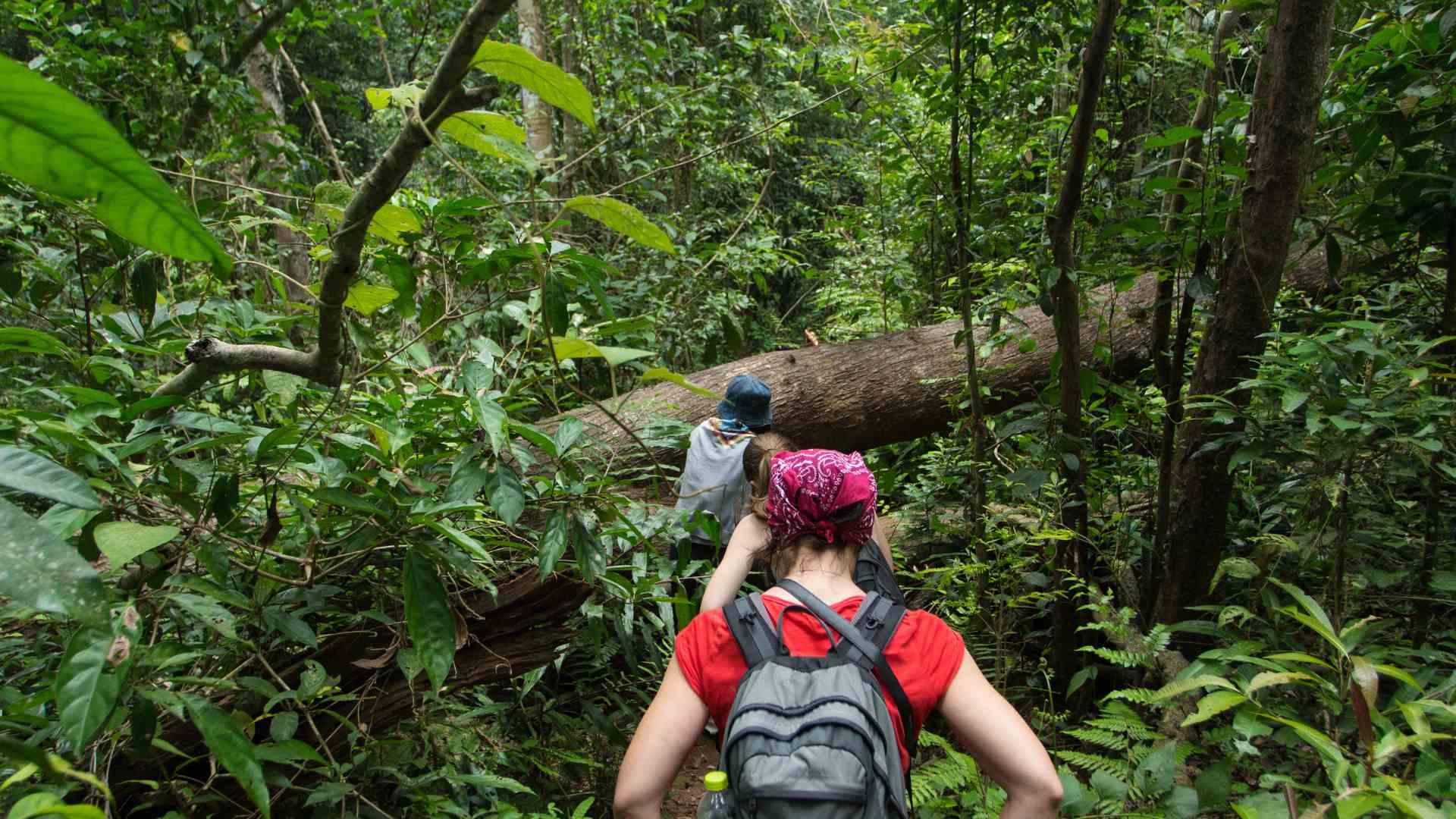
Where trails disappear, the difficulty changes substantially. Travellers may need to push through vegetation, cross fallen trees or clear limited sections while navigating without a visible line ahead. Progress becomes slow, and heavy loads, dangling equipment and loose straps create additional problems.
Water, navigation, insect repellent and basic first-aid supplies should remain accessible while moving. The traveller should not need to unpack the main dry compartment at every stop or uncertain junction.
Moving by Vehicle or Bicycle
On paved roads, wet tropical travel may involve little beyond heavy rain, reduced visibility and occasional flooding. Conditions change quickly on unpaved roads, where mud, ruts, standing water, damaged bridges and fallen trees can interrupt movement.
Four-wheel-drive vehicles, SUVs and local trucks may cross sections that stop ordinary cars, but their usefulness depends on tyres, ground clearance, weight, road conditions and driver experience. A road wide enough for a vehicle is not necessarily passable throughout its length.
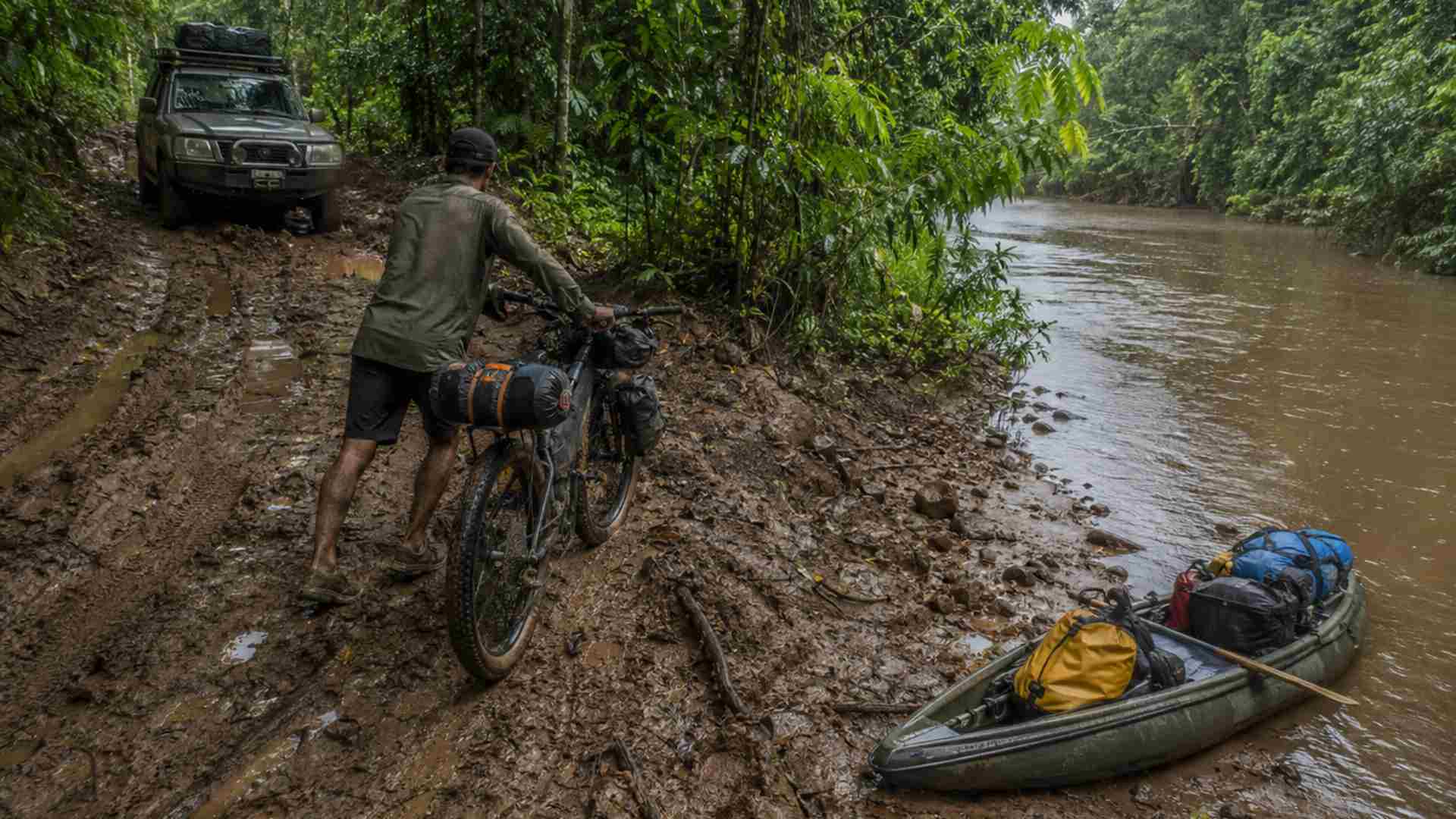
Bicycles can continue along narrower tracks, but sticky mud may reduce traction or accumulate around the tyres, brakes and frame until the wheels stop turning freely. The bicycle may then need to be pushed, lifted or carried.
Light motorcycles can cross some difficult sections, but deep mud, narrow bridges and heavy luggage quickly reduce their advantage. Low weight and controllability may matter more than engine size.
Vehicle support allows additional water, clothing, tools and protected storage. However, the essential equipment must still be organised for quick transfer if the road ends and the journey continues by local transport, boat or on foot.
Moving by Boat
In wet tropical regions, rivers, lakes, swamps and coastal waters may form part of the route rather than merely interrupt it. Where the route extends beyond rivers and sheltered waters into straits, archipelagos or open sea, independent sea travel requires a different framework of vessels, weather windows, autonomy and legal entry. Travel can involve motorboats, wooden canoes, kayaks, packrafts and other small craft.
Open boats expose travellers and luggage to rain, spray and water collecting inside the hull. Bags can become soaked without any accident, while even brief partial immersion may defeat ordinary rain protection.
Portable inflatable boats and packrafts can connect walking or cycling sections where no road continues. Their low weight makes them transferable, but luggage or a bicycle affects balance, handling and the space available for protected equipment.
The water itself may contain hidden branches, roots, rocks or fishing structures. Currents, wind and changing water levels can also make a short crossing more difficult than expected, particularly on large lakes, fast rivers or exposed coastal sections.
Equipment must therefore remain securely loaded and easy to transfer at both ends of the water section. The system has to function not only while travelling in the boat, but also during loading, unloading and carrying across wet or unstable banks.
Stopping, Waiting and Camping
Stopping creates different problems from movement. Once physical activity decreases, wet clothing feels cooler, insects gather more easily and there may be no dry surface for sitting, cooking or organising equipment.
Waiting is a normal part of travel in poorly connected regions. Boats may be delayed, roads may need to dry, and local transport may arrive without a fixed schedule. During these periods, luggage can remain exposed to rain, mud and repeated handling even though the traveller is not moving.
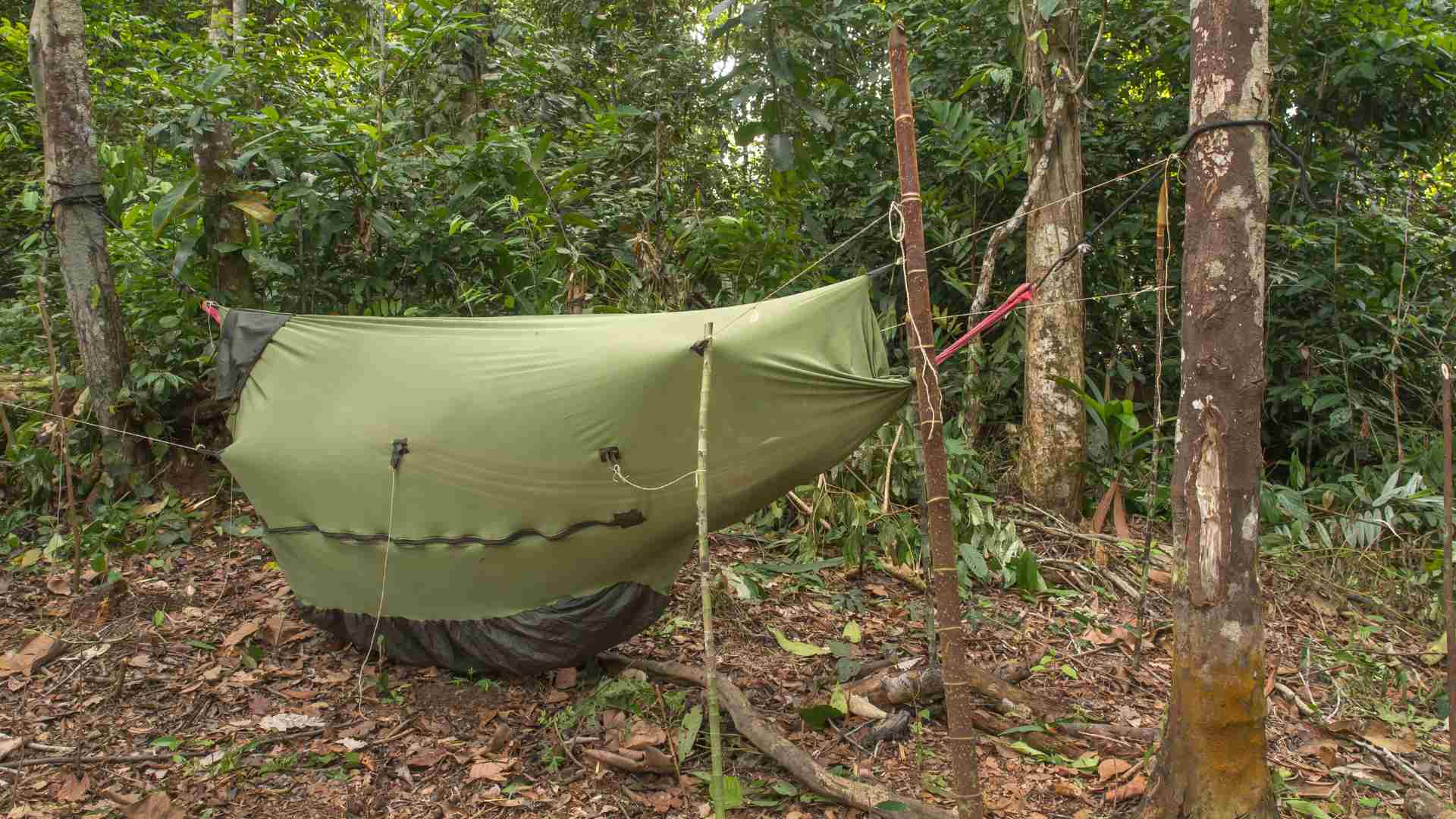
Camping extends the same problems overnight. Suitable ground may be muddy, uneven, rooted or vulnerable to flooding. A tent works where a well-drained site exists, while a hammock may be more practical above wet or irregular ground when suitable trees are available.
Both systems require rain and insect protection. Dense vegetation also restricts airflow and sunlight, so clothing and footwear may remain damp into the following day.
The camp should preserve a clear dry zone for sleeping clothing, insulation and critical belongings. Protecting one dependable dry set is usually more realistic than attempting to dry every wet item each evening.
Working, Filming and Navigating
Fieldwork requires electronics to be used repeatedly while exposed to rain, humidity, mud and wet hands. Phones, cameras and GPS devices must remain protected without becoming too difficult to access.
High humidity can fog lenses, affect touchscreens and cause condensation when equipment moves between air-conditioned interiors and warm outdoor air. Waterproof cases reduce direct exposure, but frequent handling still creates risks around ports, batteries and memory cards.
Navigation devices and route notes need to remain available while moving, especially where paths divide, fade or disappear. Offline maps, downloaded tracks and key waypoints are more reliable than depending on mobile coverage.
Power also becomes part of the field system. Phones, cameras, headlamps and navigation devices may all depend on the same limited charging supply, while weak signal and continuous tracking increase consumption.
Frequently used equipment should therefore remain in a small protected access layer separate from the main dry luggage. This allows the traveller to photograph, navigate or record information without exposing sleeping equipment and dry clothing every time the pack is opened.
Building the Gear System
Equipment for wet tropical terrain should not be selected as a collection of isolated products. Each item needs to solve a specific problem created by the environment, the method of travel and the transitions between road, trail, water and camp.
The objective is not to keep everything perfectly dry. A more realistic system protects critical items, allows wet equipment to remain functional, limits heat build-up and keeps essential supplies accessible while moving.
The exact combination depends on the route. Vehicle-supported travel allows greater reserves, while movement on foot, bicycle or small boat requires lower weight and easier transfer. The following sections therefore organise the system by function rather than by product category. For a broader overview of equipment across different environments and forms of travel, see our guide to special gear for exploring the Earth.
Affiliate disclosure: This article contains affiliate links. If you purchase through one of these links, we may earn a commission at no additional cost to you. As an Amazon Associate I earn from qualifying purchases.
Carrying, Waterproofing and Access
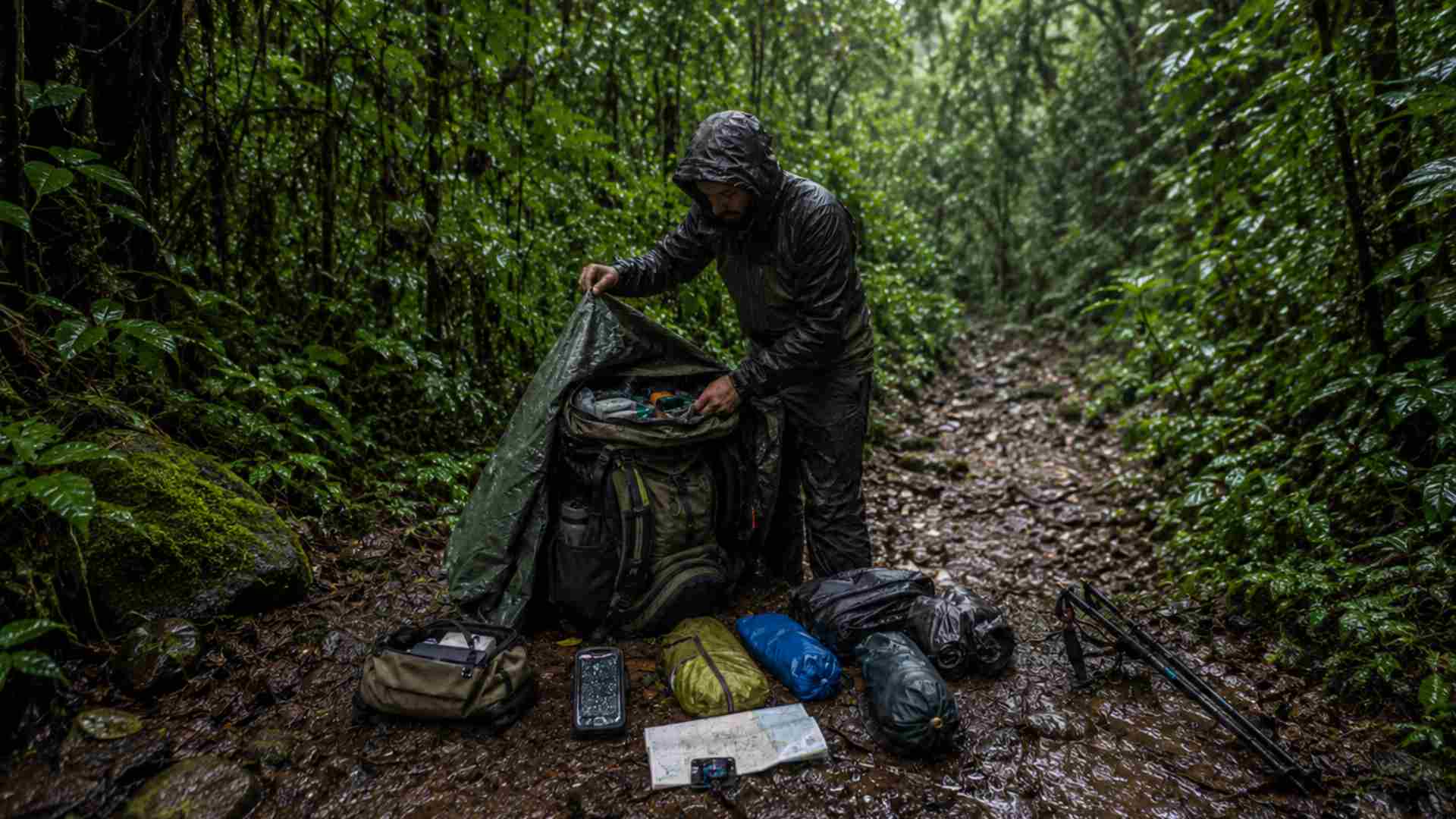
The main luggage must protect equipment, separate wet and dry contents and remain manageable during transfers between vehicles, boats and walking sections.
A backpack, pannier or travel bag should not be treated as the only waterproof barrier. Rain covers mainly protect against water falling from above; they do not seal the back panel, prevent leakage around openings or provide reliable protection during boat travel and partial immersion.
Critical contents need internal protection. A pack liner, dry bags and smaller sealed pouches can divide equipment into four functional zones:
- wet or frequently exposed items;
- dry sleeping clothing and insulation;
- protected electronics and documents;
- immediate-access equipment.
Water, navigation, rain protection, insect repellent and basic first aid should remain reachable without opening the main dry compartment. Sleeping equipment and dry clothing can stay deeper inside the protected zone until camp is established.
Several smaller protected units are usually safer than one large container. If the outer bag leaks, one dry bag fails or a pouch is opened in the rain, the rest of the system may remain protected. For equipment carried outside a pack or repeatedly transferred between boats, bicycles and vehicles, a durable roll-top model such as the Sea to Summit Big River Dry Bag provides a stronger external layer than an ultralight internal dry sack.
The luggage should also remain compact. Loose straps, hanging shoes and externally attached equipment can catch on branches, collect mud or be lost during transfers. Removable modules are useful, but they should fit inside a small number of main bags rather than create many separate pieces.
The key question is not whether the outer bag is waterproof. It is what may become wet, what must remain dry and what needs to be both protected and immediately accessible.
Managing Rain Without Trapping Heat
Rain protection in tropical conditions involves a balance between external water and internal heat.
A lightweight rain jacket is useful during cooler weather, boat travel, exposed crossings and periods of limited physical activity. Ventilation openings, adjustable cuffs and a loose fit help release heat, but even breathable membranes perform poorly when the surrounding air is already warm and humid.
A poncho usually provides more airflow and can cover part of the luggage. It works well on open roads, easier trails and while waiting, but loose fabric may catch on vegetation, interfere with balance or become difficult to control in wind. A multipurpose option such as the Sea to Summit Ultra-Sil Nano Tarp Poncho can cover both the traveller and the pack and can also be pitched as a small tarp.
An umbrella can also be useful in limited situations. It provides quick, ventilated protection while walking on roads, waiting for transport, photographing or organising equipment. It becomes impractical where vegetation is dense, both hands are needed or the terrain requires constant support.
Rain protection should change with the activity. During strenuous movement in warm lowlands, accepting some external moisture may be preferable to severe overheating. During stops, boat journeys, strong wind or cooler highland conditions, more complete protection becomes important.
The aim is not to remain perfectly dry. It is to avoid dangerous cooling, preserve essential dry layers and maintain enough ventilation to continue moving.
Clothing That Remains Functional When Damp
Clothing should be selected on the assumption that it may remain damp for much of the route.
Lightweight quick-drying hiking shirts and trousers are usually more practical than heavy materials that absorb large amounts of water. Loose long sleeves and trousers protect against sun, insects, vegetation and minor scratches while still allowing some airflow.
Cotton may feel comfortable in warm weather, but once saturated it can become heavy and dry slowly. It does not need to be excluded completely, but it should not form the only clothing system on a multi-day route where drying opportunities are limited.
Movement clothing can be treated as a working layer that may remain wet. A separate dry set should be reserved for camp, rest and sleep and stored in reliable waterproof protection. One dependable dry set is more valuable than several additional daytime outfits that all become damp.
Higher elevations require another adjustment. Montane and cloud-forest routes may be much cooler during rain, wind and overnight stops. A light insulating garment can therefore be important even on a tropical journey, but it must remain protected until needed.
The complete clothing system should combine fast-drying movement layers, sufficient coverage against insects and vegetation, and one protected recovery layer.
Footwear and Foot Management
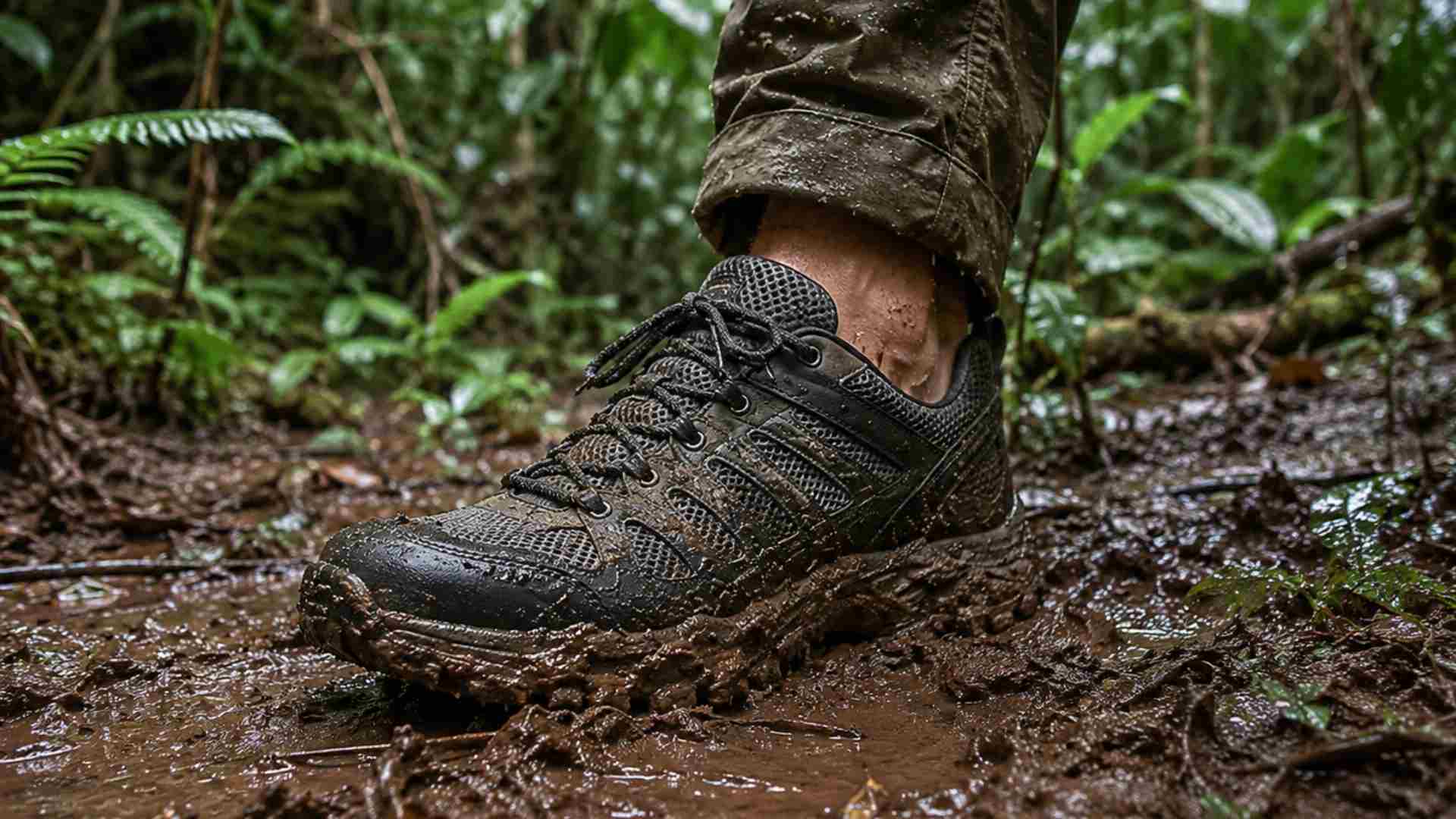
Footwear is unlikely to remain completely dry during prolonged tropical travel. Water can enter from above, rise over the top during crossings or reach the foot repeatedly through mud and wet vegetation.
The main choice is therefore between keeping water out temporarily and allowing footwear to drain and dry after it becomes wet.
Waterproof boots work well during limited exposure, shallow mud and cooler conditions. Once flooded, however, they may retain water for a long time. Lightweight fast-draining trail shoes dry more quickly but provide less protection from deep mud, sharp vegetation and rough ground.
Traction is essential. Soles need grip on mud, wet roots, rocks, wooden bridges and slippery slopes. Tread designed mainly for dry trails can fill with sticky soil and lose effectiveness.
Rubber boots are common in wet lowlands and may work well on farms, muddy roads, swamps and frequently flooded ground. They are easy to clean and protect the foot while water remains below the top. During long or steep walking, however, they may trap heat, provide limited support and fill rapidly during deeper crossings.
Foot care matters as much as footwear. Skin that remains wet softens and becomes more vulnerable to blisters, friction, fungal irritation and small wounds. Feet should be cleaned, aired and inspected whenever possible. Dry socks are particularly valuable during rest and sleep.
Gaiters, high socks and secured trouser cuffs can reduce access for leeches, although no system guarantees complete protection.
A spare lightweight camp shoe may be useful during vehicle-supported travel, but carrying several heavy pairs on foot rarely makes sense. Footwear should match the actual route: its mud depth, walking distance, elevation, river crossings and opportunities for drying.
Shelter and Sleeping Systems
A shelter must provide more than a place to sleep. It needs to create a protected dry zone above wet ground, away from insects and with enough ventilation to limit condensation.
A tent works best on level, well-drained ground. The site should be checked for depressions, drainage channels and signs of recent flooding. A footprint can reduce damage from mud, roots and saturated soil, but it cannot compensate for poor site selection.
A hammock may be better where the ground is muddy, uneven or periodically flooded. It keeps the sleeping area above the surface but requires suitable trees, secure suspension, rain protection and insulation beneath the body. Airflow below the hammock can cause unexpected cooling during rain or at altitude.
A tarp can support either system. Above a hammock, it provides the primary rain barrier. With a tent, it can create a separate area for cooking, changing clothes and organising wet equipment without opening the sleeping compartment.
Insect protection is essential. A tent should have intact mesh, while a hammock normally requires an integrated or separate mosquito net.
Ventilation remains necessary even during heavy rain. A sealed shelter traps warm, humid air and increases condensation. Covered vents, correct fly spacing and careful pitching can reduce internal moisture, though not eliminate it entirely.
Sleeping clothes, insulation, quilts and sleeping bags should remain separately protected until the shelter is ready. Warm lowlands may require only light insulation, while cooler cloud-forest and mountain routes need greater protection from wind and evaporative cooling.
The area above the shelter should also be checked for dead branches and unstable trees. Avoiding both flood-prone ground and dangerous overhead vegetation is part of the shelter system.
Insects and Skin Protection
Wet tropical terrain may contain mosquitoes, leeches, ticks, biting flies, ants, wasps and other biting or stinging animals.
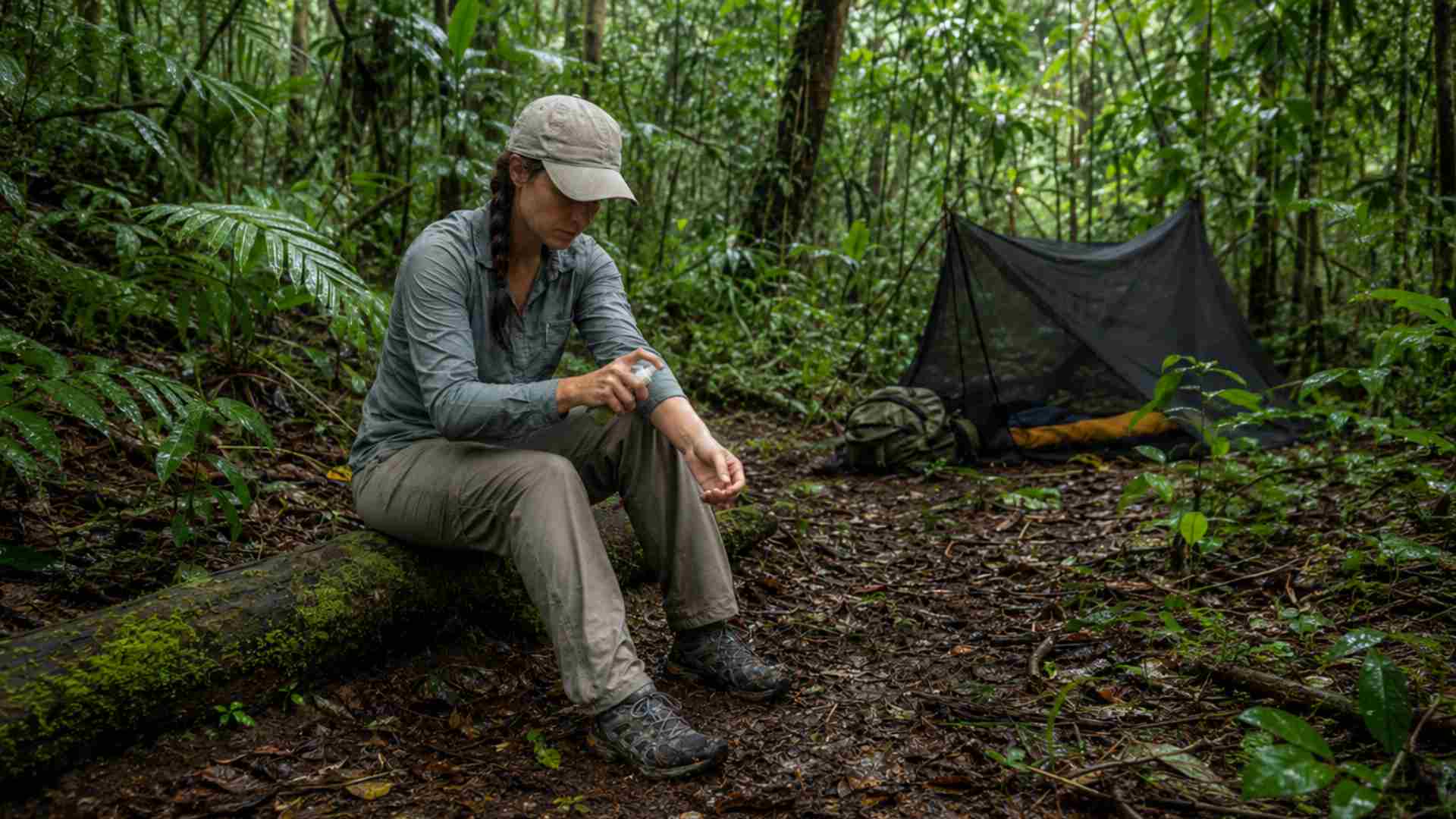
Protection begins with clothing. Lightweight long sleeves, trousers, socks and closed footwear reduce exposed skin without adding excessive insulation. Cuffs, collars and trouser openings should limit entry where leeches or ticks are common.
Repellent should remain accessible while moving and may need to be reapplied after rain, sweating or river crossings. A 20% picaridin product such as OFF! Clean Feel Insect Repellent provides a DEET-free option for protection against mosquitoes, ticks and biting flies. A mosquito net is important during sleep, whether it forms part of a tent, hammock or simple local shelter.
Skin exposed to persistent moisture also needs regular attention. Wet clothing, perspiration and repeated friction can cause chafing, rashes and softened skin, especially around the feet, waist, shoulders and other contact points.
Small scratches, bites and blisters should be cleaned early rather than ignored. In warm, wet conditions, minor damage can become increasingly difficult to manage.
Sun protection is also necessary on rivers, roads, lakes and cleared ground. The complete system combines covering clothing, repellent, netting, sun protection and basic skin care.
Water and Hydration
Abundant water does not mean safe drinking water.
Rivers, ponds, streams and flooded ground may contain microorganisms, sediment, animal waste or contamination from settlements, agriculture and mining. Water treatment therefore begins with source selection.
A portable filter can reduce many biological risks, but ordinary hiking filters do not reliably remove dissolved chemicals, fuel, pesticides, heavy metals or salt. Visibly polluted water should not be treated as acceptable simply because a filter is available. Where biological contamination is the main concern, the Sawyer Squeeze Water Filtration System provides a lightweight filter that also fits standard 28 mm threaded bottles.
Muddy water can also clog filters quickly. Allowing sediment to settle, collecting from a clearer inflow or using a simple pre-filter can protect the main system. Purification tablets or boiling provide useful backup if the filter fails or cannot be used.
Water should remain easy to access while moving. Regular drinking is more practical than waiting for long stops, especially in high heat and humidity. Additional carrying capacity is still necessary for uncertain sources, dry ridges, boat sections and transport delays.
Heavy sweating may also require food or electrolytes, particularly during long periods of exertion. At cooler elevations, thirst may feel weaker, but hydration remains important.
The water system should combine accessible drinking water, reserve capacity, a primary treatment method and a backup.
Food, Cooking and Resupply
Food planning must account for delays as well as distance. Rain, damaged roads, slow boats and difficult walking can extend the route beyond the expected schedule.
Food should be divided into daily-access supplies and protected reserves. Frequently used items need to remain reachable, while the main supply should be sealed against rain, humidity, insects and accidental immersion.
Heat-stable foods are more reliable than products that depend on refrigeration. Compact items that can be eaten without cooking are useful during transport delays or heavy rain. At the same time, dry foods increase water requirements, so food weight, fuel and water availability need to be considered together.
Cooking equipment should match the route. Foot-supported travel may require only a compact stove, suitable fuel and a waterproof backup ignition method. A vehicle can support a larger and more flexible system.
Fuel availability should be checked in advance. Cartridges or liquid fuels that are common at home may be difficult to replace locally.
Cooking in prolonged rain requires a covered but ventilated area. A tarp can provide working space, but a stove should not be used inside a closed tent or other poorly ventilated shelter.
Food storage must also account for ants, rodents and other animals. Containers should remain closed, waste should be managed carefully and supplies should not be left casually beside the sleeping area.
Local villages may provide meals or basic products, but availability should not be assumed. A practical system combines local resupply where it is reliable with a reserve for unexpected delays.
Navigation in Low-Visibility Terrain
Dense vegetation limits visibility and can make paths difficult to follow. Smaller trails may divide, fade into vegetation or disappear around flooded sections and fallen trees.
Offline maps, downloaded GPS tracks and key waypoints should be stored before the route begins. Important locations may include settlements, river crossings, bridges, landing points, junctions and possible exit routes.
A digital line does not guarantee that a route remains open. Tracks may be outdated, bridges missing and old paths completely overgrown. Repeated detours around mud or obstacles can also move the traveller gradually away from the intended line.
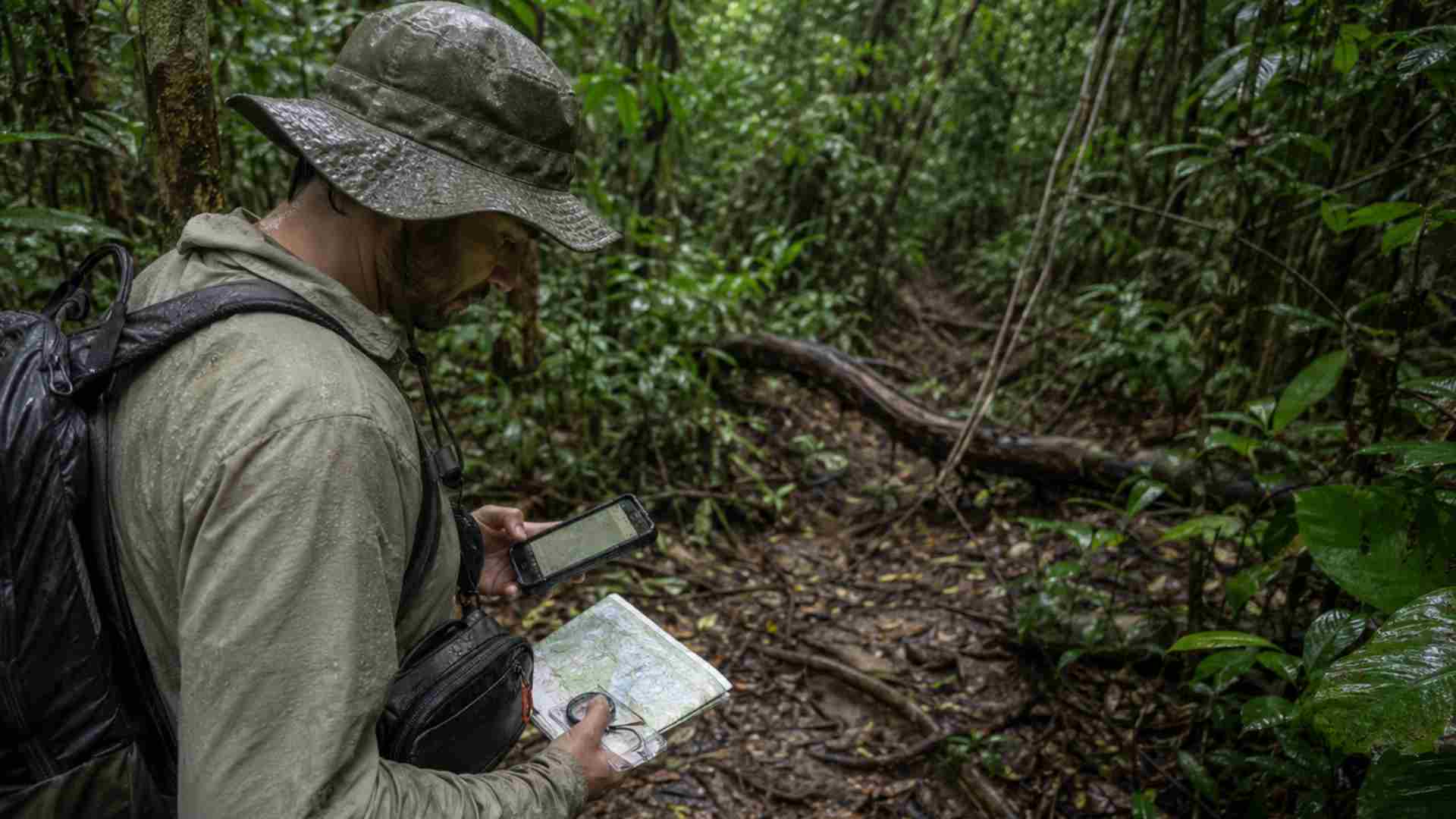
GPS accuracy may become less stable under dense canopy, in deep valleys or near steep terrain. Phones and handheld devices should therefore be supported by observation, recorded waypoints and, when appropriate, a compass or paper backup.
Navigation equipment must remain usable in rain. Touchscreens may perform poorly when wet, so essential controls and offline maps should be tested beforehand.
The active device should remain accessible in a protected pocket rather than buried inside the main pack. Power conservation, backup navigation and marked retreat points are part of the same system.
The goal is not simply to follow a line on a screen. It is to understand the traveller’s actual position as terrain and access conditions change.
Electronics, Light and Power
Electronic equipment is exposed to rain, spray, perspiration, wet hands, condensation and prolonged humidity.
Phones, cameras, GPS devices, power banks and spare batteries should be stored in separate protected units. A waterproof phone case, such as the Sea to Summit TPU Guide Waterproof Case for Smartphones, allows use during rain, while sealed pouches protect equipment that does not require immediate access.
Waterproof ratings should not be treated as complete protection. Covers can be damaged, ports left open and seals contaminated with mud. Devices should be returned to protection as soon as their immediate task is complete.
Condensation is another risk. Moving equipment from an air-conditioned vehicle or room into warm, humid air can cause moisture to form on or inside it. Allowing the device to adjust gradually while still inside a closed bag can reduce the sudden temperature change.
Charging should take place in a dry working area. Wet ports should not be connected, and cables should remain short, organised and protected from mud.
Power capacity depends on the route. A vehicle can support larger power banks and charging systems. Foot and boat travel require stricter limits, making energy conservation as important as additional capacity. To determine how much storage and charging capacity the route actually requires, first estimate the off-grid energy needs of the laptop, phone, camera and other devices under realistic daily use. For weight-sensitive foot sections, the Nitecore NB10000 Gen4 provides 10,000 mAh of capacity at a listed weight of 143 g.
A headlamp should remain immediately accessible, especially during delayed arrivals, camp setup and boat unloading. A hybrid headlamp such as the Petzl ACTIK CORE is useful on mixed routes because it can run from its rechargeable CORE battery or three standard AAA batteries. A small independent backup light adds useful redundancy.
The electronics system should avoid dependence on one device, one battery or one charging method.
Choosing Transport for Wet and Broken Routes
Transport should be selected for the weakest part of the route, not only for the long sections that appear easy.
A four-wheel-drive vehicle, SUV or local truck can carry substantial reserves, but its usefulness depends on tyres, ground clearance, weight, recovery points and driver experience. A heavy vehicle with unsuitable tyres may perform worse than a lighter one. For vehicle-supported sections, the Overland Route Fuel Calculator can estimate the basic fuel requirement and cost from the route distance, real-world fuel consumption and expected price per litre.
Recovery equipment may include tow straps, a shovel, tyre-repair supplies and basic tools. These do not guarantee passage through unstable mud or floodwater. Waiting, turning back or transferring to another form of transport may be safer than forcing the route.
Bicycles can continue along narrower tracks, but wide tyres, useful mud tread, low gearing and sufficient wheel clearance are important. Sticky soil may accumulate around the tyres, brakes and frame until the wheels no longer turn freely.
The bicycle must also remain manageable when it cannot be ridden. Bags should be stable, compact and easy to remove when the bicycle has to be pushed, lifted or loaded into a boat.
Light off-road or dual-sport motorcycles can cross some sections that stop larger vehicles. Low weight and controllability are often more important than engine size, especially in deep mud, on narrow bridges or during boat transfers.
Where roads disappear, canoes, kayaks, local motorboats and packrafts may continue the route. The appropriate craft depends on current, wind, waves, load, exposure and landing conditions. A canoe suitable for a slow river is not automatically appropriate for rapids, large lakes or coastal water.
Packrafts are useful where the route alternates between walking, cycling and water. Their advantages are low weight and portability; their limitations include restricted space, reduced control under load and vulnerability to sharp objects.
Small-craft travel requires suitable flotation equipment, secure loading and separate waterproof protection for critical items. Luggage should not remain loose inside the boat.
Local transport can sometimes provide greater continuity than carrying a specialised vehicle or boat for the entire route. Whatever the method, the luggage still needs to remain compact, protected and portable after the transfer.
No single transport mode guarantees complete continuity. The strongest route may combine vehicle, bicycle, boat, local transport and walking.
First Aid, Repair and Route-Specific Tools
A first-aid and repair kit should reflect the route rather than a universal expedition checklist.
Basic medical supplies may include dressings, tape, blister treatment, antiseptic supplies, disposable gloves and personal medication. They should remain compact, organised and protected from moisture. A compact ready-made option is the Adventure Medical Kits Mountain Series Hiker, although its contents should still be adapted to the route, group size and personal medical needs.
Common injuries are often more important than dramatic wildlife encounters. Blisters, cuts, burns, falls, chafing and softened skin should be treated early, before continued exposure to mud and contaminated water makes them worse.
Wildlife risks vary by region. Venomous snakes, scorpions, spiders, centipedes, hornets and dangerous aquatic animals may be present in some environments and absent in others. Local information is more useful than preparing for every tropical species.
Snakebite planning should focus on prevention, limited movement and rapid evacuation. Travellers should avoid reaching blindly into vegetation, use light around camp and check footwear before use. Cutting the wound, attempting to suck out venom, applying electric shocks or using a tight tourniquet are harmful snakebite first-aid practices and should not be treated as field solutions.
Travellers with a known severe allergy to bee, wasp or hornet stings should carry prescribed medication where it can be reached immediately and ensure that companions understand the emergency plan.
Aquatic hazards also require local knowledge. Unfamiliar water may contain dangerous animals, submerged branches or other risks that cannot be assessed from the surface.
An evacuation plan is part of first aid. Travellers should know where realistic medical help is located, which transport could reach it and where communication may be possible.
Repair supplies should be equally specific. A general kit may include strong tape, cord, cable ties, spare buckles, a needle and thread, and a compact multitool. Gear Aid Tenacious Tape is a compact option for repairing tears in nylon, polyester, vinyl and several other outdoor materials.
Specialised equipment adds its own repair needs: fabric patches for tents, compatible patches for inflatable mats and packrafts, tyre and chain tools for bicycles, and recovery or tyre-repair equipment for vehicles.
A machete is relevant only where vegetation genuinely needs to be cleared and where its use is permitted and understood. It should not be carried merely because the route passes through tropical forest.
The strongest kit is not the largest one. It is the one designed around likely injuries, equipment failures and evacuation problems.
Adapting the Complete System to Vehicle, Boat and Foot Travel
The complete system should be built around a transferable core kit that remains with the traveller regardless of transport.
This kit should contain documents, navigation and communication equipment, accessible water, basic food, rain protection, light, essential medication and a compact first-aid supply. It must be light enough to carry and protected against rain, spray and repeated handling.
Vehicle-supported travel allows an additional reserve layer: more water, food, dry clothing, a second pair of footwear, larger power supplies, heavier shelter equipment and specialised tools. These reserves should remain organised so that the essential system can be removed quickly if the road ends.
Bicycle-supported travel requires stable loading and manageable weight. The bicycle must remain possible to push, lift or load into another vehicle or boat.
Boat-supported sections require stronger waterproof separation and secure attachment. The load may also need to be carried along a riverbank or between the landing point and the next road.
Foot-supported travel imposes the strictest limits. Every item must justify its weight through frequent use, safety value or support for route continuity. Excess clothing, large cooking systems and unnecessary electronics become harder to defend.
Mixed routes should be planned around their most difficult transition. A journey may be mostly vehicle-supported but still include a two-day walking section, a canoe transfer or deep mud through which everything must be carried.
Food, water and power capacity should also change by segment. Large reserves may remain with the vehicle, while the portable system carries enough for the independent section and a realistic delay margin.
Not every tool needs to continue through every stage. Recovery equipment may remain with the vehicle, while a boat repair kit is relevant only while the craft continues.
The most effective system is therefore modular rather than maximal. It uses the carrying capacity of vehicles and boats where available, but never becomes completely dependent on them. When transport changes, the essential equipment should remain protected, accessible and possible to move.
Practical Packing Logic and Common Mistakes
A suitable collection of equipment does not automatically create a workable system. The way items are divided, protected and positioned determines whether they remain useful when rain begins, transport changes or something is needed quickly.
Packing should follow function and consequence. Critical items require stronger protection, frequently used equipment needs immediate access, and wet clothing must not compromise the dry sleeping system. The complete load must also remain manageable during the most demanding part of the route, not only while stored inside a vehicle.
Many failures begin with simple mistakes: relying on one waterproof layer, burying essential equipment, carrying too many specialised items or assuming that roads, electricity and resupply will remain available.
Separate Wet, Dry and Critical
Equipment can be divided into three practical categories.
The first contains items that may remain wet without stopping the journey: rainwear, damp movement clothing, muddy gaiters, sandals and some external equipment. These belong in an accessible wet zone, away from the protected interior of the luggage.
The second category contains items that must remain dry but do not need constant access. Sleeping clothes, insulation, spare socks and the sleeping system should remain inside a pack liner or separate dry bags until the shelter is ready.
The third category must remain both dry and immediately accessible. This includes documents, phone or GPS, essential medication, basic first aid, headlamp, route notes and emergency communication equipment. These need independent waterproof protection near the top of the pack or inside a small transferable bag.
The categories may change during the day. A rain jacket moves from the accessible zone to the wet zone after use, while a headlamp or dry camp clothing becomes more accessible towards evening.
The principle is simple: wet equipment should not spread moisture, dry equipment should remain sealed until needed, and critical equipment should never become unreachable.
Pack for Transitions, Not Only for Walking
Packing should reflect the complete route, including transfers between vehicles, boats, local transport, walking sections and camp.
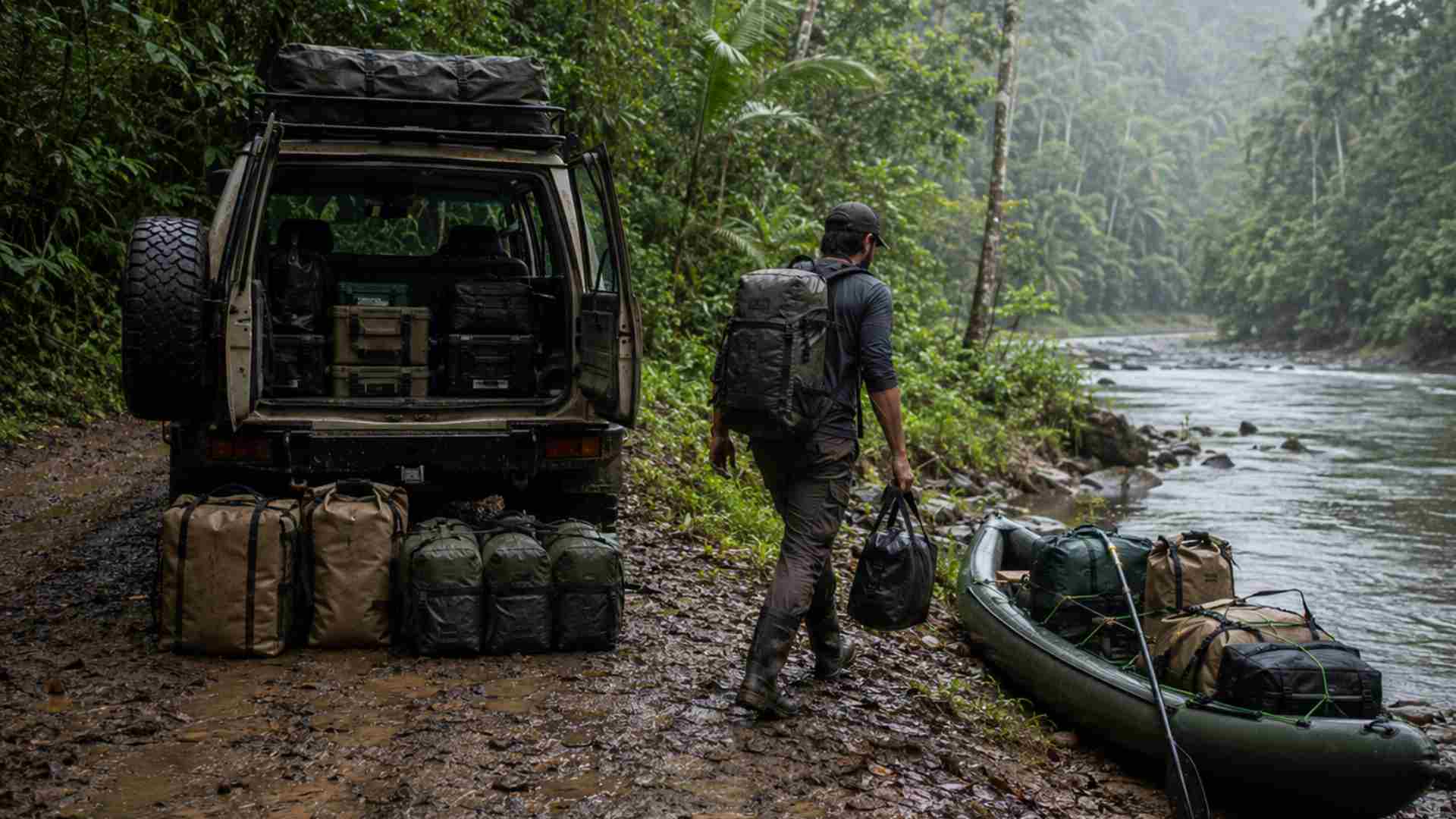
Each transition creates risk. Bags may be placed on wet ground, passed across unstable banks, loaded onto roofs or separated from the traveller inside crowded transport. A system that is comfortable to carry but slow to close or divided into many loose pieces can quickly become impractical.
The main luggage should remain compact and easy to lift. Internal modules are useful, but bottles, shoes, jackets and small bags should not become separate objects that must each be tracked during loading.
Critical equipment should remain with the traveller rather than inside luggage stored on a roof, at the back of a truck or in another part of a boat. A small core kit should contain documents, navigation, communication, medication, water and immediate rain protection.
Camp transitions also matter. The tarp, tent, headlamp and wet zone should be reachable before dry sleeping equipment is exposed.
A useful test is whether the luggage can be unloaded, protected and prepared for the next stage without spreading its contents across wet ground.
Do Not Assume Waterproof Means Comfortable
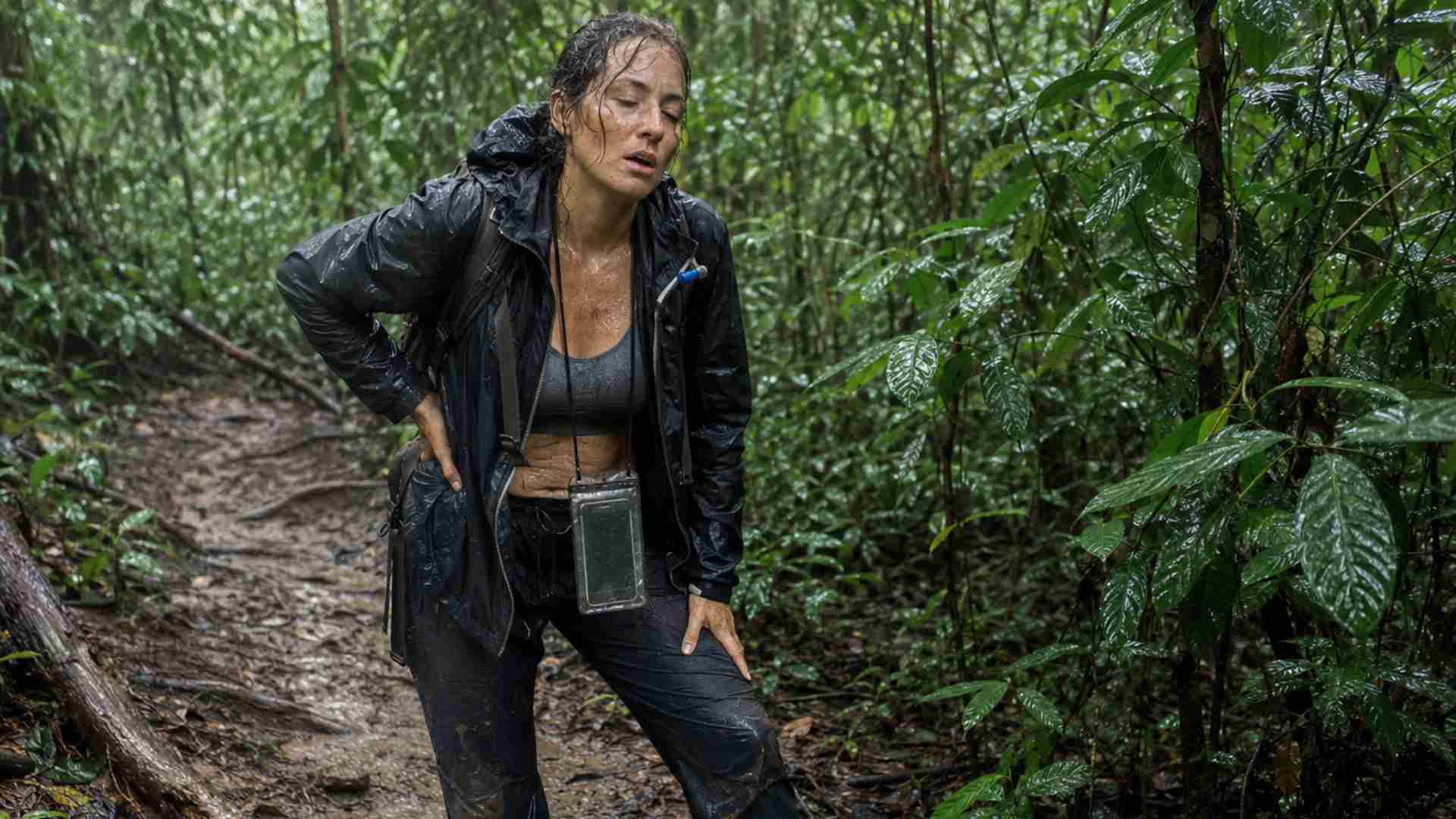
Waterproof equipment solves only the problem of external water. It may still trap perspiration, heat and condensation inside.
During climbing, load carrying, bicycle pushing or movement through mud, the body produces heat faster than waterproof clothing can release it. Even breathable membranes have limited effectiveness in warm, saturated air.
The same problem affects footwear and accessories. Waterproof boots may retain water after a deep crossing, while sealed phone cases can trap condensation or make the screen difficult to use.
Waterproof equipment should therefore be assessed together with ventilation, drainage, drying time and ease of access. A lighter, more breathable option may work better during strenuous movement, while stronger protection becomes more useful during waiting, boat travel and cooler conditions.
The practical choice is rarely between completely dry and completely wet. It is a balance between external protection and the ability to release heat and moisture from within.
Do Not Depend on One Layer of Protection
No single waterproof product should be expected to protect the complete system.
A rain cover mainly blocks water falling from above. It does not seal the back of a pack or protect against prolonged contact with water, spray or partial immersion. Dry clothing and sleeping equipment still need internal protection.
A waterproof backpack can also leak through worn seams, damaged closures or an opening left unsecured during use. Critical contents should not depend entirely on the condition of the outer bag.
The same principle applies to electronics. A waterproof phone case protects the phone, but not the power bank, cables, spare batteries or memory cards that keep it useful. These components need their own sealed pouch.
Layered protection should reflect the consequences of failure. Wet clothing may need only separation, while documents, medication, electronics and sleeping insulation justify independent protection.
The purpose is to ensure that one damaged cover, leaking bag or careless opening does not disable several critical functions at once.
Avoid Packing Too Many “Just in Case” Items
Uncertainty encourages travellers to add equipment for every possible situation. Each item may seem reasonable on its own, but together they increase weight, volume and the difficulty of transfers.
Several heavy clothing layers are rarely useful in hot lowlands and require additional waterproof space. The system should match the coldest realistic part of the route, including altitude and overnight conditions, rather than an unlikely extreme.
Electronics can create similar duplication. A backup for a critical function is valuable, but several cameras, overlapping devices, large power banks and multiple chargers may add more complexity than resilience.
Heavy boots, large survival tools and bulky camping equipment should also have a clear route-specific purpose. They may be appropriate for certain expeditions but become liabilities during canoe transfers, local transport or long walking sections.
Reducing excess does not mean eliminating every backup. A second light, backup water treatment, alternative navigation method or spare ignition source may provide significant value for little weight.
Every additional item should answer three questions:
- What specific route problem does it solve?
- How likely is that problem?
- Can equipment already carried perform the same function?
If the purpose remains unclear, the item may not justify its place in the system.
Test the System Before the Route
The complete system should be tested before entering remote terrain. Individual products may work well while the combined load remains too heavy, difficult to access or poorly adapted to rain and transport changes. Walking with the fully loaded luggage in wet conditions can reveal whether clothing overheats, footwear drains, the rain cover remains secure and water reaches unexpected areas of the pack.
Frequently used equipment should also be tested in realistic conditions. The traveller should confirm that the phone can be operated inside its case, maps remain readable with a wet screen, and navigation, rainwear or first aid can be reached without exposing the sleeping system. Opening the luggage under rain is another useful test. Shelter equipment and the wet zone should be accessible before the main dry compartment is opened.
The transferable core kit should be packed and carried separately. It must contain the essentials for continuing beyond a road end, but also remain light enough for real walking rather than simply small enough to fit inside another bag. Total weight should be measured with water, food, fuel, batteries and repair supplies included. Wet clothing and accumulated mud can increase the load further during the route.
Power performance also needs realistic testing. Navigation, photography, video, weak mobile reception and repeated screen use may consume energy faster than expected. A trial day can show whether batteries and charging capacity are sufficient for the longest unsupported section.
Shelter setup, water treatment and basic repairs should be tested in the same way. Equipment should be familiar before it must be used in darkness, rain or difficult terrain.
Testing can also prevent unnecessary spending. It may show that existing equipment already works, that a lighter alternative is needed or that extra luggage would create additional transport and baggage costs. These equipment decisions should be considered as part of the real overland route budget, alongside fuel, ferries, repairs, accommodation and other movement costs. The Overland Route Cost Planner Lite can help compare how different equipment loads, transport choices and route scenarios affect the complete journey budget.
The purpose is not to reproduce every possible expedition failure. It is to identify predictable weaknesses while they can still be corrected easily and locally. For additional calculators and planning aids covering route costs, logistics and uncertainty, explore the JBH Resources & Tools page.
Conclusion: Build for Continuity, Not Maximum Protection
In hot, wet and roadless terrain, keeping the traveller and every item completely dry is often unrealistic. Rain enters during transfers, footwear is repeatedly soaked, clothing absorbs perspiration, and humidity slows or prevents drying.
A stronger system accepts that some equipment will become wet while protecting the items whose failure would interrupt the journey. Documents, electronics, medication, dry sleeping clothing and insulation need reliable separation. Rainwear, footwear and movement clothing must remain functional even after repeated exposure.
The same principle applies to transport. Equipment should remain useful when a road becomes impassable, luggage is transferred into a canoe, a bicycle must be pushed through mud or the final section continues on foot.
Maximum protection can also reduce flexibility. Heavy waterproof layers may trap heat, oversized luggage may become difficult to transfer, and unnecessary specialised tools add weight without improving continuity.
The better system is therefore not necessarily the largest or most expensive one. It is the one shaped by the route, organised around critical functions and light enough to continue when transport changes.
The right gear system does not remove the terrain. It allows the route to continue through it.
Like it? Pin it here⇓! Follow us on Facebook, X and Instagram!
You may also like




Hi, we are Krasen and Ying Ying. Krasen is from Bulgaria, and Ying Ying is from China. We are passionate about geography and history, and we believe that the best way to experience it is by exploring the Earth in reality, not in a school, and not virtually.
So, we created this blog Journey Beyond the Horizon, where we share geographical knowledge, travel guides and tips how to experience it when you explore our planet, and a lot of inspiration.
And we wish you a happy journey, not just virtually, but most of all- in reality.
Enjoy!
Krasen and Ying Ying
Hi, we are Krasen and Ying Ying. Krasen is from Bulgaria, and Ying Ying is from China. We are passionate about geography and history, and we believe that the best way to experience it is by exploring the Earth in reality, not in a school, and not virtually. So, we created this blog Journey Beyond the Horizon, where we share geographical knowledge, travel guides and tips how to experience it when you explore our planet, and a lot of inspiration. And we wish you a happy journey, not just virtually, but most of all- in reality. Enjoy!

