
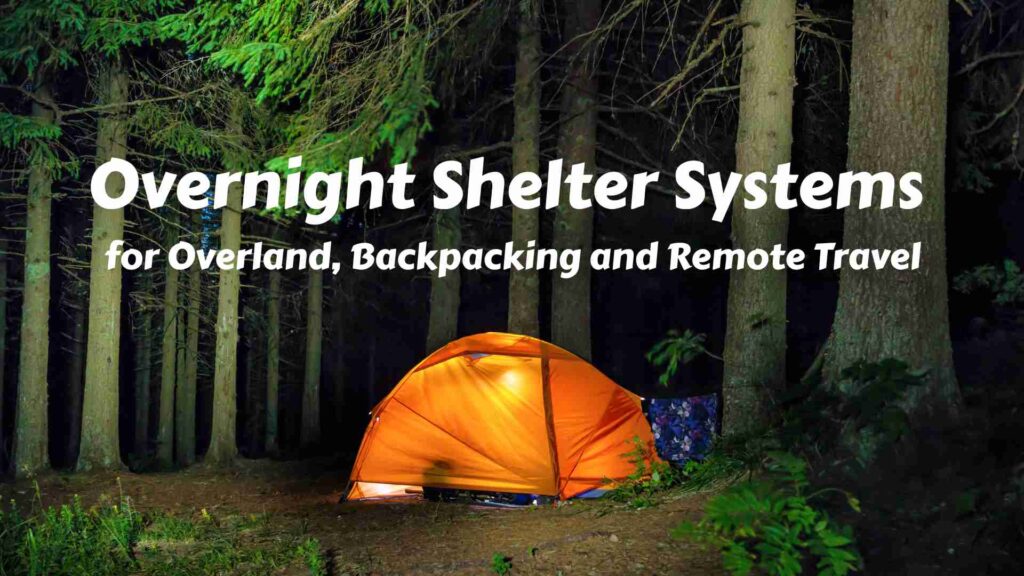
Choosing overnight shelter is not only about gear. A tent, bivy sack, tarp or hammock works only when it fits the terrain. Flat open ground may suit a tent or bivy. Steep forest, wet ground or jungle may make a hammock more practical. Treeless plateaus, rocky slopes, river valleys, beaches and areas near villages all create different problems. Distance from transport matters too. Near a car, van, motorcycle or canoe, more comfort is possible. Far from any vehicle, weight, volume and simplicity become decisive.
This guide is a practical framework for choosing shelter by terrain, movement style, distance from support and night-time risks — not a generic list of the “best” camping gear. For the wider range of travel accommodation options — from hotels and guesthouses to camping, local homes and sleeping while moving — see this broader guide to places to sleep while traveling.
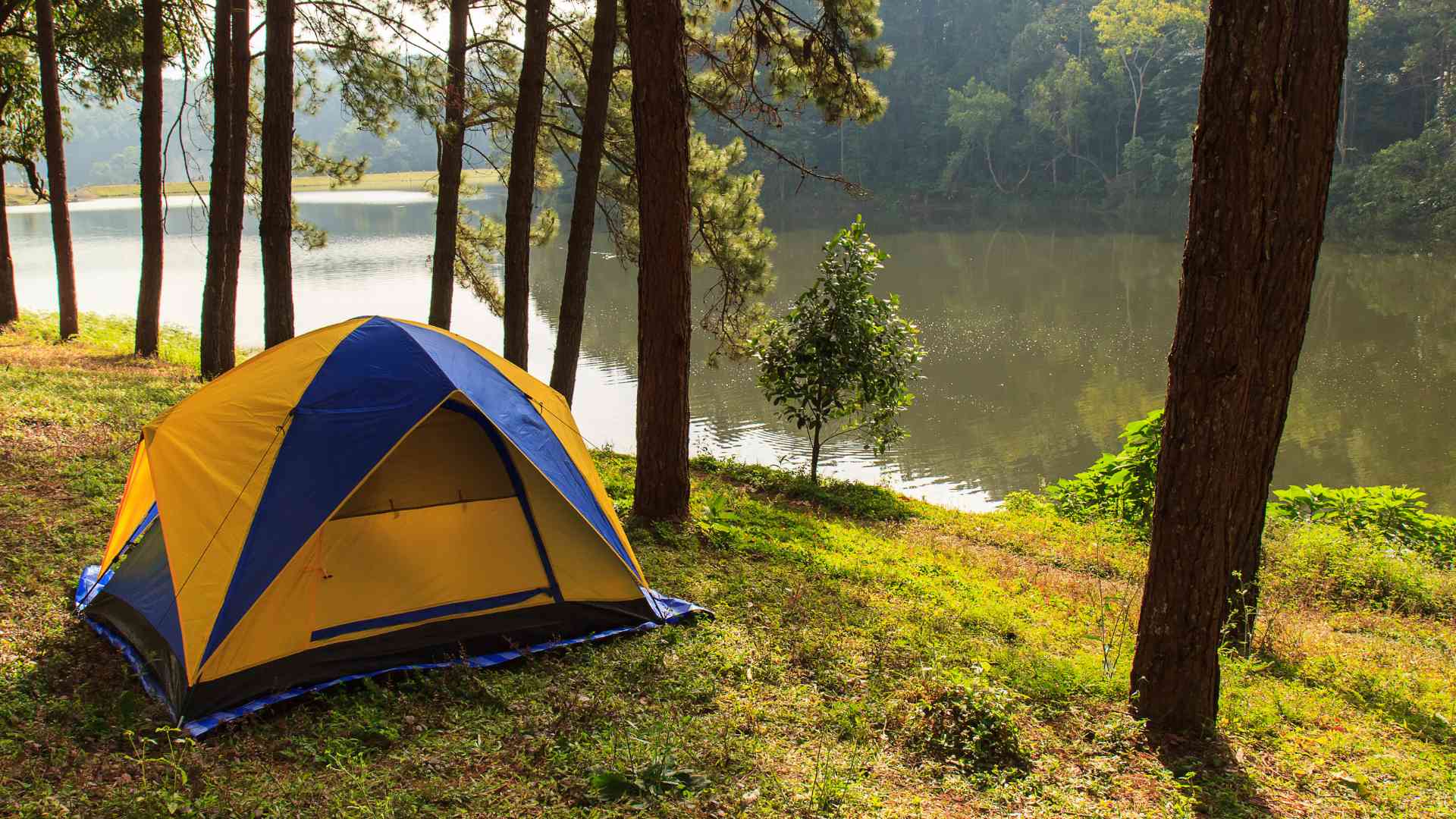
Table of Contents
The Main Variables Before Choosing Your Shelter
Before choosing a tent, bivy, tarp or hammock, the place itself has to be read first. Shelter choice depends on more than weather or comfort. Transport distance, terrain, , movement style, remoteness and human presence all change what is practical for the night. As with any serious trip preparation, the overnight system has to fit the route, transport, season, safety conditions and the way the journey is actually planned.
Terrain Comes First
Terrain is the first thing to read. Flat ground makes a tent or bivy much easier to use, while steep, uneven or rocky ground can make sleeping on the ground difficult or impossible. In forested slopes, a hammock may work better, but only if there are strong and safe anchor points.
The ground surface matters too. Dry, firm soil is very different from mud, wet grass, marsh, snow, sand or sharp rock. Cold ground changes the shelter system because insulation underneath the body becomes as important as the sleeping bag itself.
A good overnight place is not only a place where the shelter fits. It also has to sit outside the path of water, falling branches, unstable rocks, strong wind exposure and other terrain-related risks.
Distance From Transport and Movement Style
Shelter choice changes completely when the camp moves away from transport. Near a car or van, a larger tent, thicker sleeping pad, extra blankets, more water, spare clothes and heavier comfort items may all be realistic. Weight and volume matter less because the vehicle remains close.
With a motorcycle, bicycle, canoe or horse, the limits become stricter. There may still be more carrying capacity than on foot, but every item has to justify its space, weight and shape. For longer independent routes, shelter weight, transport capacity and comfort choices are part of the same route-planning problem as fuel, food, accommodation and other practical costs. Bulky gear becomes harder to pack, load, protect from rain and move through difficult terrain.
On foot, the shelter system has to become much simpler. A tent, bivy, tarp or hammock has to fit into the total backpack load together with food, water, clothing and safety gear. Public transport creates a different kind of limit: the load may not be carried all day, but it still has to pass through buses, trains, stations, villages and walking sections.
The farther the route moves from reliable transport, the more important light weight, small packed size, quick setup and simple use become.
Remoteness and Access to Help
Remoteness changes how much risk the shelter system can absorb. Close to a village, road, vehicle or hut, a poor campsite choice may only create an uncomfortable night. Far from help, the same mistake can become serious.
In remote terrain, the shelter has to be more reliable, not only lighter. Rain, cold ground, wind, injury, broken gear or a bad campsite are harder to solve when there is no road nearby, no phone signal and no simple way to leave.
The farther the camp is from help, the more important it becomes to choose a safe site, keep gear protected from weather and avoid shelter systems that only work in perfect conditions.
Human Presence: Villages, Farms, Dogs and Private Land
Not every good campsite is a place where sleeping is allowed or welcome. Wild camping, bivying or sleeping outside may be legal, restricted or forbidden depending on the country, protected area, municipality or land ownership.
Private land is another issue. Fields, pastures, orchards, forest plots and farm roads may look empty, but they can still belong to someone. In such places, permission matters. Near villages and farms, dogs can also become a bigger problem than wildlife, especially at night or early in the morning.
Human risk also changes the shelter decision. In some areas, sleeping openly near roads, settlements, informal camps, abandoned buildings or known crime zones may be less safe than moving farther away or choosing a more discreet place. A campsite has to fit not only the terrain, but also the human landscape around it.
Main Shelter Types and Where They Actually Work
There is no single best shelter for every route. Each option works only under certain terrain, weather, weight and access conditions. The real question is not only what feels comfortable to sleep in, but where that shelter can actually be used.
Tent
A tent is the most complete ground-based shelter. It gives protection from wind, rain, insects and some cold exposure, but it needs enough space and reasonably level ground. Tent size also matters when several people share the same shelter or when gear has to be stored inside during bad weather. It works best on open ground, high plateaus, mountain camps, dry valleys, beaches away from the tide line, and many places where there are no trees for a hammock.
The main limitation is the ground itself. A tent becomes harder to use on steep slopes, broken rocks, marshy ground, dense forest floor or places where water may collect during rain. It also depends on campsite judgment. A flat patch under dead branches, unstable trees, rockfall zones, coconut palms or inside a dry streambed is not a safe tent site just because the tent fits there.
Tent types follow the route. Lightweight backpacking tents make sense when everything is carried. Stronger mountain tents are built for wind, cold and exposed ground. Larger camping tents are comfortable near a vehicle, but too bulky for long walking or cycling routes. Single-wall tents save weight but may collect more condensation, while double-wall tents usually handle moisture better. For a more detailed comparison of different tent styles, see this separate guide to tents for explorers and adventure travelers.
Bivy Sack or Minimal Ground Shelter
A bivy sack is a minimal shelter around the sleeping bag. It is lighter and smaller than a tent, and it can work when only basic protection from wind, dew or light rain is needed. It is useful for dry mountains, fast routes, emergency nights, exposed terrain with little space, or situations where setting up a full tent would be unnecessary.
Its weakness is comfort and weather protection. A bivy is less suitable for long rainy nights, humid forests, heavy condensation, insects or places where gear has to be organized inside the shelter. It also still depends on the ground. Even the smallest bivy needs a safe place to lie down.
There are simple water-resistant bivy covers, more protective waterproof bivy sacks, and more structured bivies with small poles around the head area. Simpler versions are lighter but less comfortable. More structured bivies offer better protection, but start moving closer to the weight and bulk of a small tent.
Hammock
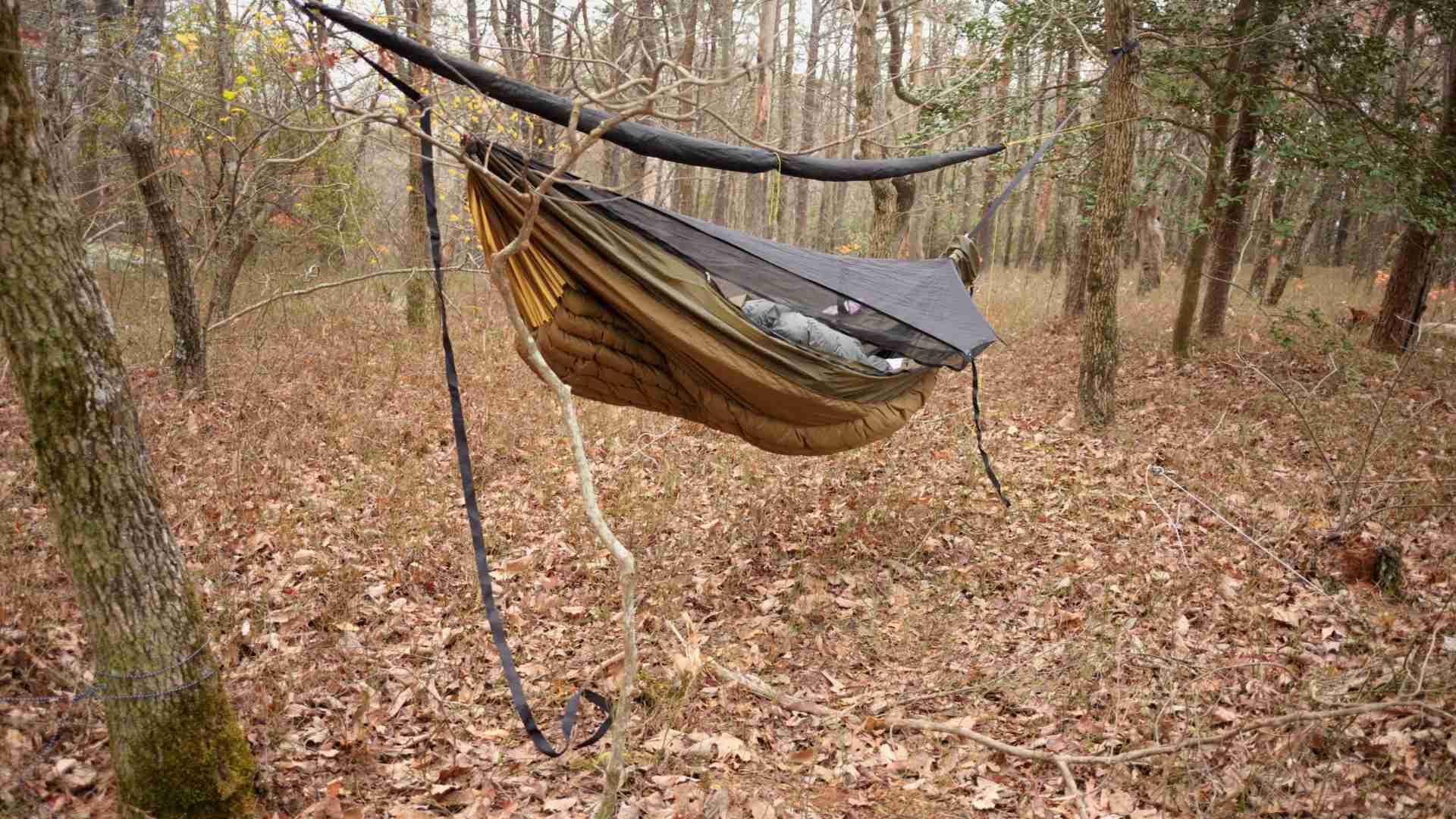
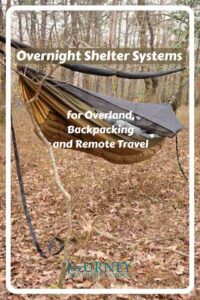
A hammock solves one problem that tents and bivies cannot solve well: bad ground. It can work on steep forest slopes, wet jungle floor, muddy lowlands, root-covered terrain and places where there is no flat sleeping space. If the trees are strong, safe and correctly spaced, the ground below becomes much less important.
But a hammock depends completely on anchors. In steppe, desert, high mountains above the tree line, open plateaus, beaches without trees or rocky terrain without reliable anchor points, it may become useless. It also requires tree judgment. Dead trees, weak trunks, hanging branches and storm-damaged forest can make a hammock dangerous.
Basic hammocks are light and simple, but overnight use usually needs more than the hammock itself. A proper setup often includes straps, tarp, mosquito net and insulation underneath, because cold air passes below the body. Jungle hammocks often include integrated insect protection. Cold-weather hammock systems need more insulation and become heavier.
Tarp Shelter
A tarp is not always a full shelter by itself, but it is one of the most flexible protection systems. It can cover a hammock, extend the protected space around a tent, create a quick rain roof, or serve as a minimal shelter with trekking poles, trees, rocks or other anchor points.
It works best when the pitch matches the wind and rain. In forests, a tarp can be very useful because anchor points are common. In open terrain, it may require poles, good stakes and careful orientation. And in strong wind, a poor tarp setup can fail quickly.
Tarps vary from small ultralight sheets to larger heavy-duty covers. A small tarp is useful for backpacking or hammock use. A larger tarp is better near a vehicle, canoe or base camp, where weight matters less and covered working space becomes more valuable. Often, the tarp is not the main sleeping system, but it makes another system much more practical.
Vehicle-Based Shelter
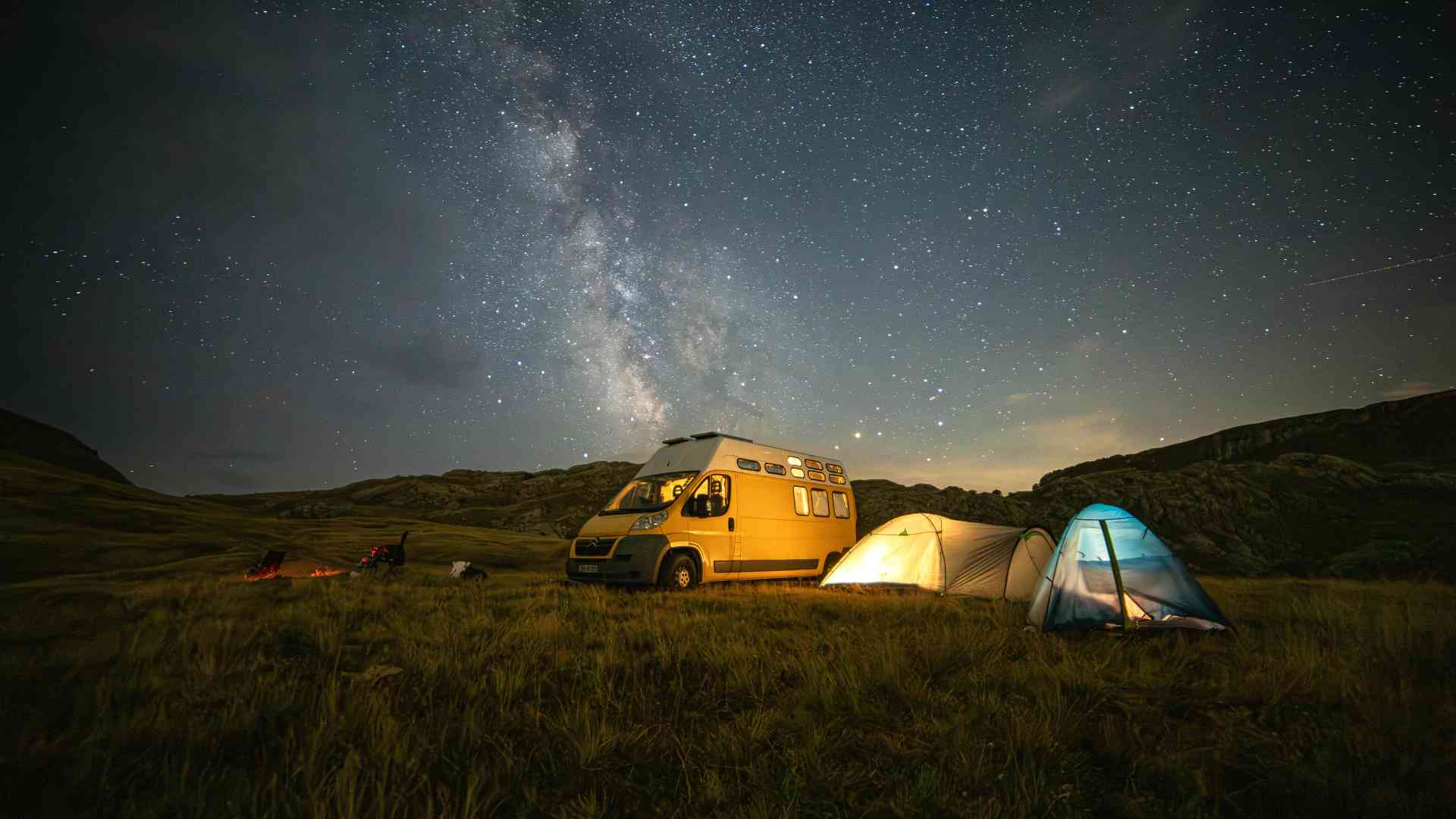
When the camp is near a car, van, motorcycle or canoe, the shelter logic changes. More weight, more comfort and more backup equipment become possible. A larger tent, thicker sleeping pad, extra tarp, folding mat, warm blanket or more solid cooking and rain area may be realistic because the gear does not have to be carried for many kilometres.
Vehicle-based shelter can mean sleeping inside the vehicle, using a roof tent, setting up a larger ground tent nearby, adding an awning, or building a tarp system from the vehicle. This is often the most comfortable option for road-based overland travel, remote driving routes, fishing trips, canoe routes and camps near tracks or parking points.
The limitation is access. A vehicle-based setup works only where the vehicle can safely reach and stay. On long one-way routes, the vehicle itself also becomes part of the shelter and logistics problem, because it has to be stored, recovered, shipped or moved when the route continues without it. It becomes less useful when the best campsite is far from the road, when the vehicle has to be hidden or protected, or when the route continues on foot into terrain where every part of the shelter has to be carried.
Improvised Natural Shelter
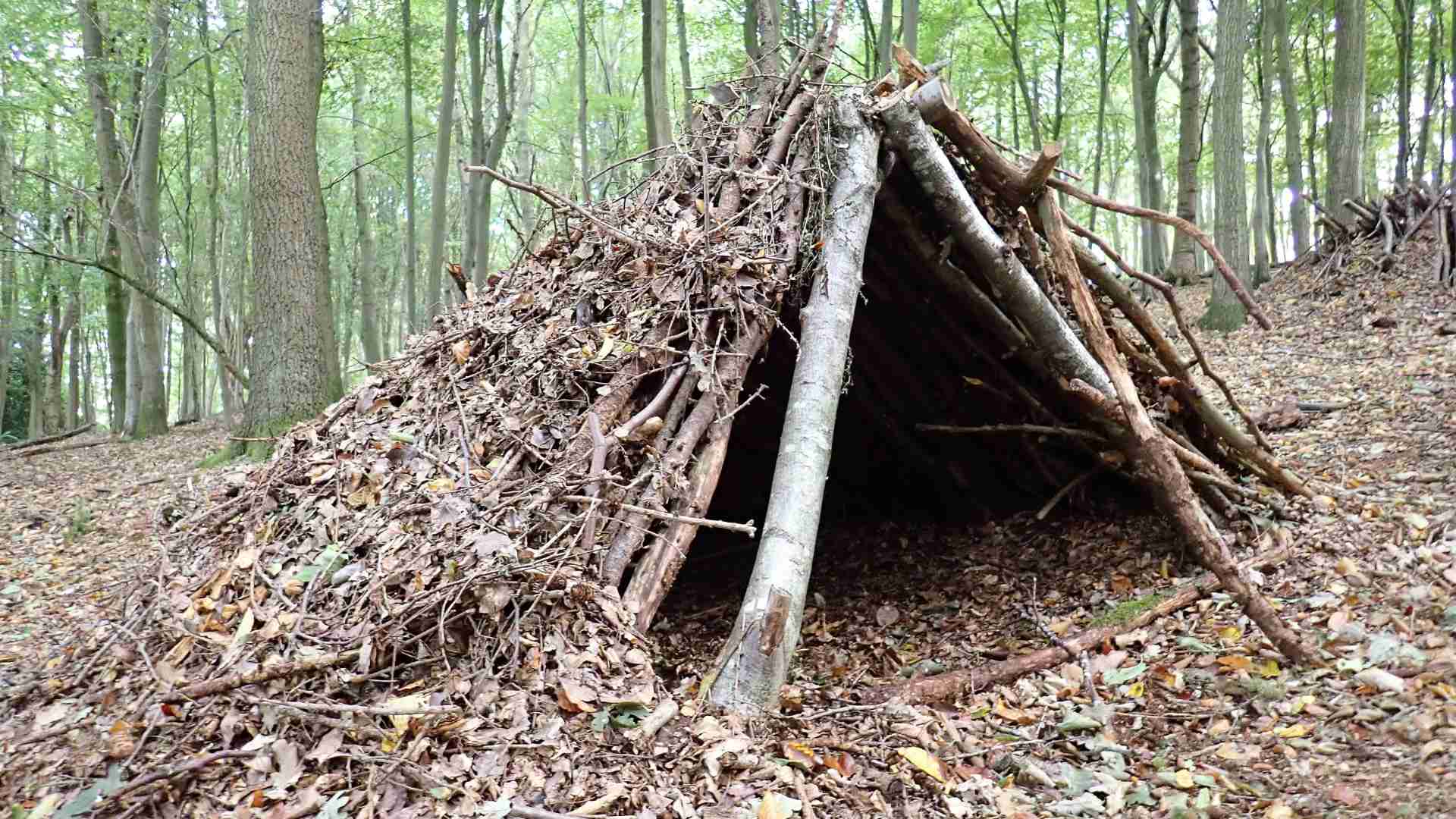
Not every shelter is bought and carried. In some places, the shelter may already exist in the landscape: a rock overhang, a cave-like hollow, a dry depression protected from wind, dense branches, old stone walls, abandoned ruins, or snow that can be shaped into a snow shelter or igloo in the right conditions.
This is not the main planned shelter for most travelers. It depends on local terrain, weather, skill, legality and safety. Rock hollows may be damp or unstable. Ruins may be private, culturally sensitive or dangerous. Branch shelters require time and can damage the environment. In fragile or protected landscapes, the safer and more responsible approach is to use existing durable surfaces and natural protection without altering the site. Snow shelters and igloos require suitable snow, tools, experience and cold conditions where the structure will remain stable.
Still, improvised shelter matters because it can extend the usefulness of a minimal sleeping system. A traveler carrying only a sleeping bag, pad and bivy may sleep better if a natural windbreak, rock hollow or dry protected space exists. In this case, the landscape becomes part of the shelter system — but it cannot replace judgment about water, falling rocks, animals, people and weather.
Campsite Safety Before You Sleep
A tent, bivy, tarp or hammock can feel like a small protected space, but it is not a building. It may reduce rain, wind, insects or cold air, but it does not remove the risks of the terrain around it. The shelter is only one part of the overnight system. The ground, trees, rocks, water, wind, people and animals around the campsite may matter more than the shelter itself.
Look Up Before You Set Up
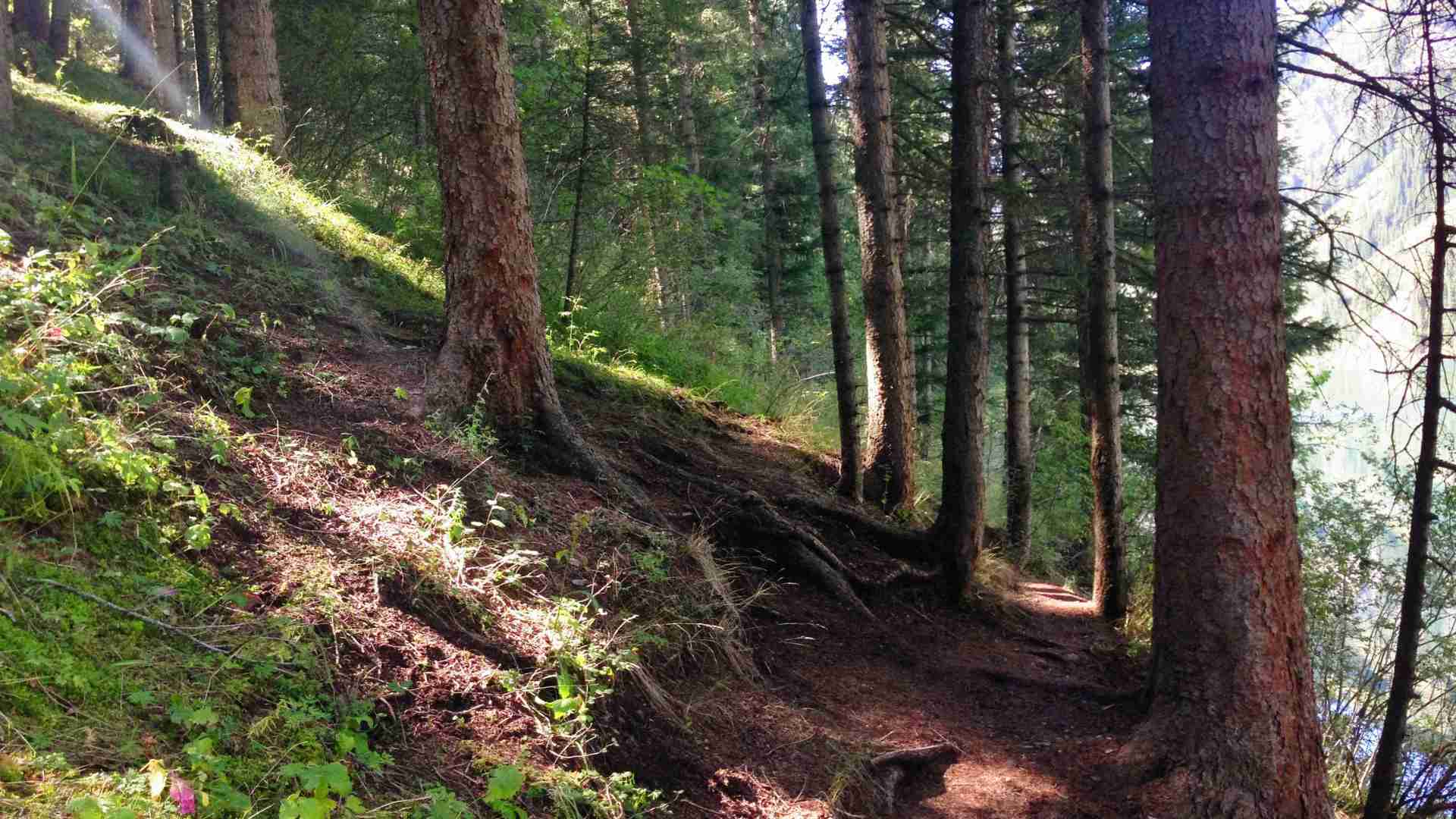
The flattest ground is not always the safest ground. Many dangerous campsites look comfortable at first glance. The real danger may be overhead: dead branches, cracked trunks, loose rocks, leaning trees, coconuts, unstable cliffs or snow slopes.
This matters especially in forests, tropical coastlines, canyons, steep valleys and old abandoned places. A good sleeping spot is not only flat and dry. It also has to be safe from what may fall during the night.
Falling Trees, Dead Branches and Dangerous Palms
Forests provide shade, wind protection and anchor points for hammocks and tarps, but they also carry weight above the shelter. Dead trees, broken branches, leaning trunks or trees damaged by wind, rot, fire or erosion remain part of the campsite all night.
Large old trees may look beautiful, but heavy branches can drop from above. In tropical areas, a tent or hammock under coconut palms with mature coconuts may sit below a real falling-object risk. A campsite under trees has to be judged twice: first for shelter and comfort, then for what may fall.
Slope, Flatness and Sleeping Position
Ground shelters need more than “almost flat” terrain. If the slope is too strong, the body slides during the night, sleep becomes poor, and pressure builds on one side of the shelter. A small flat bench, natural terrace or shallow protected hollow can be useful, but only if it is not a water path.
For tents and bivies, the better position is usually slightly raised, reasonably flat and outside the lowest part of the area. For hammocks, the ground below matters less, but the anchor points become much more important.
Water Flow, Flash Floods and Rising Rivers
Water is one of the easiest night risks to underestimate. A dry streambed can look like one of the flattest places in a valley. That flatness exists because water already uses it as a route. Rain upstream can send water through it later, even if the camp itself has stayed dry.
Camping beside a river, lake or beach also requires distance. Water levels can rise, waves can reach higher than expected, and soft riverbanks may collapse. A good campsite should remain safe if rain starts after dark.
Wind Exposure and Storm Direction
Open terrain can be safer from falling branches, but more exposed to wind. Ridges, passes, bare plateaus, beaches and open steppe can become difficult at night if the wind increases. A shelter that feels stable in calm weather may fail when the wind direction changes.
Natural protection helps, but it can create a trade-off. A campsite directly under unstable trees, cliffs or loose rocks may block wind while introducing a worse danger from above.
Lightning Risk
A tent or tarp does not protect against lightning. In storm conditions, exposed ridges, isolated high points, lone trees, open summits and metal objects standing above the ground all change the risk. Low ground can also become dangerous if it turns into a water channel.
When lightning is possible, shelter type alone does not solve the problem. The position of the camp matters more than whether the night is spent in a tent, bivy or hammock.
Rockfall, Avalanches and Unstable Slopes
Steep terrain can hide serious night risks. Loose cliffs, scree slopes, unstable boulders, snow-loaded slopes and avalanche paths can all send material downslope. Stones, ice, snow or debris may move after rain, thaw, wind or temperature change.
In mountain terrain, a protected-looking place at the base of a slope is not always safe. If the terrain above can send something down, the shelter is still exposed, even if the ground itself feels comfortable.
Private Land, Local People and Dogs
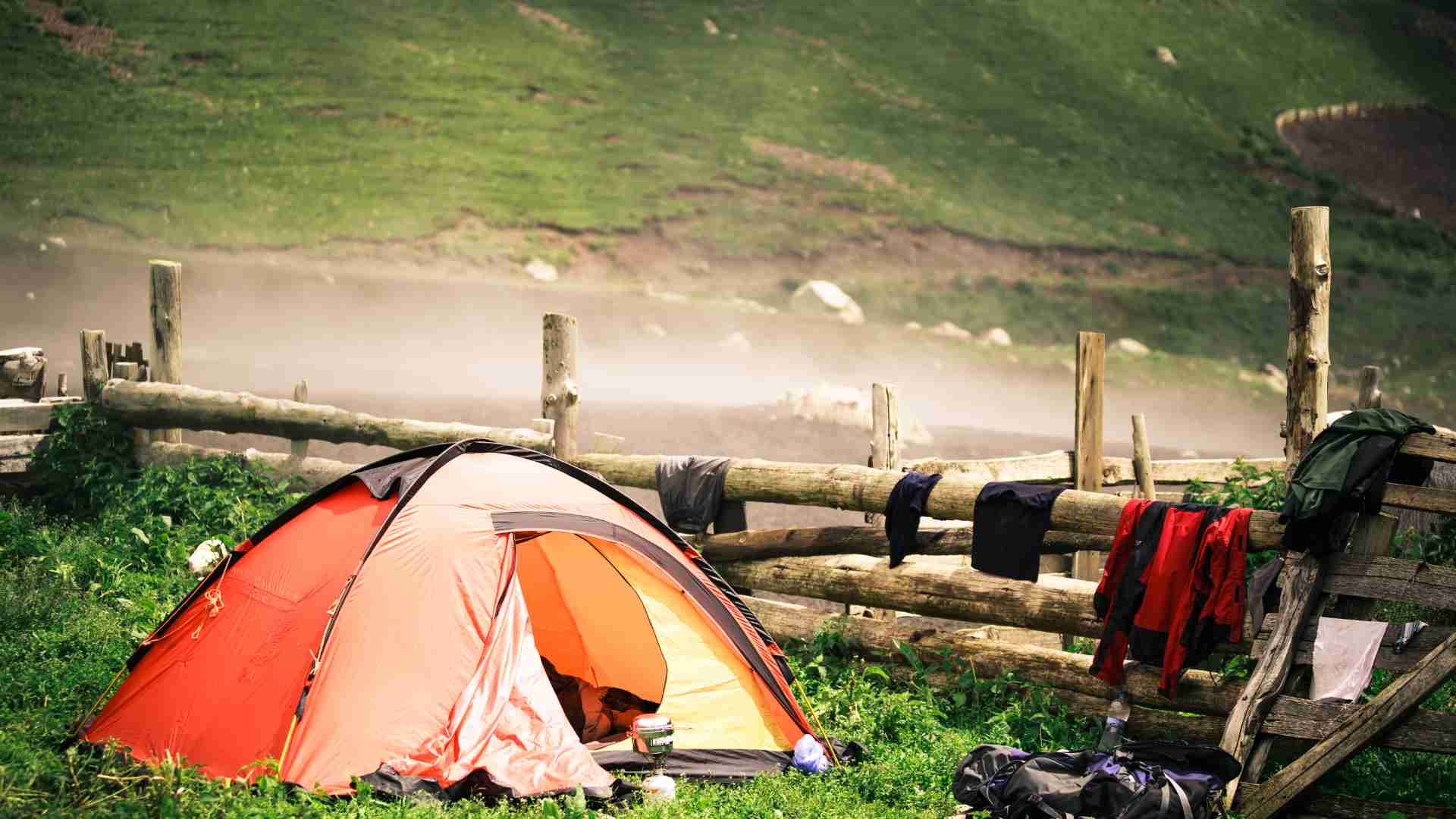
Safety is not only natural. Near villages, farms, pastures, orchards, roads and abandoned buildings, people and dogs may be the main concern. A flat field may be private land. A quiet pasture may have guard dogs. A roadside camp may be visible to everyone passing by.
The legal and social setting matters as much as the ground. In many regions, a discreet, legal and respectful campsite is as important as a dry and flat one.
Animals and People at Night
Animals and people are part of the overnight environment, but their importance changes by region. In some places, wildlife is the main concern. In others, dogs, farms, roads, theft or local conflict are more relevant than wild animals.
The shelter itself rarely solves these problems. A tent or hammock may create a sense of separation, but sound, smell, food, movement and location still connect the camp with the surrounding landscape.
Dogs Near Villages and Pastures
Near villages, farms and grazing areas, dogs can be one of the most immediate night risks. Guard dogs may react to movement, smell or unfamiliar presence, especially around livestock, isolated houses, shepherd camps and farm tracks.
This is different from wilderness risk. The problem is not only the dog, but the human landscape around it: ownership, territory, private land and possible conflict. A quiet field edge in the afternoon can become the edge of a guarded territory after dark.
Bears, Wild Boar, Wolves and Other Temperate-Zone Risks
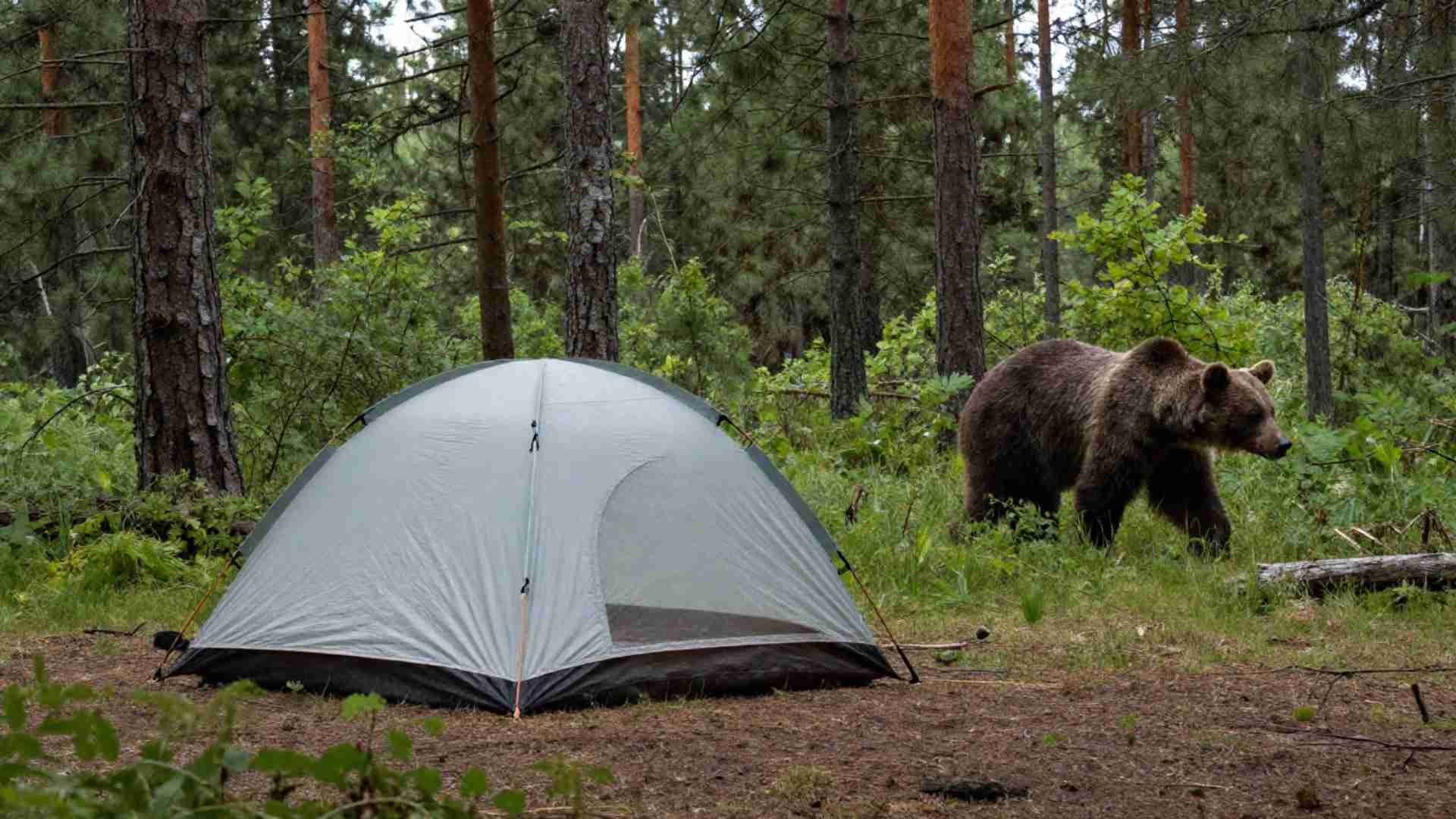
In temperate mountains, forests and rural borderlands, animal risk depends strongly on region and season. Bears are usually connected with food, smell and surprise encounters. Wild boar can become dangerous when startled, especially in dense vegetation or near feeding areas. Wolves are usually less direct as a campsite threat, but their presence changes how isolated night camps feel.
The important point is not fear, but how the camp sits inside animal movement. A narrow track through bushes may look like a convenient flat line for a tent, but it may also be a regular passage for wild boar. If animals use it at night, the tent becomes an obstacle on their route, not a protected space outside it.
Food, rubbish, cooking smells and sleeping location change the situation. A campsite on an animal trail, near dense cover, close to water or beside food waste is different from a clean camp placed with more distance and visibility.
Tropical Wildlife: Big Cats, Snakes, Monkeys and Insects
Tropical regions add different risks. Dense vegetation, warm nights and high humidity keep animal activity close to the ground and often close to camp. Snakes, insects, monkeys, rodents and larger predators may all be part of the local environment, depending on the region.
In many tropical areas, insects and small animals are more constant problems than dramatic large predators. A mosquito net, sealed food, dry bags and a raised or well-protected sleeping setup may matter more every night than rare encounters with big cats. In jungle or wet forest, the shelter system has to deal not only with rain, but also with life moving through the camp area.
Food, Smell and Camp Cleanliness
Food changes a campsite. Cooking smells, open rubbish, spilled food, toothpaste, fruit, fish, meat or snacks can attract animals long after the meal is finished. This applies not only to bears, but also to rodents, dogs, monkeys, insects and other animals.
A clean camp is part of the shelter system. Food storage, rubbish control and distance between cooking and sleeping areas become more important in wild or semi-wild places. In some regions, this may require strict food storage methods; in others, simple cleanliness and sealed bags may be enough.
When Human Risk Is More Important Than Wildlife Risk
In many real travel situations, people are the bigger night factor. Camps near roads, settlements, informal parking areas, abandoned buildings, border zones, mining areas, logging roads or places with known crime may carry risks that have nothing to do with wildlife.
A technically good campsite can still be a poor choice if it is too visible, too close to conflict, too close to private land, or too easy for strangers to approach. In these cases, the best shelter is not only the one that fits the terrain, but the one that fits the human geography around it.
Overnight Shelter Accessories That Matter
The shelter is only the outer layer of the overnight system. A tent, bivy, tarp or hammock may reduce exposure, but the night is often decided by the smaller items around it: insulation, light, rain protection, dry storage and small repair tools.
These accessories do not need to turn a simple camp into a heavy expedition setup. Their role is to solve the real problems of the route: cold ground, rain, darkness, insects, wet gear, broken straps, loose stakes or a sudden drop in temperature.
Sleeping Bag
The sleeping bag is the main insulation around the body. Its role changes with climate and terrain. A warm bag that works well in dry mountain air may become uncomfortable in humid lowlands. A light summer bag may feel perfect near a vehicle with extra blankets, but too weak when carried alone into cold ground and wind.
The important question is not only how cold the night can become, but how often that cold is expected. On a mixed route, the sleeping bag has to cover the repeated conditions, not only the best-case night. For colder mountain routes, this separate guide to sleeping bags for high-mountain trekking looks more closely at temperature ratings, shape, insulation material, weight and price.
Sleeping Pad or Ground Insulation
Cold often comes from below. A tent floor or bivy sack does not stop the ground from pulling heat away from the body. This becomes more obvious on rock, frozen soil, wet grass, snow, damp forest floor or exposed mountain ground.
A sleeping pad is therefore not only a comfort item. It is part of the warmth system. Near a vehicle, a thicker and more comfortable pad is easy to justify. Far from transport, the pad has to balance insulation, packed size, weight and durability.
Headlamp and Backup Light
A campsite changes after dark. The flat patch that looked simple in daylight becomes harder to judge when a stake comes loose, rain starts, an animal moves nearby or something has to be repaired.
A headlamp keeps both hands free for setting up shelter, checking the ground, cooking, packing, finding water or moving around camp. A small backup light matters because darkness makes even simple problems slower and more stressful. For a more detailed comparison of brightness, battery systems, weather resistance and weight, see this separate guide to headlamps for night movement. During several nights away from reliable electricity, lighting must share the available battery reserve with the phone, navigation equipment, cameras and sometimes a laptop, making it important to calculate off-grid power needs and available working time in advance.
Tarp, Groundsheet and Rain Protection
Rain protection is not only about the main shelter. A tarp can create a dry working space, protect a hammock, cover gear, extend a tent entrance or give a quick roof during bad weather.
A groundsheet or footprint can protect the sleeping area from moisture, mud, sharp stones and wet vegetation. In wet terrain, this layer can decide whether the shelter remains usable or slowly becomes a damp place where everything touches the ground.
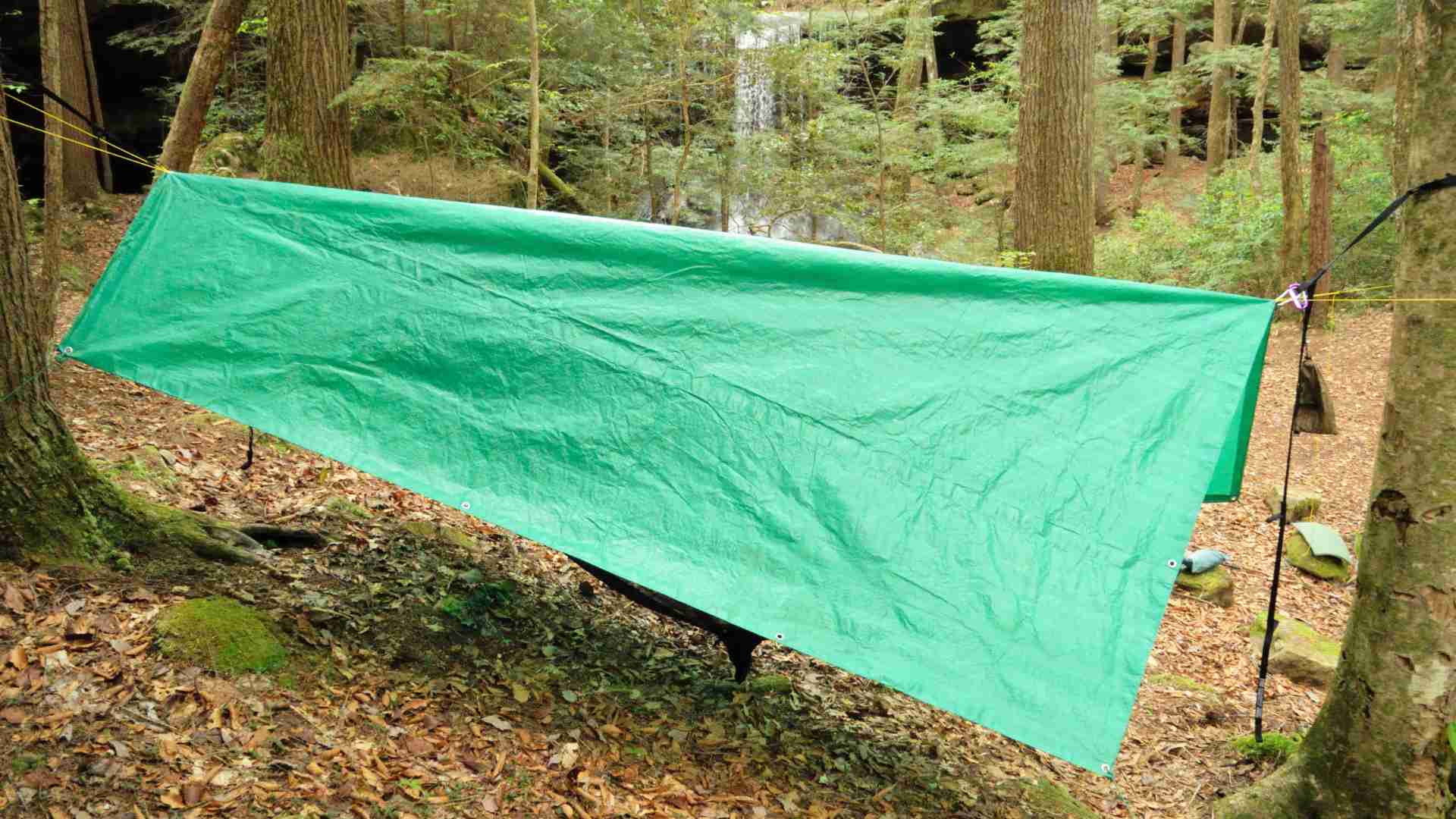
Hammock Straps and Mosquito Net
A hammock without proper straps is only part of a system. The straps need to hold weight safely without damaging trees or slipping during the night. In forested or jungle terrain, the anchor points matter as much as the hammock itself.
A mosquito net becomes important where insects are active through the night. In humid forests, river valleys and tropical regions, insect protection can matter more than the shelter fabric. The camp may feel protected from rain, but still remain open to mosquitoes, flies, ants and other small animals.
Dry Bags and Waterproof Packing
Wet gear can turn a manageable night into a difficult one. A sleeping bag, dry clothes, electronics, documents and emergency layers need protection before the rain starts, not after the pack is already soaked.
Dry bags are especially useful in canoe travel, wet forests, tropical regions, river crossings, boat approaches and long routes where drying gear is not always possible. Even inside a tent, packed items can suffer from condensation, floor moisture or water entering through an opening during a storm.
Repair Kit, Cordage and Stakes
Small failures often happen at the edges of the system: a broken strap, torn fabric, lost stake, loose guyline, damaged buckle or leaking seam. These are not dramatic problems when the camp is close to a car, but they become more serious when the shelter has to survive a remote night.
Cordage, spare stakes, tape, small patches, needle and thread, extra guyline and simple repair pieces can keep a shelter working. The repair kit does not need to be large. It only has to match the shelter system being carried.
Warmth at Night: Heat the Person, Not the Shelter
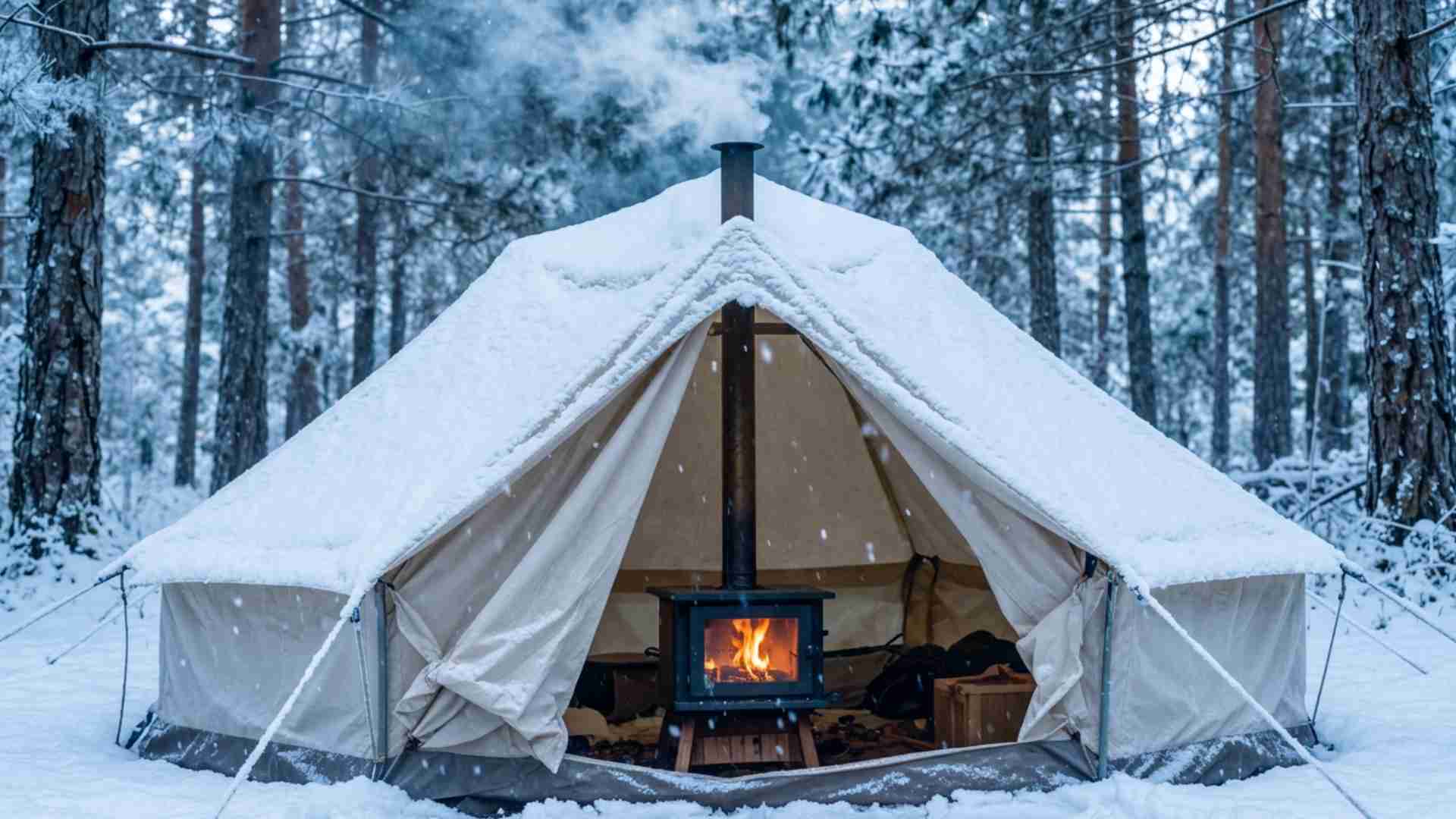
Cold nights create a different kind of shelter problem. A tent, bivy or tarp may reduce wind and rain, but most lightweight shelters do not work like heated rooms. Reliable warmth comes mainly from the sleeping system: ground insulation, a suitable sleeping bag, dry clothing layers and protection from wind. Distance from transport changes the options. Near a car, van or base camp, heavier comfort systems become possible: extra blankets, thicker pads, hot water bottles, spare dry clothing or even a proper winter hot-tent setup designed for a stove, chimney and ventilation. Far from transport, the system has to stay much lighter, and warmth depends more on insulation than on heating the shelter itself.
Small heat sources can still matter. A gas heater used briefly while awake may warm fingers before sleep. Rechargeable hand warmers, chemical warmers, a hot water bottle or a heated stone wrapped safely in cloth can create temporary warmth inside the sleeping system. They will not heat the whole night, but they can make the first minutes inside a cold sleeping bag much more bearable.
These methods are different from leaving a flame or heater running through the night. Fuel-burning equipment inside a small shelter brings risks of carbon monoxide, fire, oxygen loss and condensation, especially in closed or poorly ventilated spaces. Hot stones, hot water bottles and electric warmers also need care, because direct heat against skin or fabric can cause burns or damage gear. For most lightweight shelter systems, the safer logic is to heat the person, not the shelter. The shelter reduces exposure. The insulation keeps the body warm. Small heat sources can add comfort, but they should not replace a sleeping system that is already suitable for the expected night conditions.
Quick Shelter Decision Summary
The shelter choice becomes clearer when the route is reduced to a few practical questions:
- If there is flat, safe ground, a tent or bivy can work well.
- If the ground is steep, wet or broken but the trees are safe, a hammock may be better.
- If the route is exposed, cold or above the tree line, a ground shelter is usually more realistic than a hammock.
- If the camp is close to a vehicle, heavier and more comfortable gear becomes possible.
- If everything must be carried, weight, packed size and simplicity become more important.
- If the site has dead trees, falling branches, flood paths, rockfall, private land problems or aggressive dogs, moving may be better than trying to improve the shelter.
A good shelter system is not only the one that feels comfortable inside. It is the one that fits the ground, the weather, the route style and the risks around the camp.
Conclusion: The Best Shelter Is the One That Fits the Terrain
There is no universal overnight shelter for every route. A tent, bivy, tarp, hammock or vehicle-based setup can all work well, but only when the terrain, weather, distance from transport and campsite risks match the system.
A good shelter choice begins before the gear is unpacked. The shape of the ground, the trees above, the water routes, the wind, the animals, the nearby people and the distance from support all decide whether the night will be simple or difficult.
The best shelter is not always the strongest, lightest or most comfortable one. It is the one that fits the place where the night actually happens.
Disclaimer: Journey Beyond the Horizon is a participant in the Amazon Services LLC Associates Program, an affiliate advertising program designed to provide a means for us to earn fees by linking to Amazon and affiliated sites at no additional cost to you.
Like it? Pin it here⇓! Follow us on Facebook, X and Instagram!
You may also like


Hi, we are Krasen and Ying Ying. Krasen is from Bulgaria, and Ying Ying is from China. We are passionate about geography and history, and we believe that the best way to experience it is by exploring the Earth in reality, not in a school, and not virtually.
So, we created this blog Journey Beyond the Horizon, where we share geographical knowledge, travel guides and tips how to experience it when you explore our planet, and a lot of inspiration.
And we wish you a happy journey, not just virtually, but most of all- in reality.
Enjoy!
Krasen and Ying Ying
Hi, we are Krasen and Ying Ying. Krasen is from Bulgaria, and Ying Ying is from China. We are passionate about geography and history, and we believe that the best way to experience it is by exploring the Earth in reality, not in a school, and not virtually. So, we created this blog Journey Beyond the Horizon, where we share geographical knowledge, travel guides and tips how to experience it when you explore our planet, and a lot of inspiration. And we wish you a happy journey, not just virtually, but most of all- in reality. Enjoy!

